

H. BRUMAND
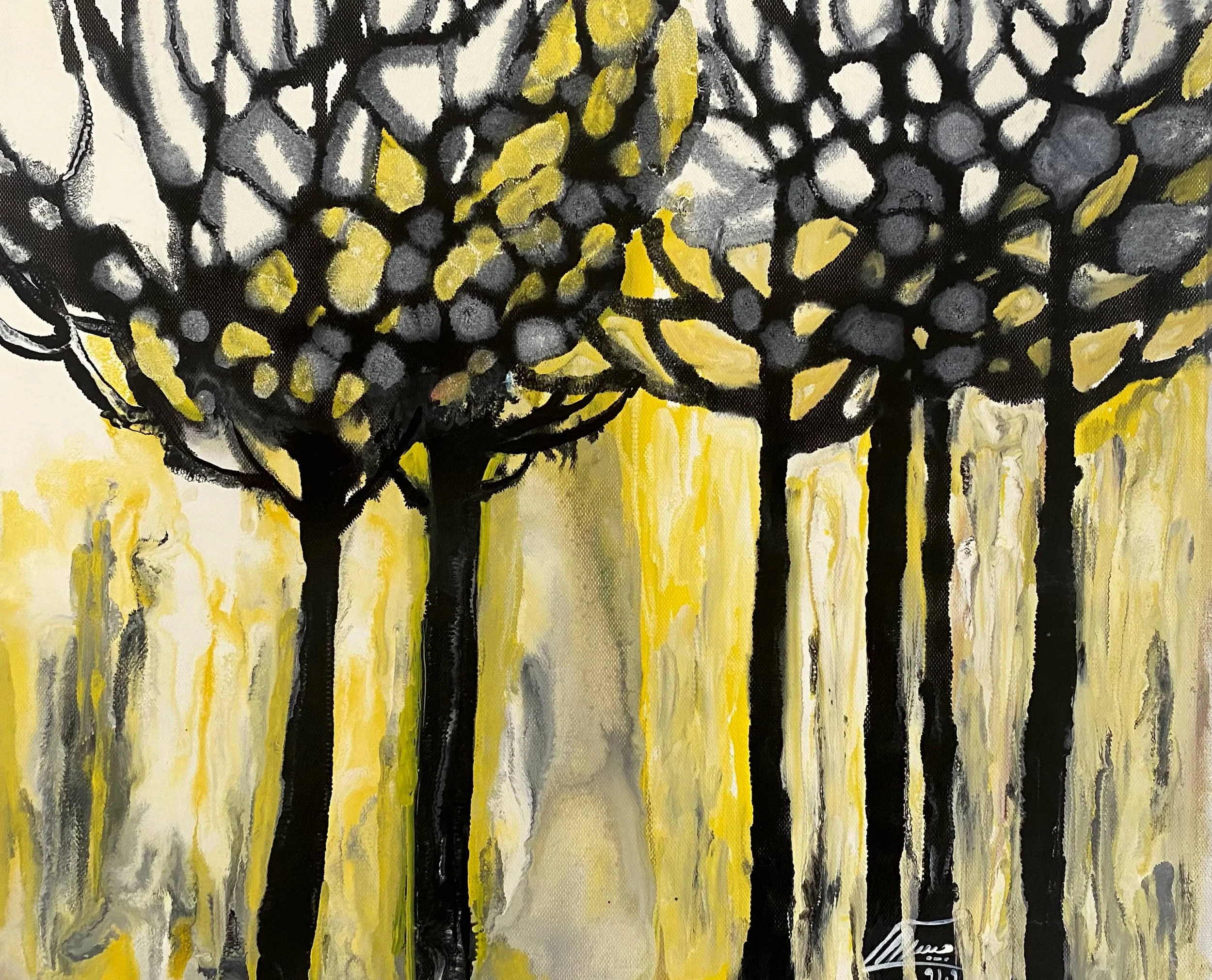
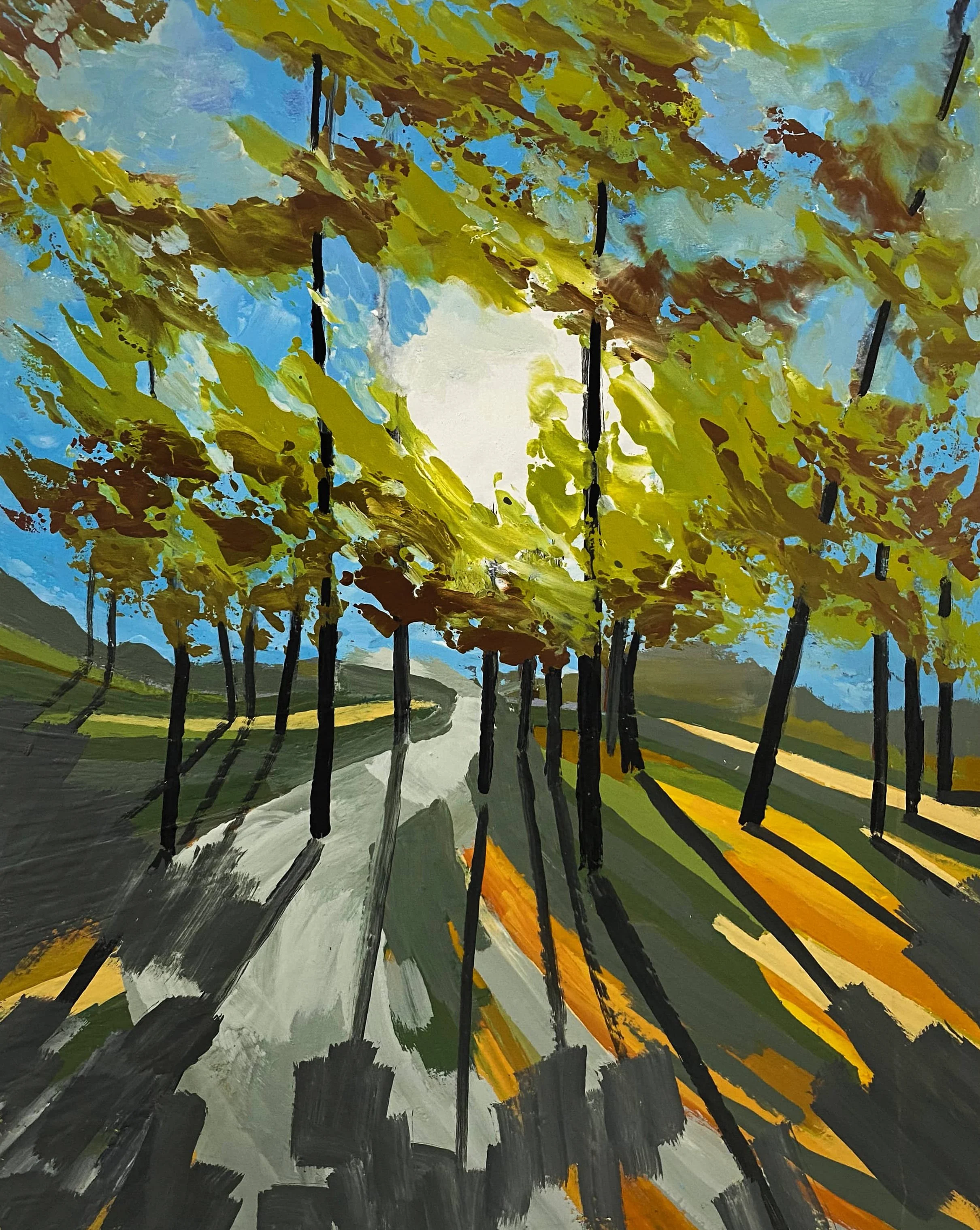
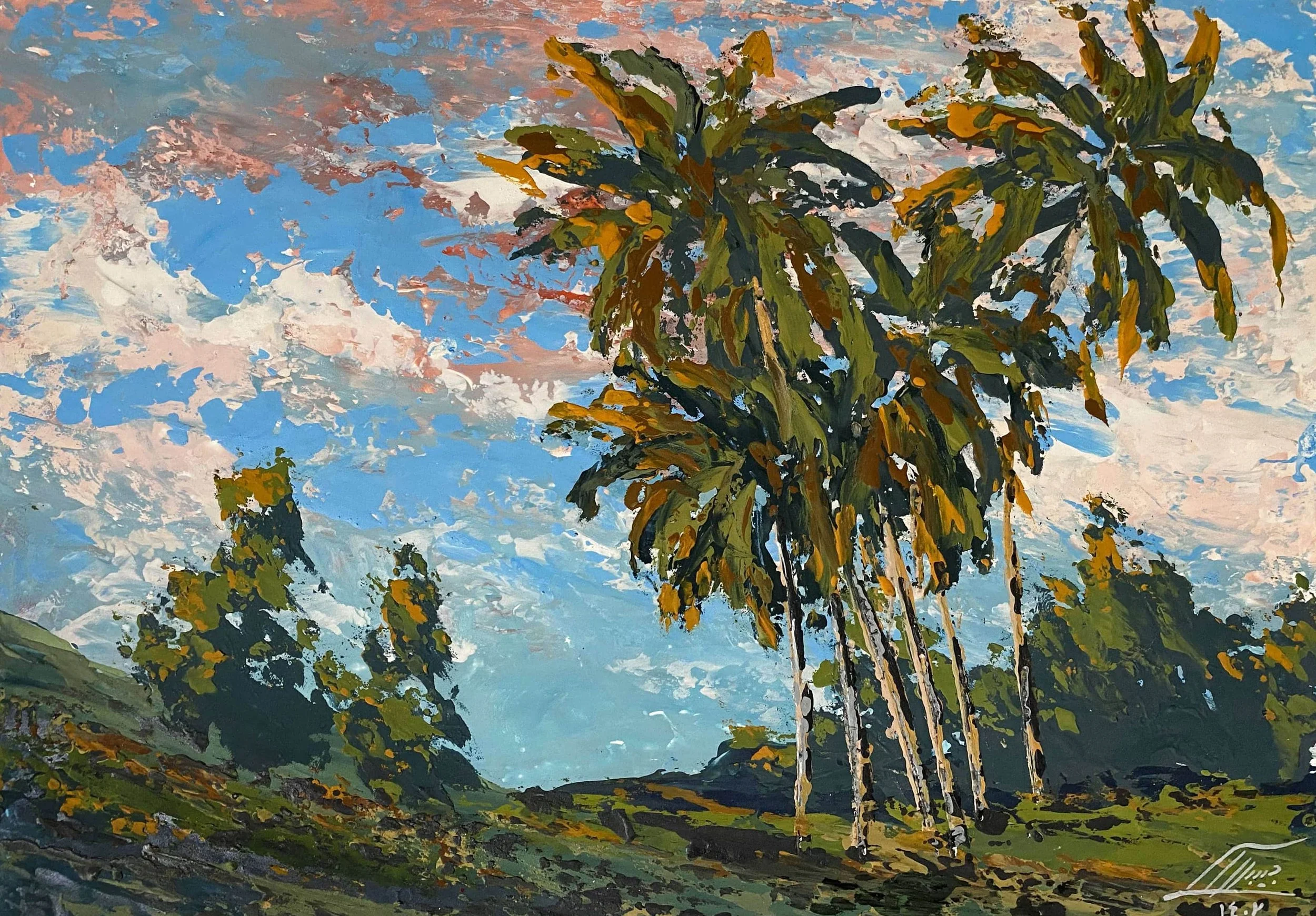
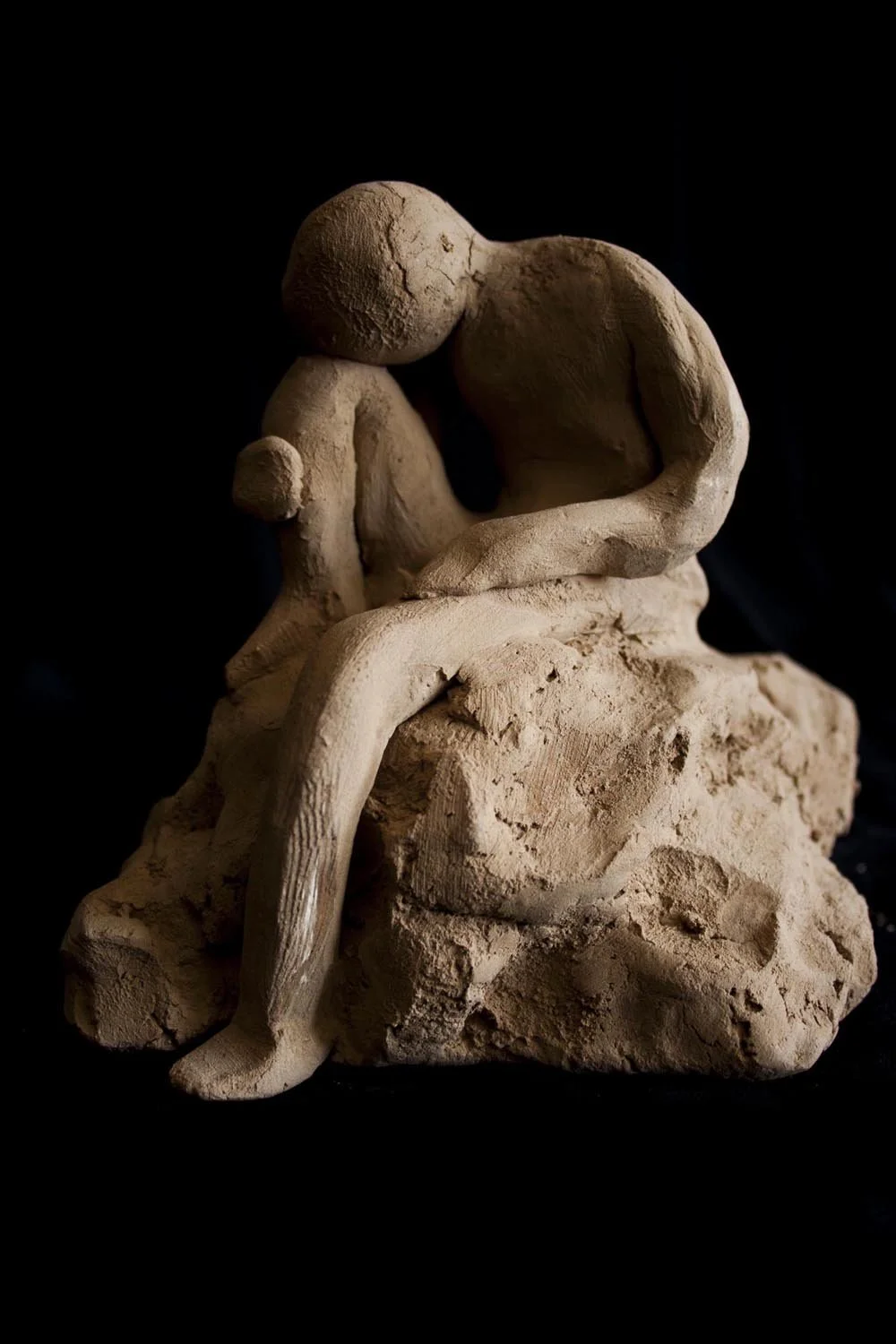
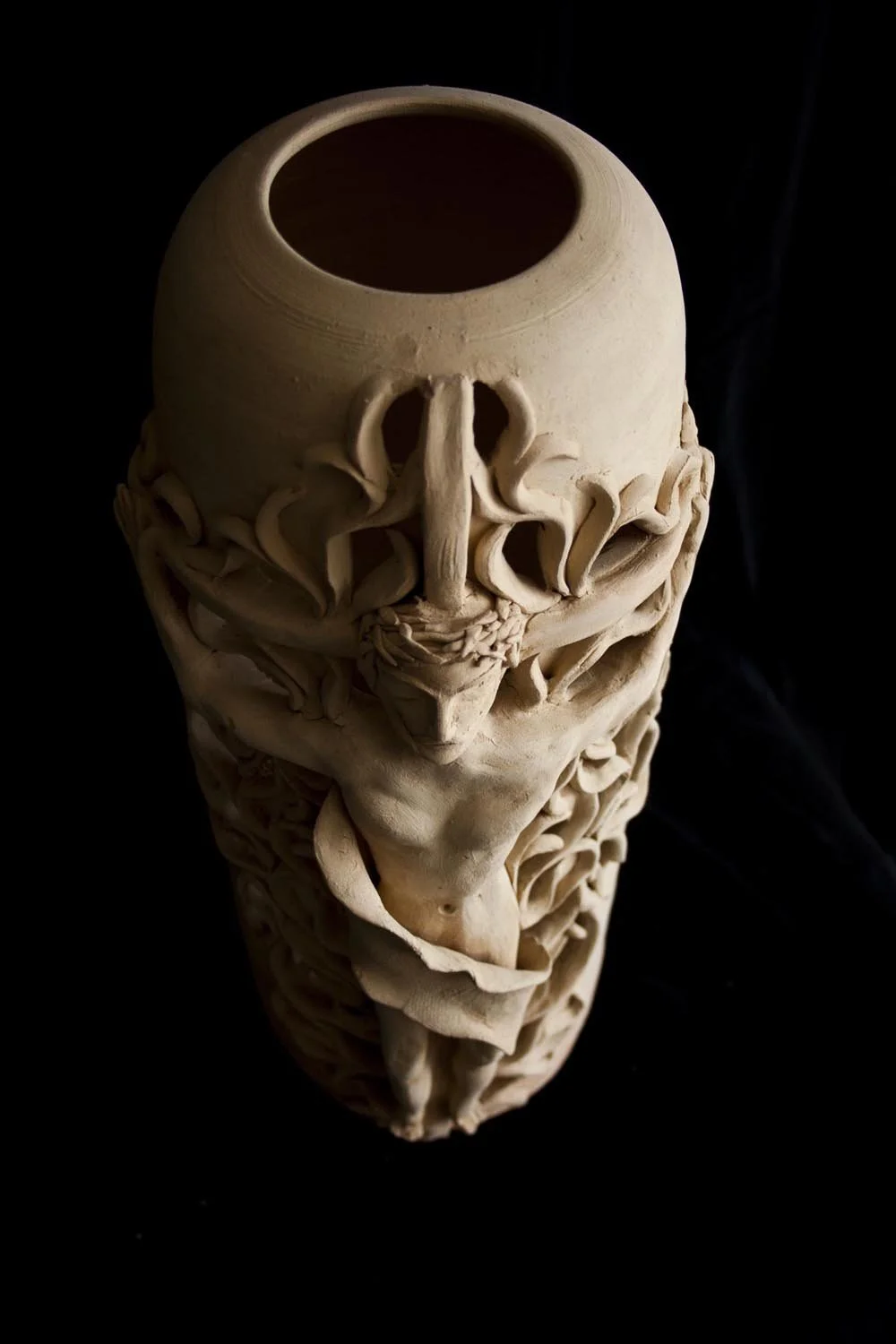
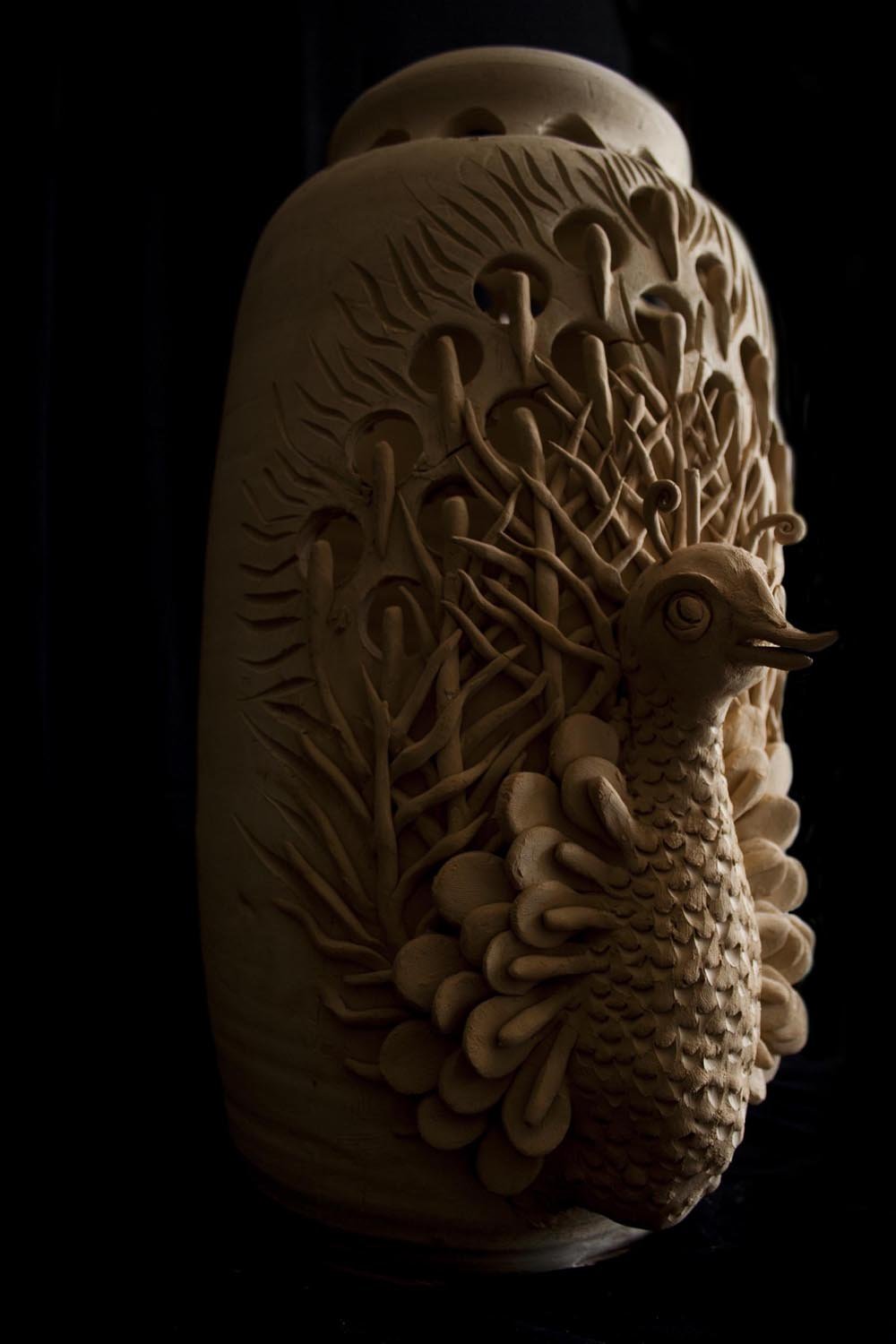
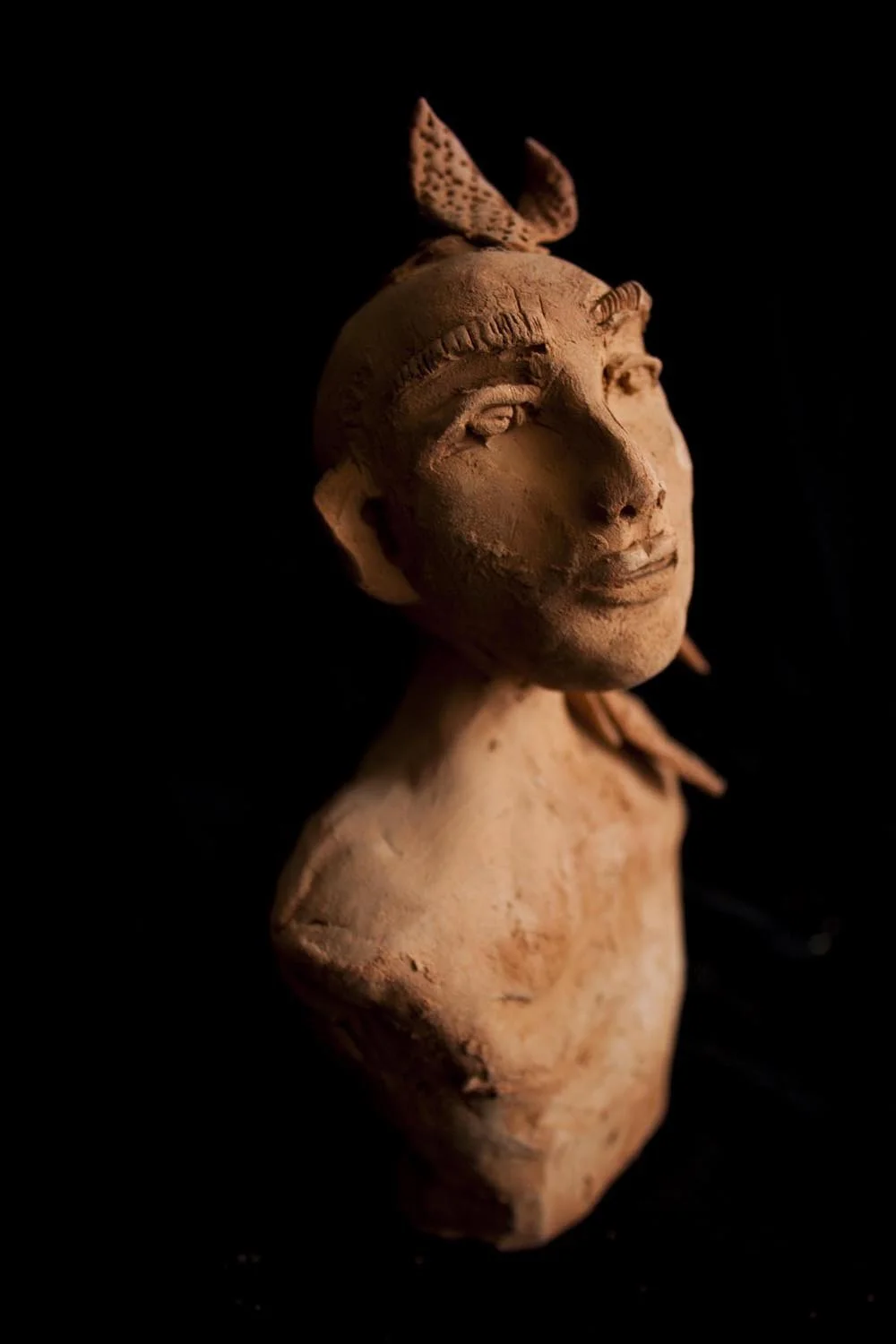
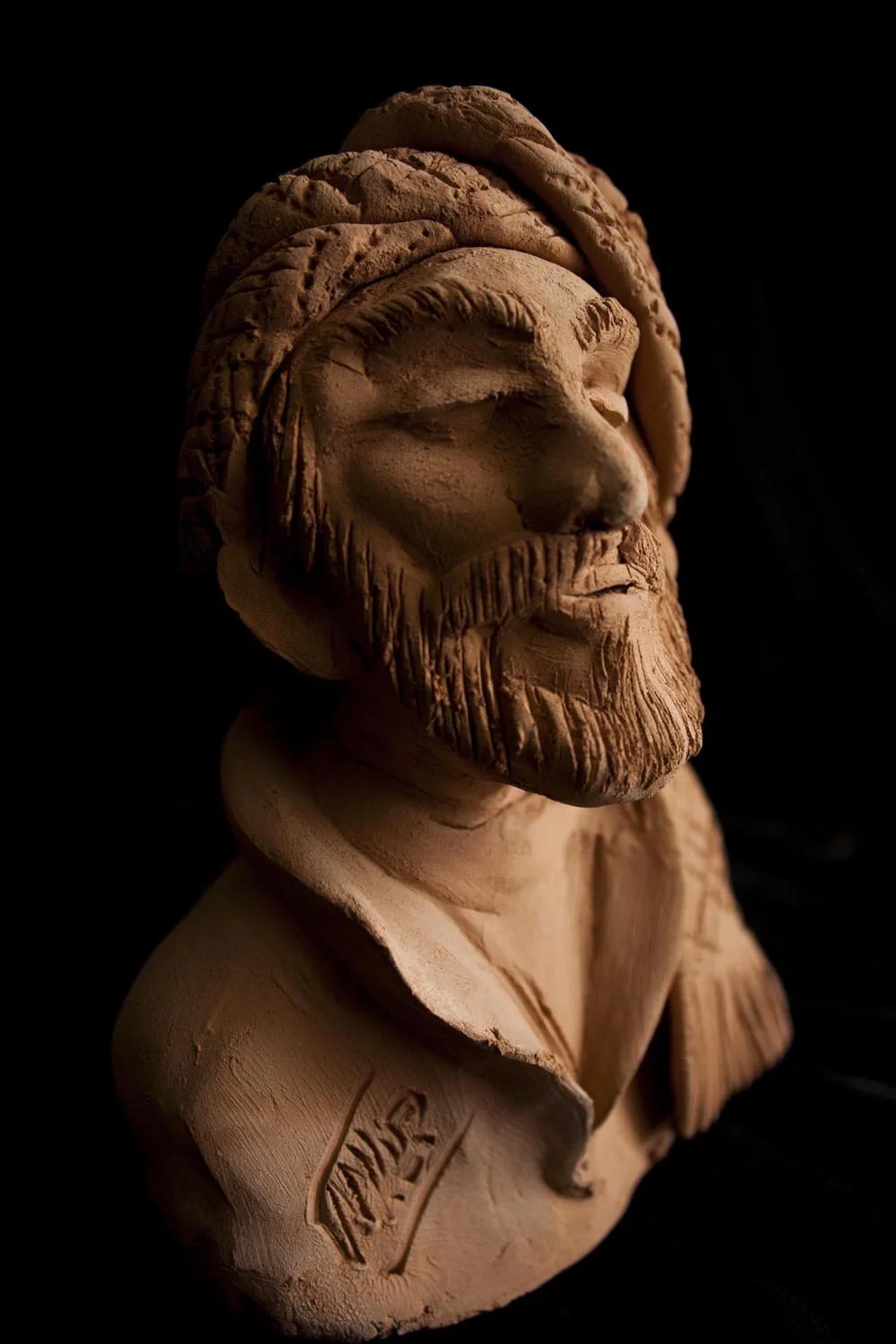
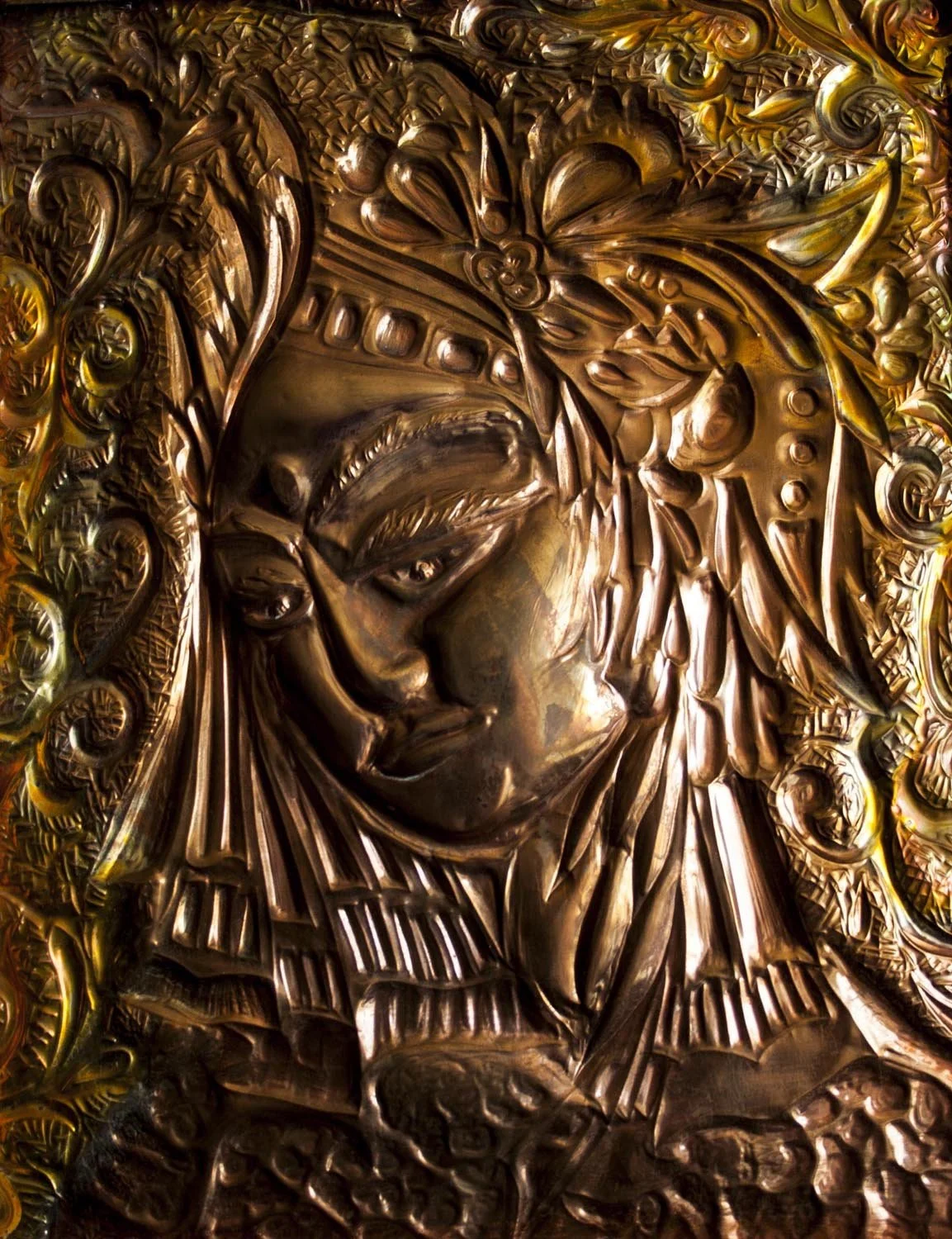
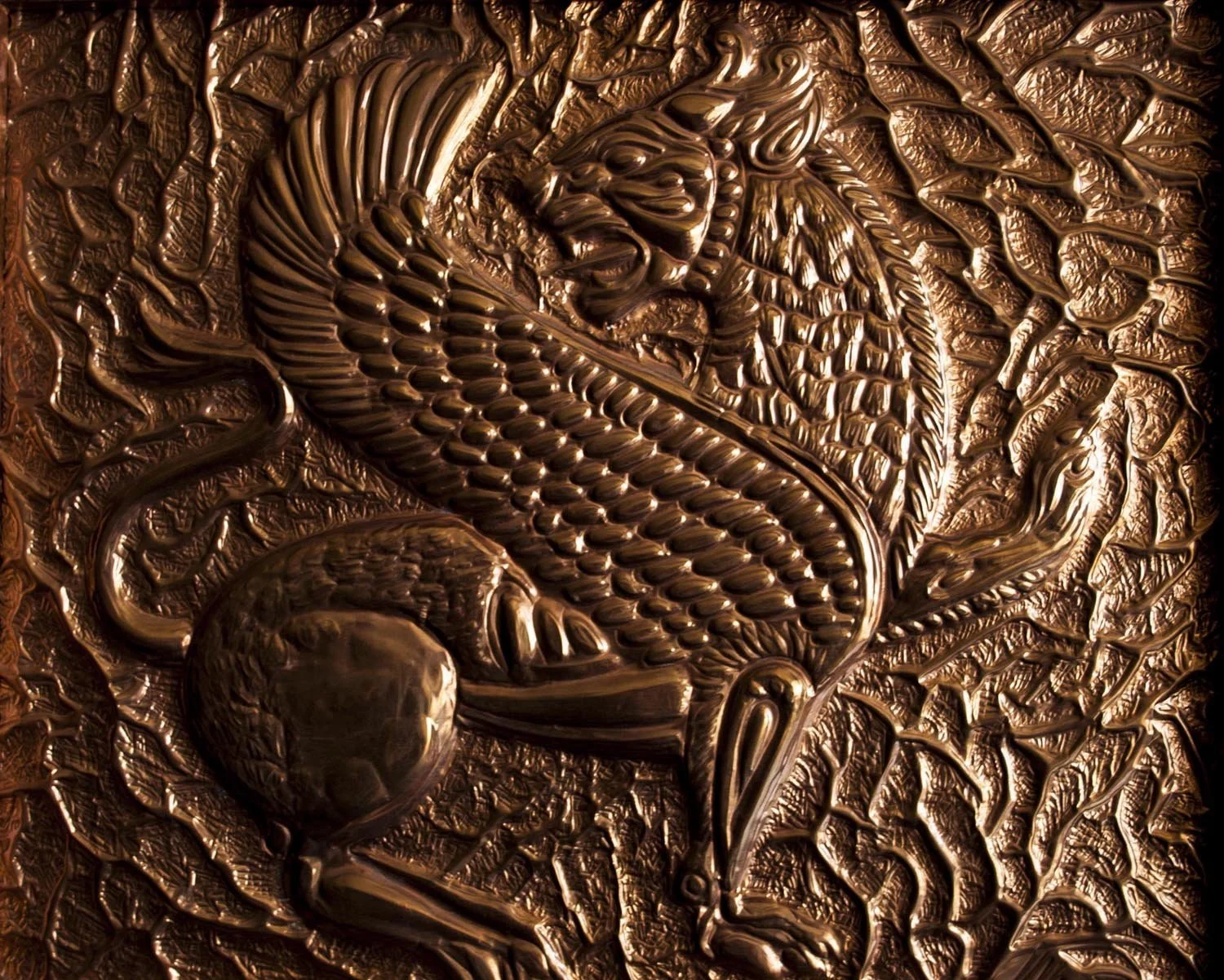
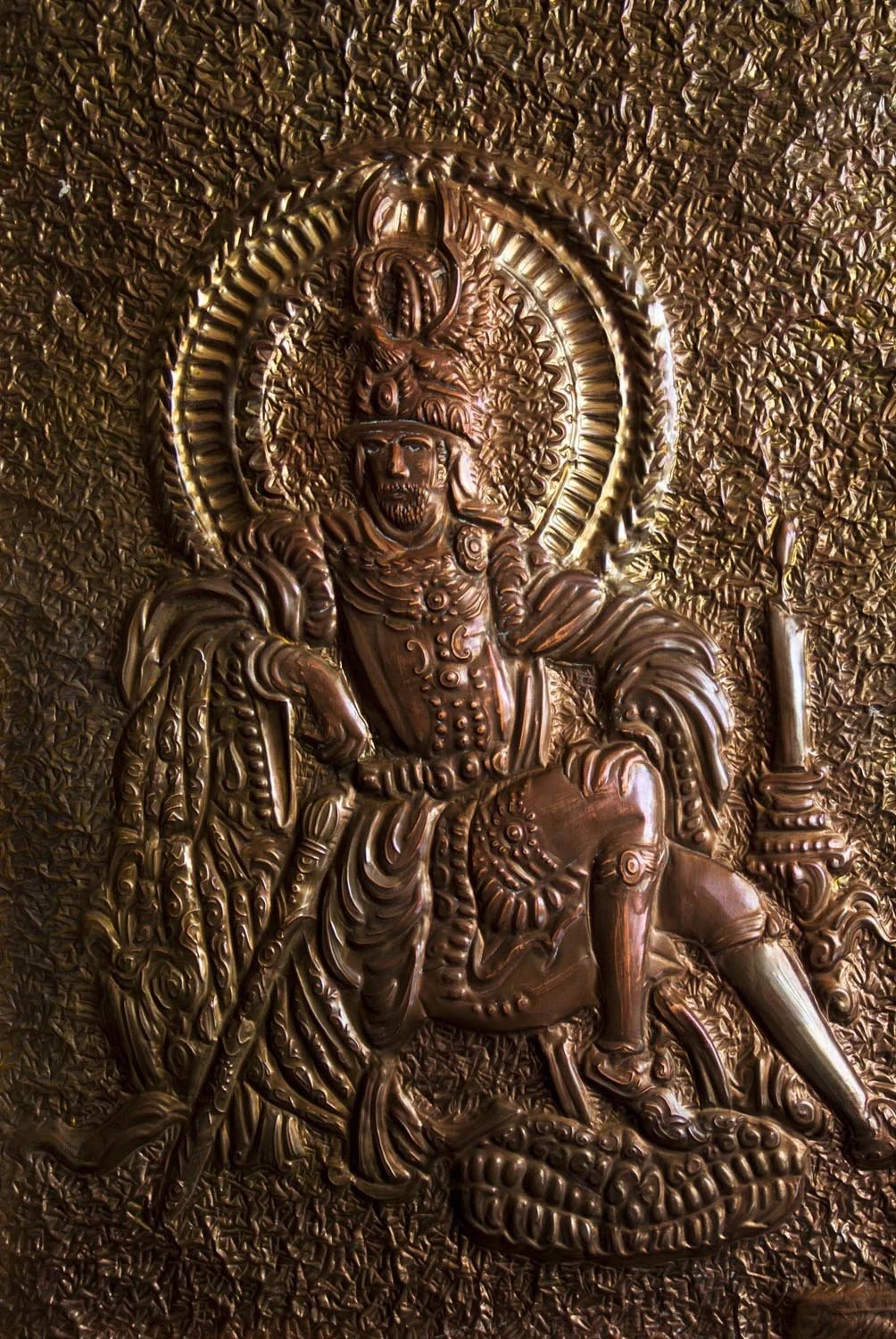
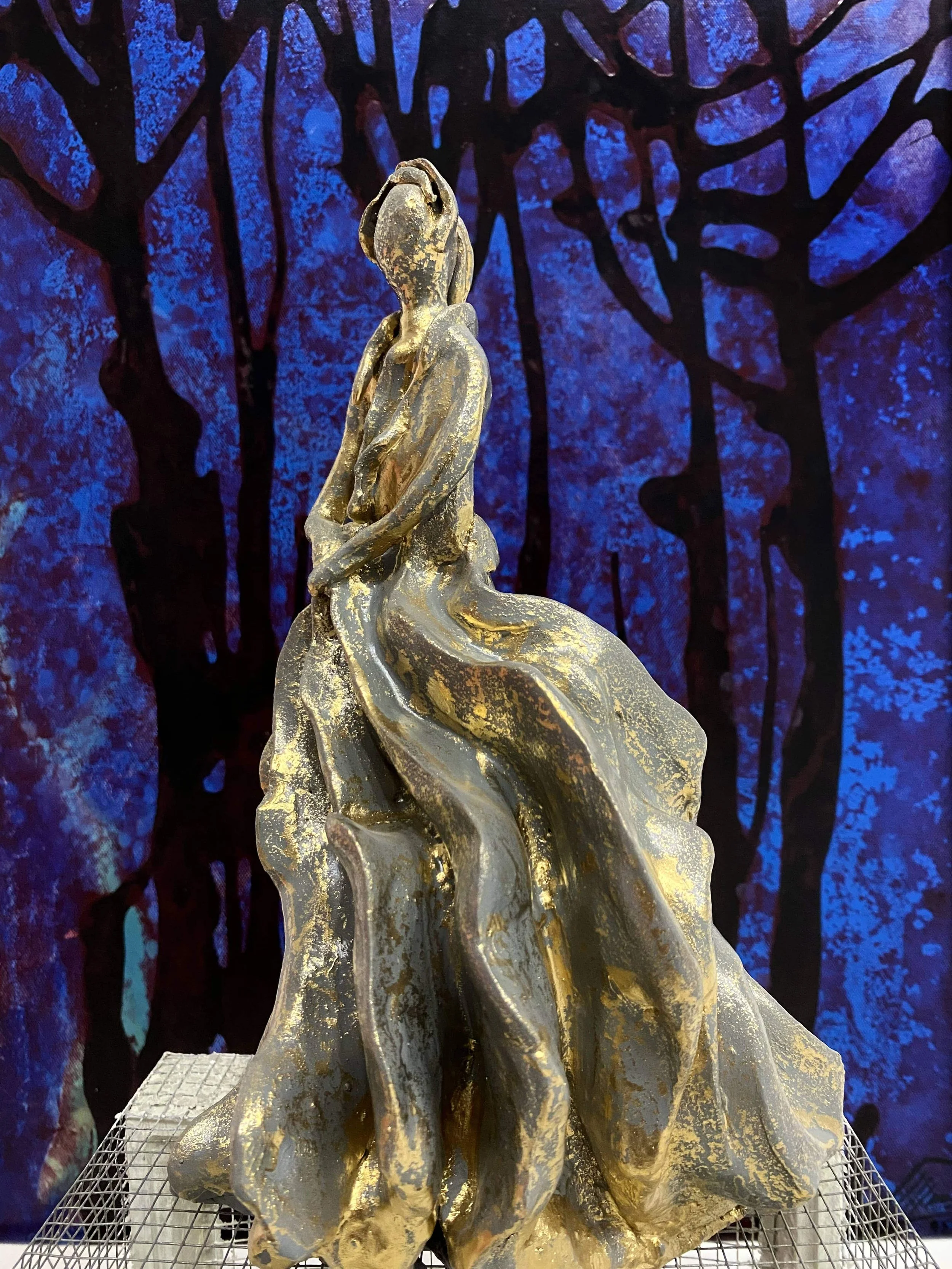
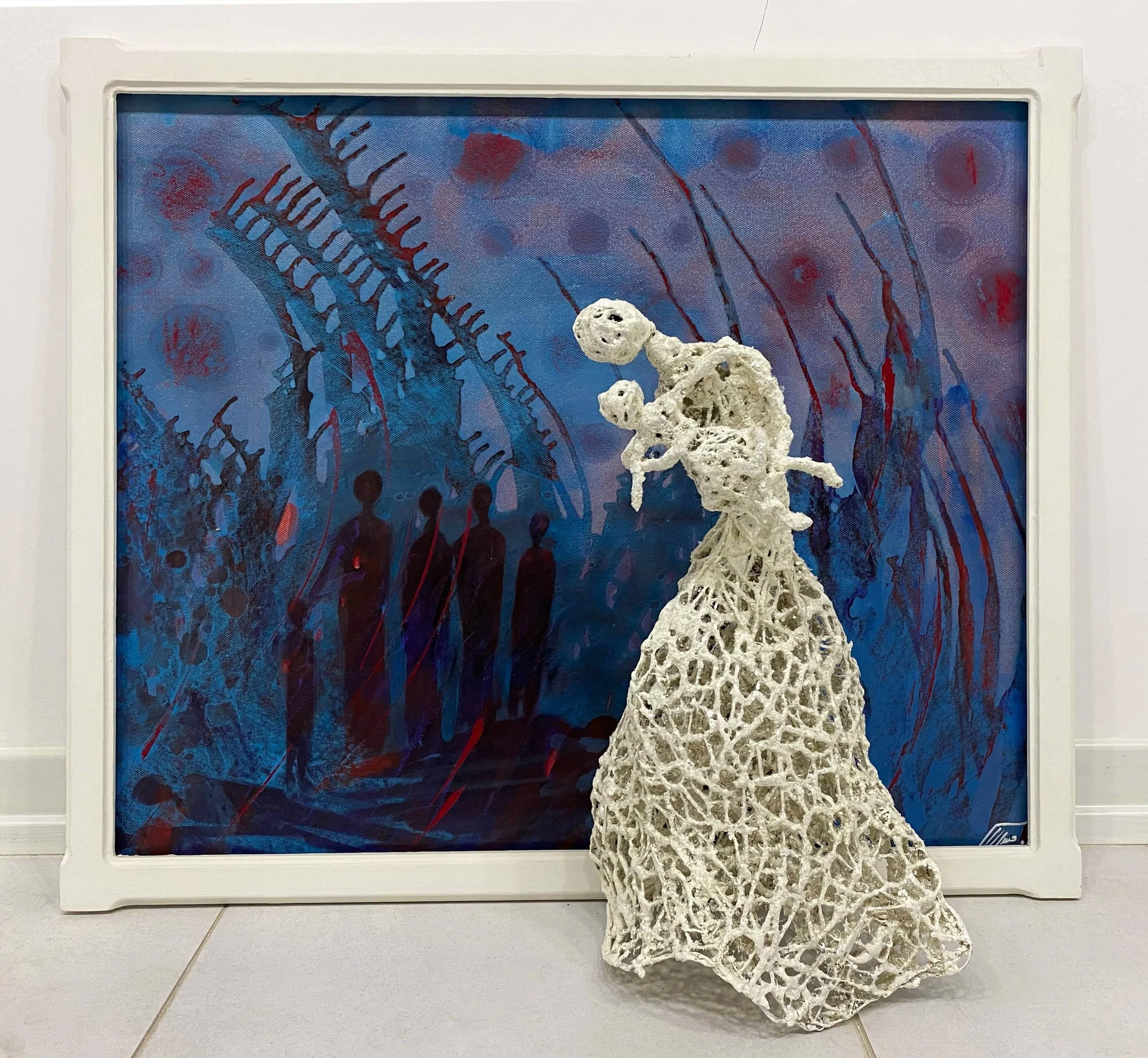
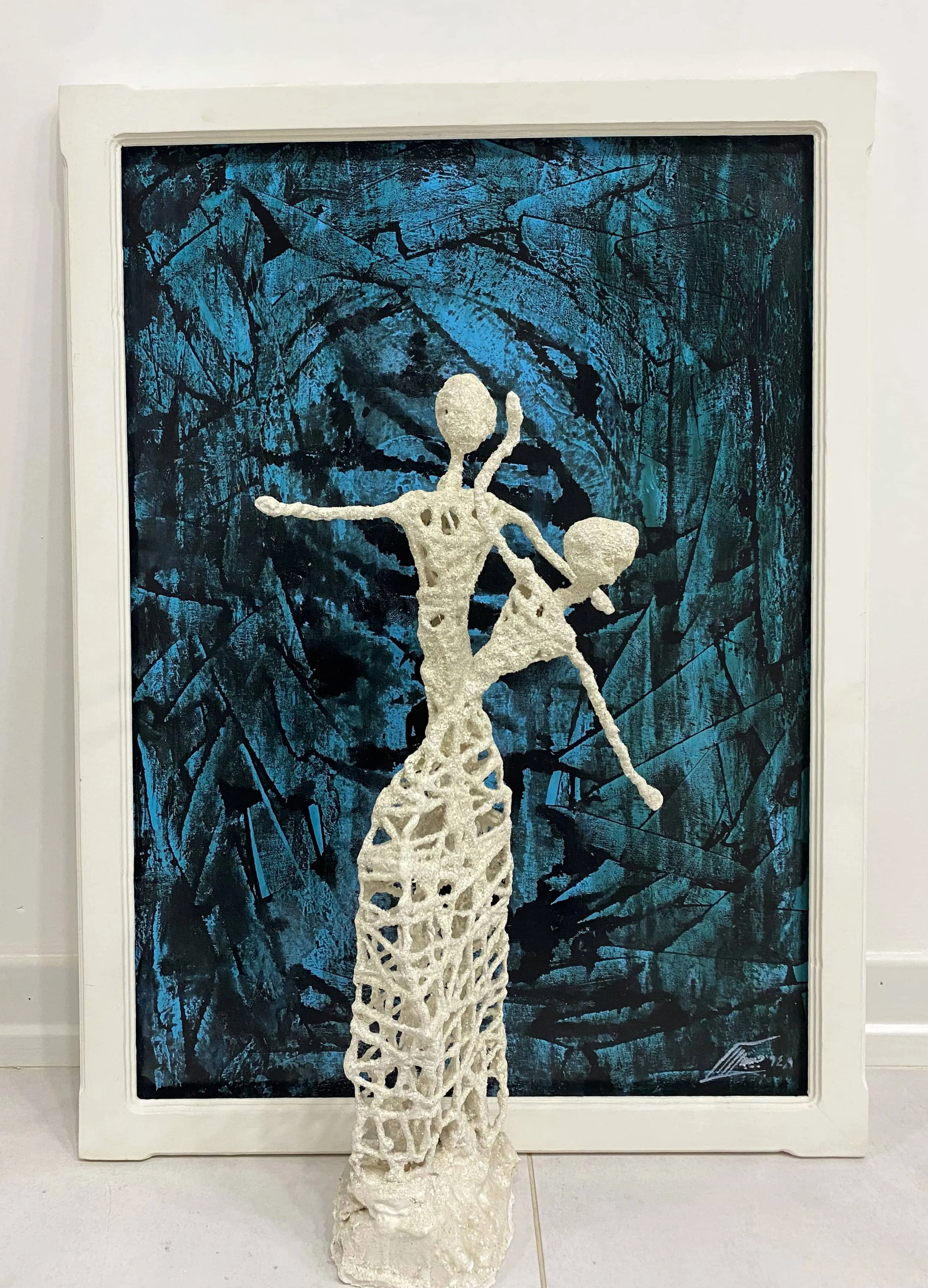
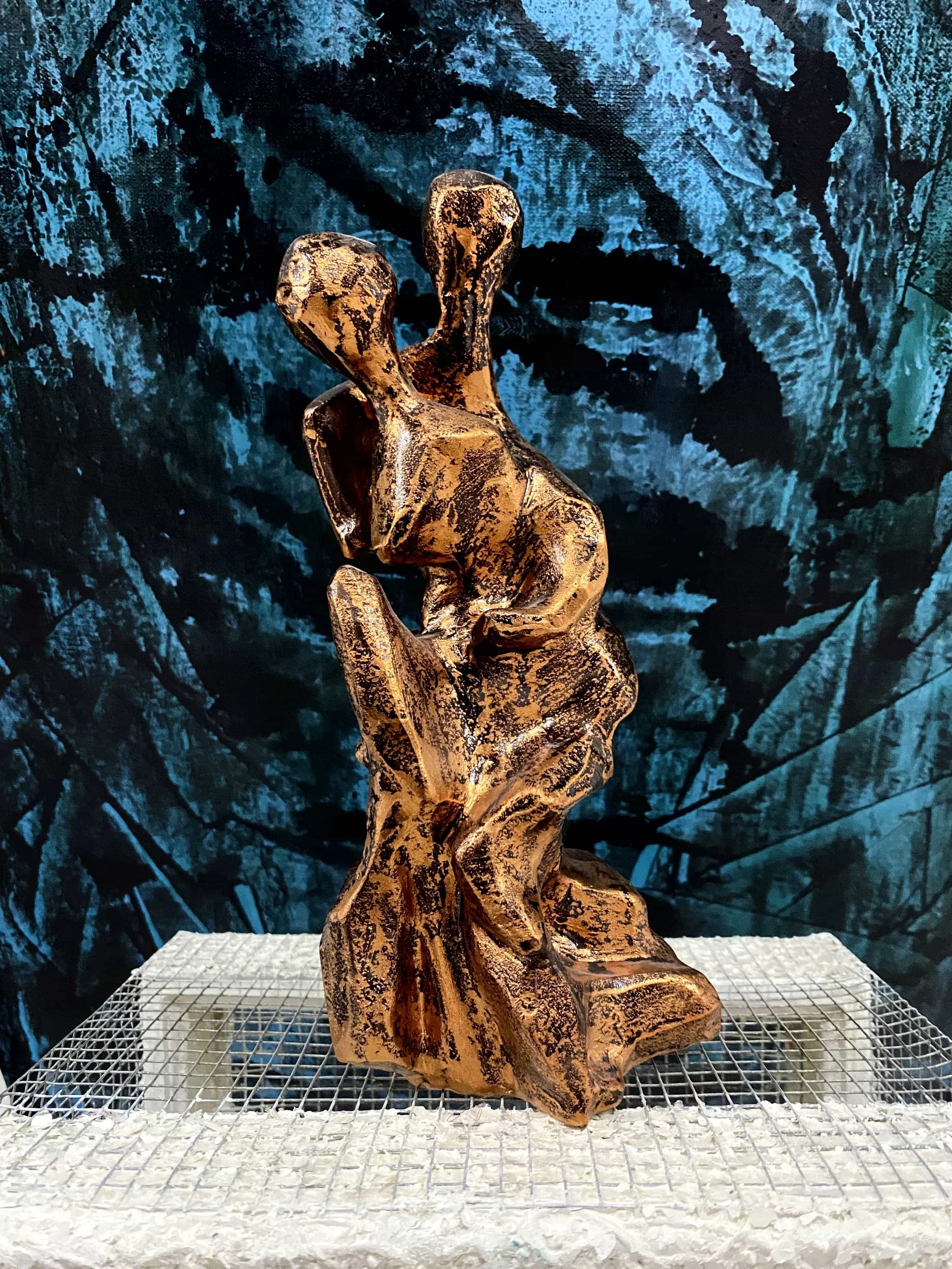
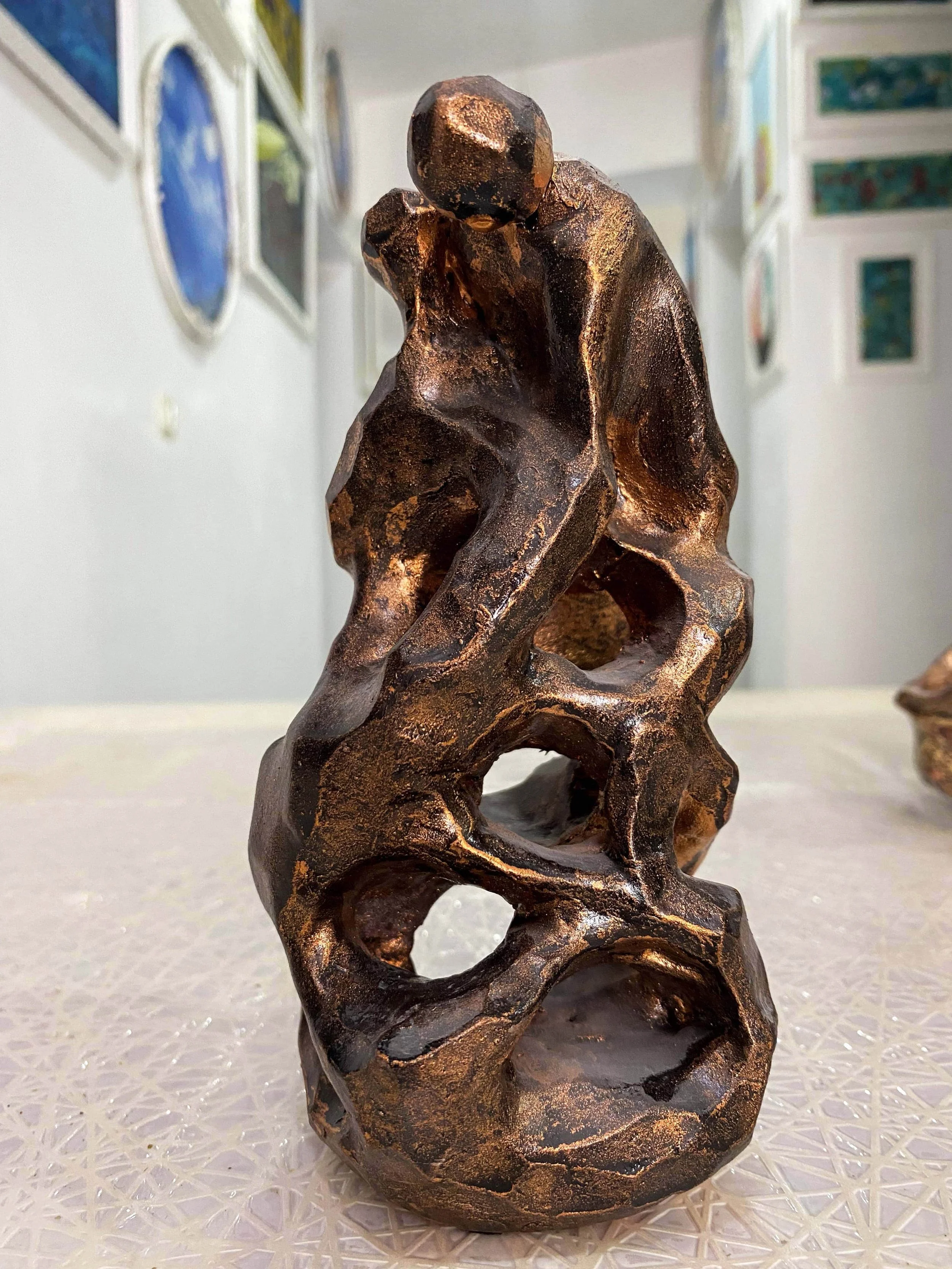
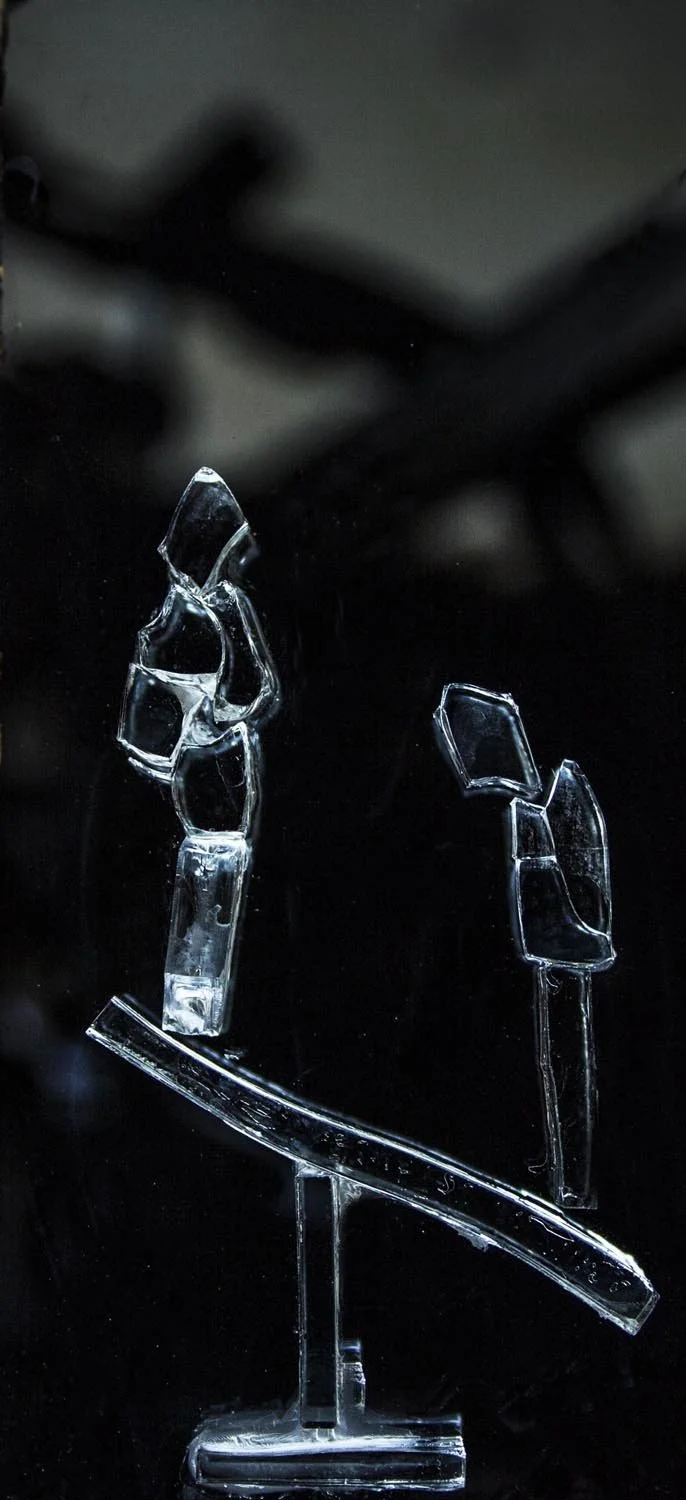
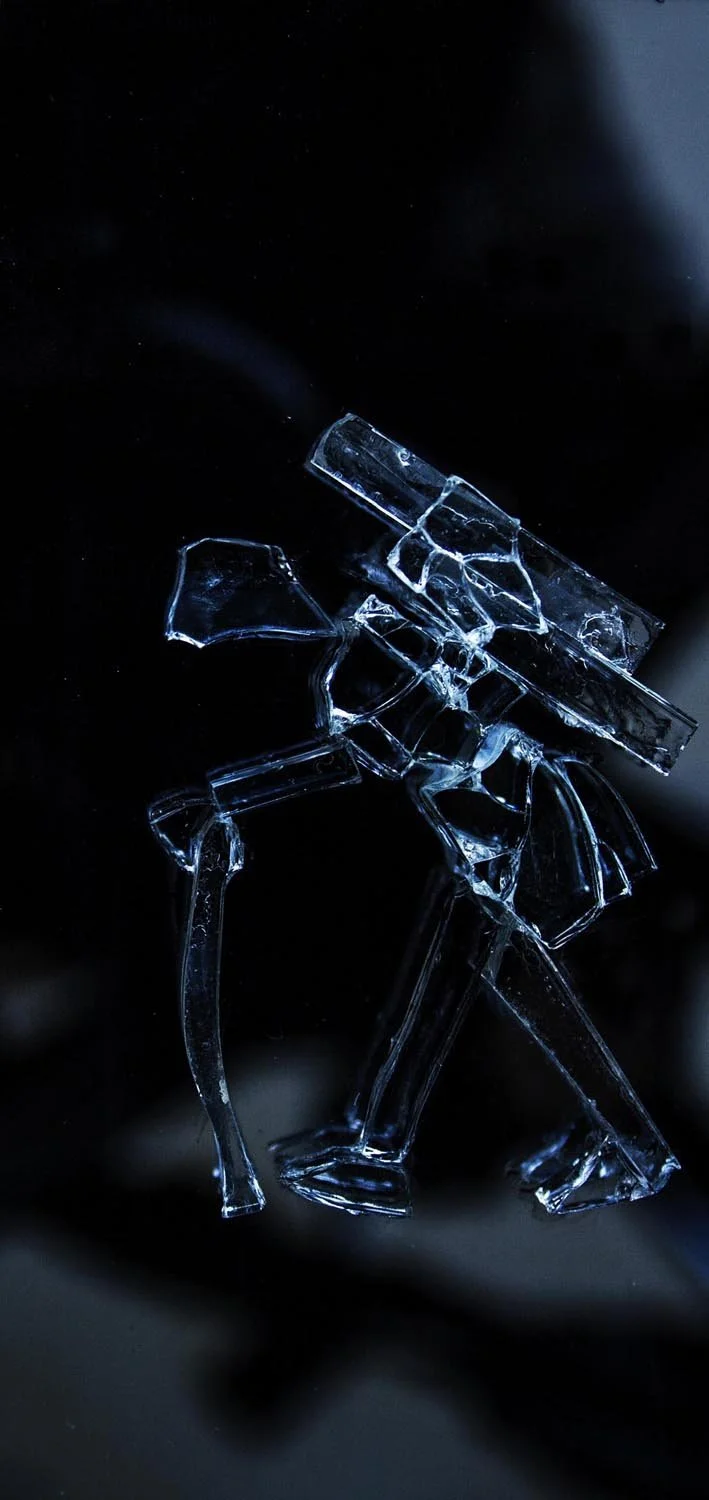
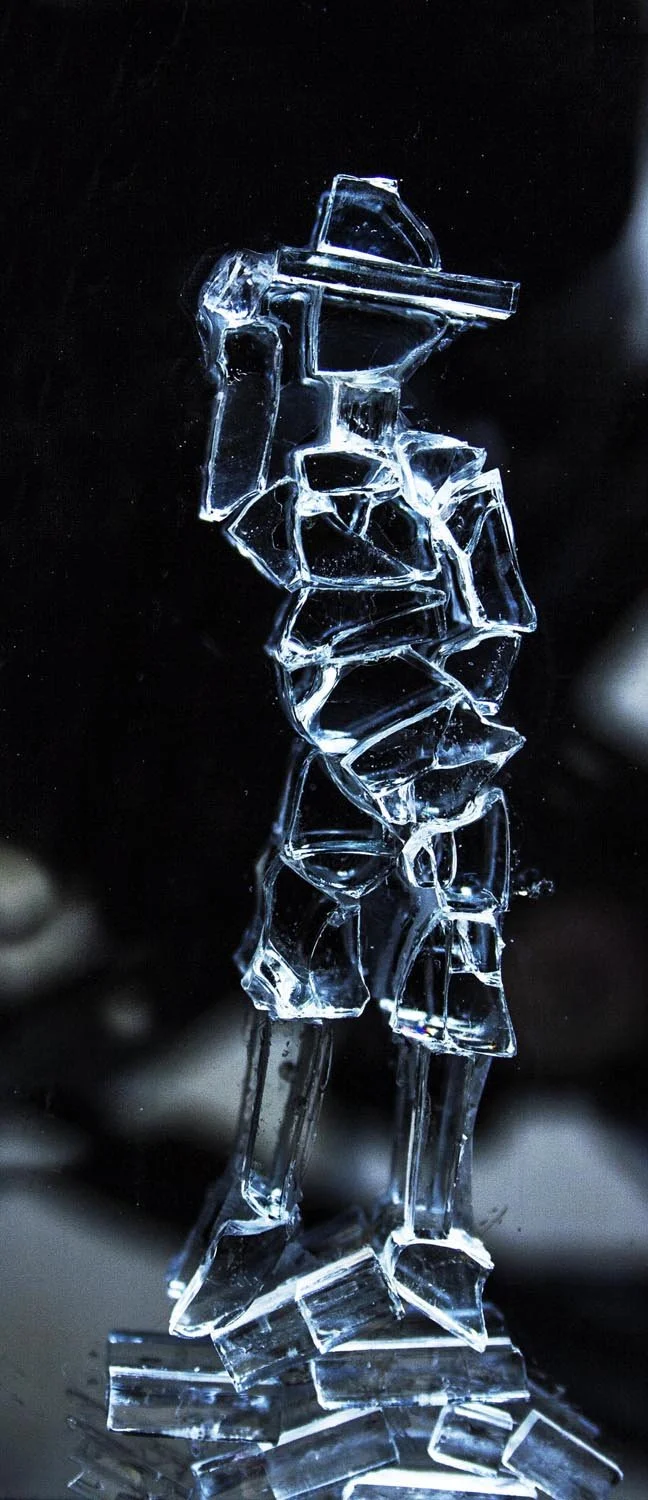
is a self-taught artist whose practice spans more than fifty years and comprises an estimated 7,000 to 8,000 artworks—primarily oil paintings, alongside sculptures and creations in metal, clay, glass, wood, lime, and fabric. Ranging from portraits and landscapes to free-form chromatic abstractions and emergent figures, her visual language defies any single style. Yet these radically diverse works are bound by a deeper structural coherence.
Their unity is procedural. Brumand formulated this process as Consonism—an original methodology that transforms the canvas into a shared, evolving field, where distinct emotional and psychological states express themselves through form and color, encountering, enabling, and constraining one another upon the surface.
Operating in a field continually altered by preceding actions, participating psychological states gradually align their oppositions and leverage one another’s capacities, forging durable Bonds. These bonds integrate insulated or fragmented internal states, offering a mechanism through which a psyche continually pulled apart by life can compose itself anew.
is a self-taught artist whose practice spans more than fifty years and comprises an estimated 7,000 to 8,000 artworks—primarily oil paintings, alongside sculptures and creations in metal, clay, glass, wood, lime, and fabric. Ranging from portraits and landscapes to free-form chromatic abstractions and emergent figures, her visual language defies any single style. Yet these radically diverse works are bound by a deeper structural coherence.
Their unity is procedural. Brumand formulated this process as Consonism—an original methodology that transforms the canvas into a shared, evolving field, where distinct emotional and psychological states express themselves through form and color, encountering, enabling, and constraining one another upon the surface.
Operating in a field continually altered by preceding actions, participating psychological states gradually align their oppositions and leverage one another’s capacities, forging durable Bonds. These bonds integrate insulated or fragmented internal states, offering a mechanism through which a psyche continually pulled apart by life can compose itself anew.
Painful, Yet Alive
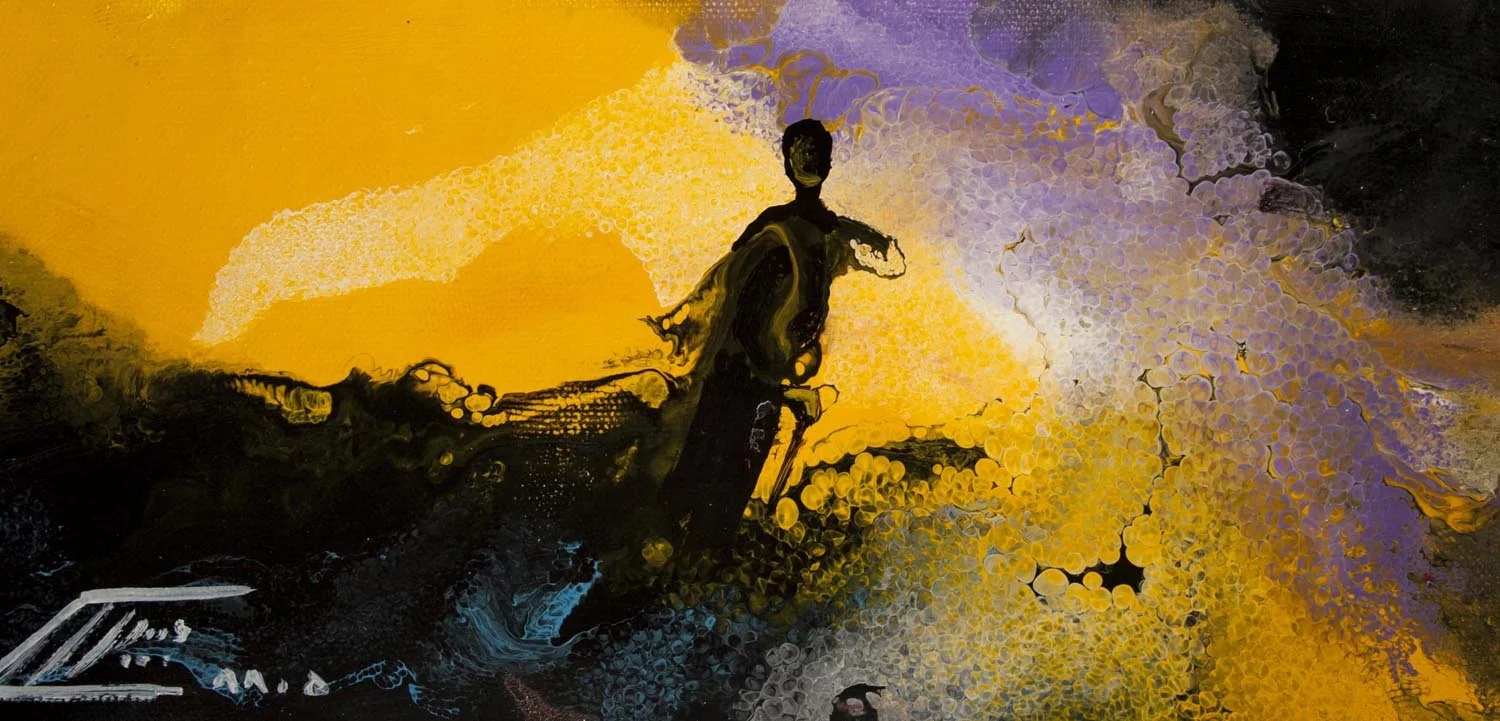
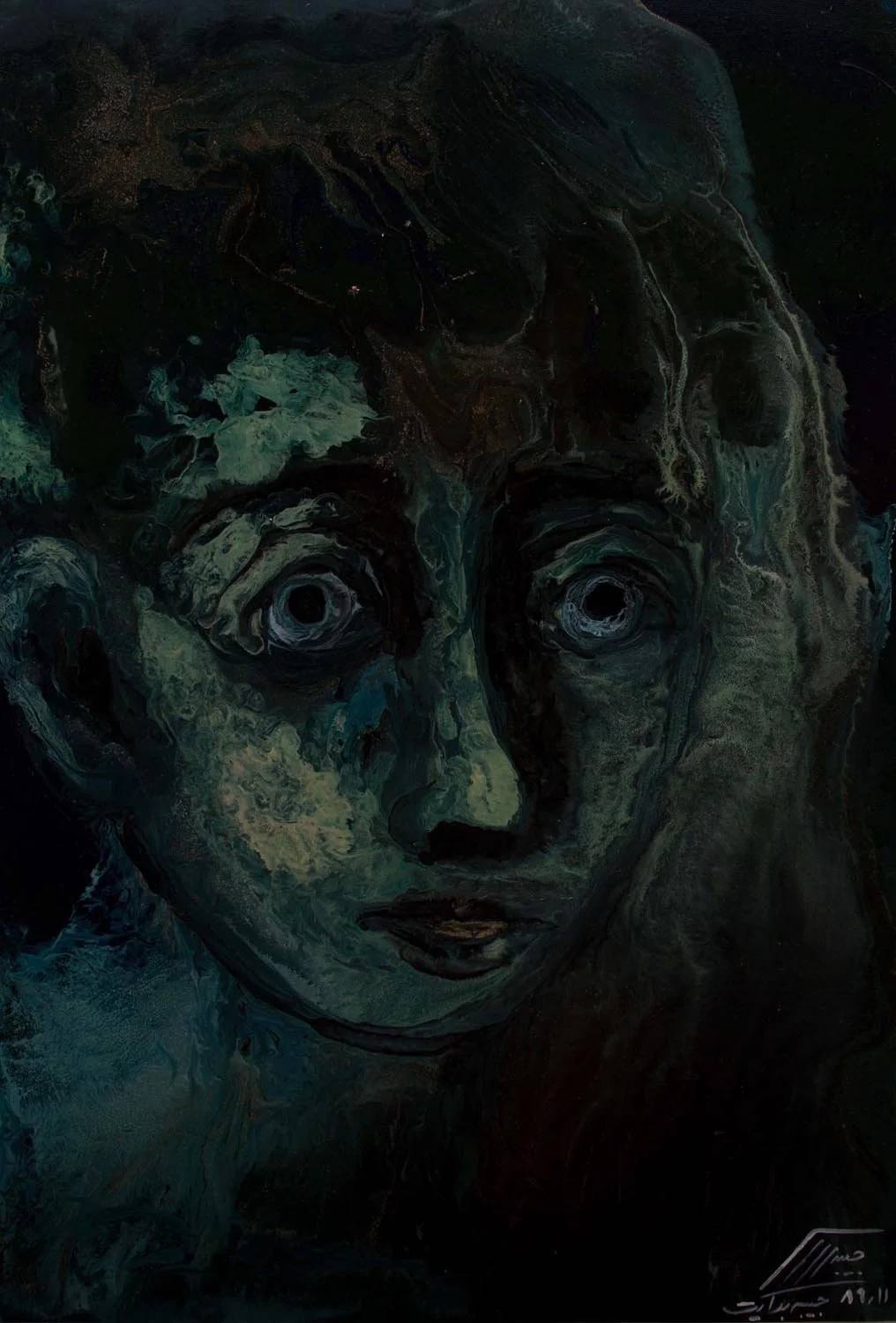
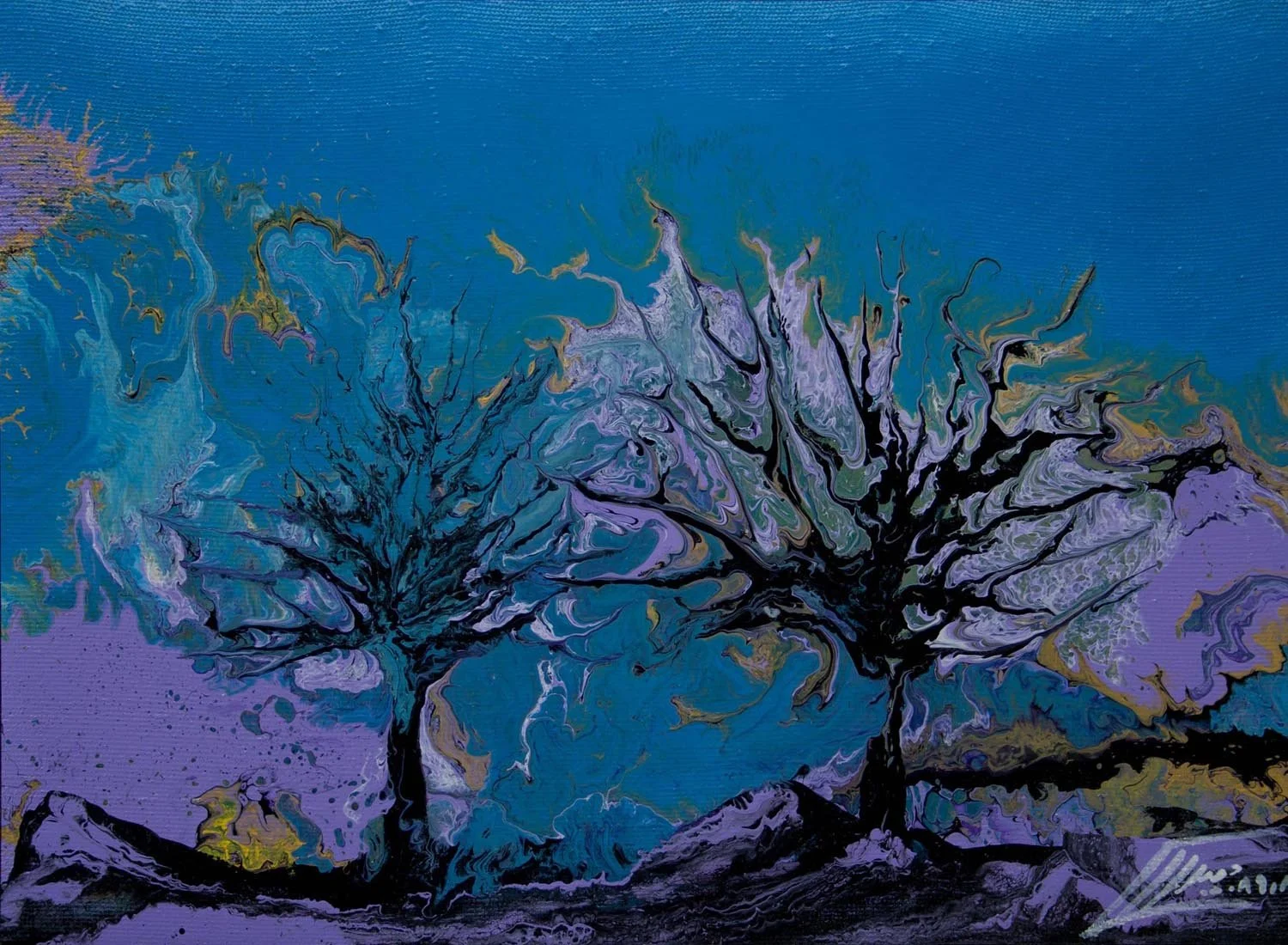
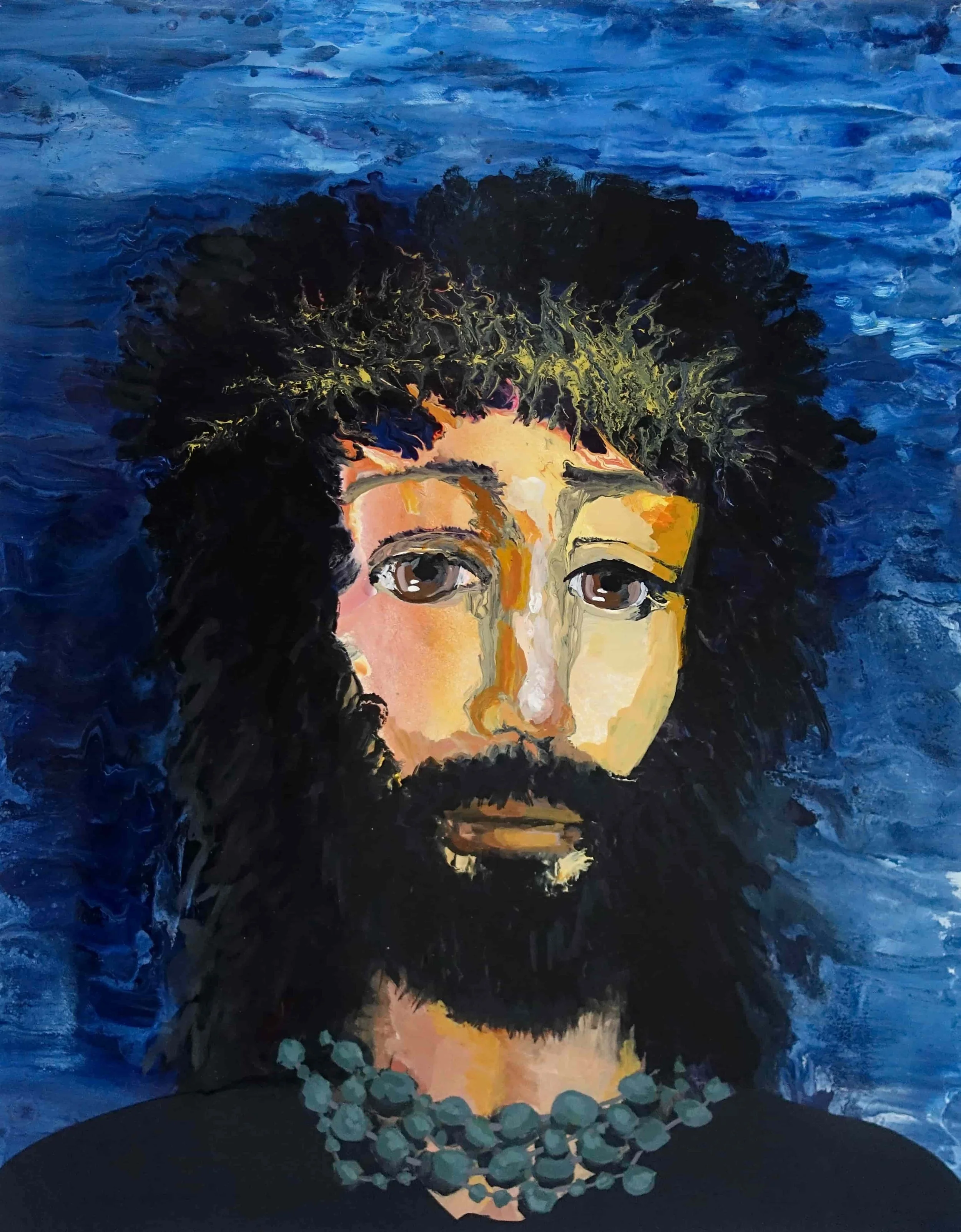
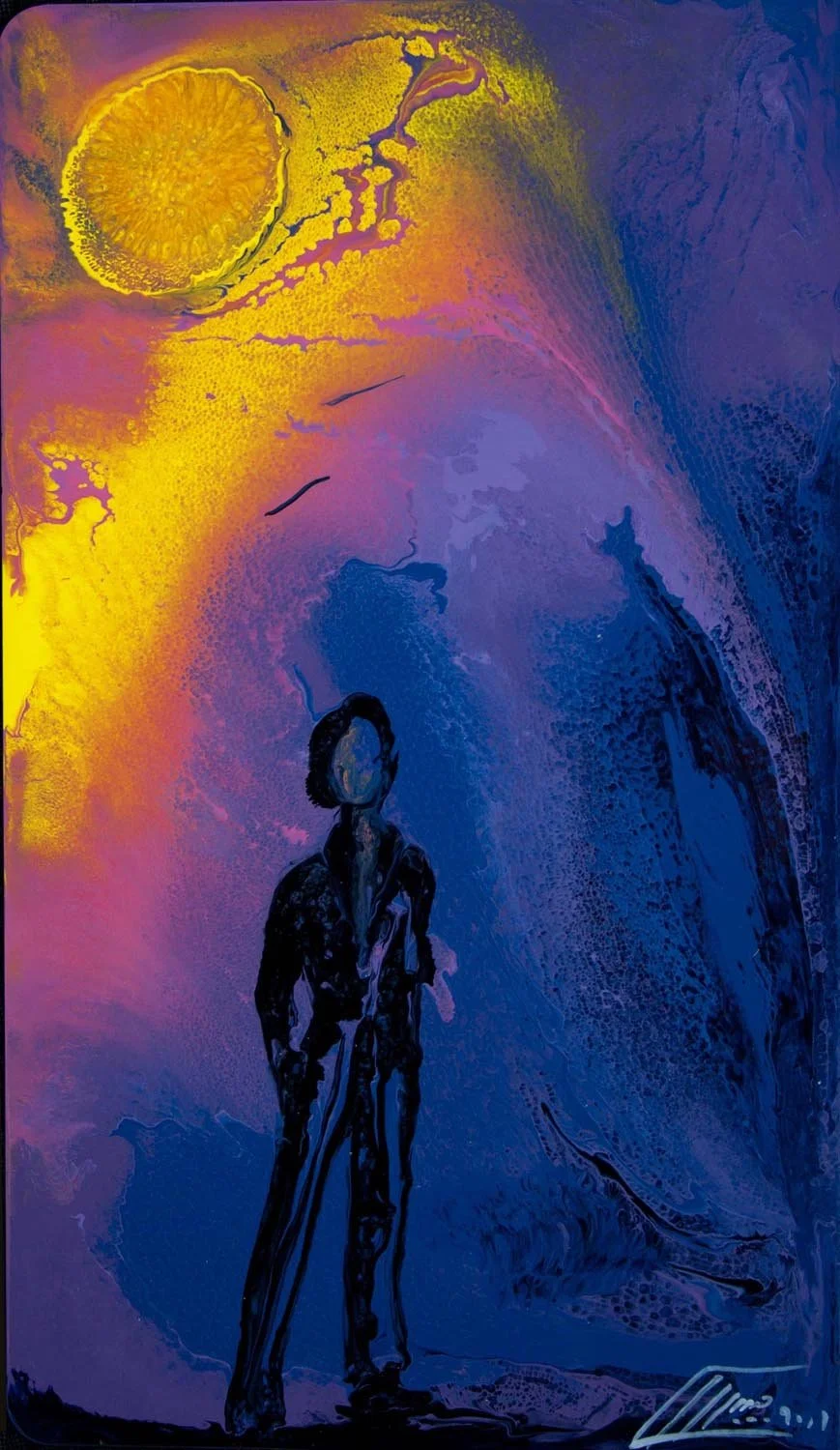
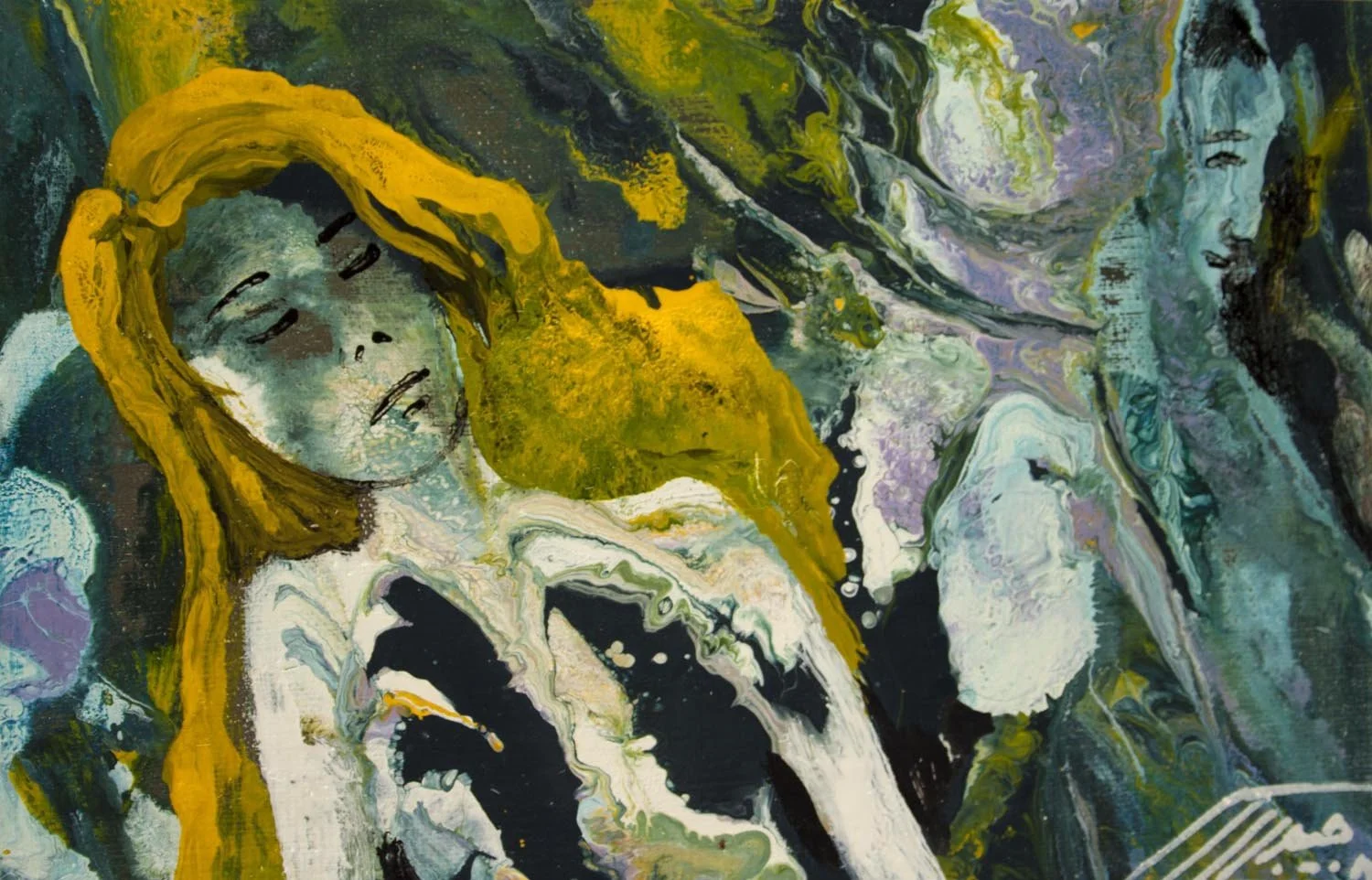
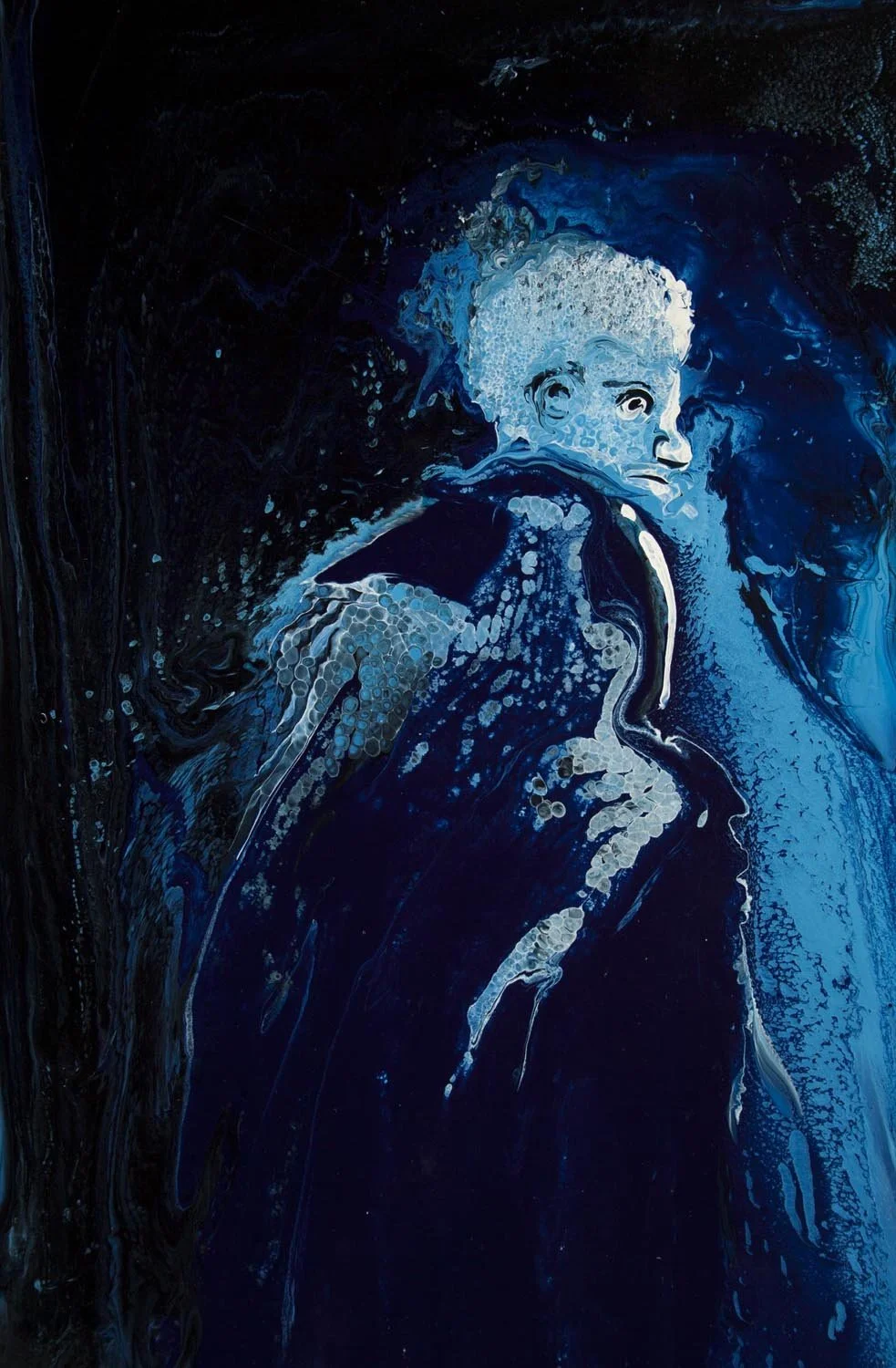
Grief introduces a palette of violet and blue to the surface, where fluid paint shifts as she tilts the canvas. Each movement alters the field without fixing its final form. Deliberate yet indeterminate, the process unfolds through a continuous exchange between intention and discovery.
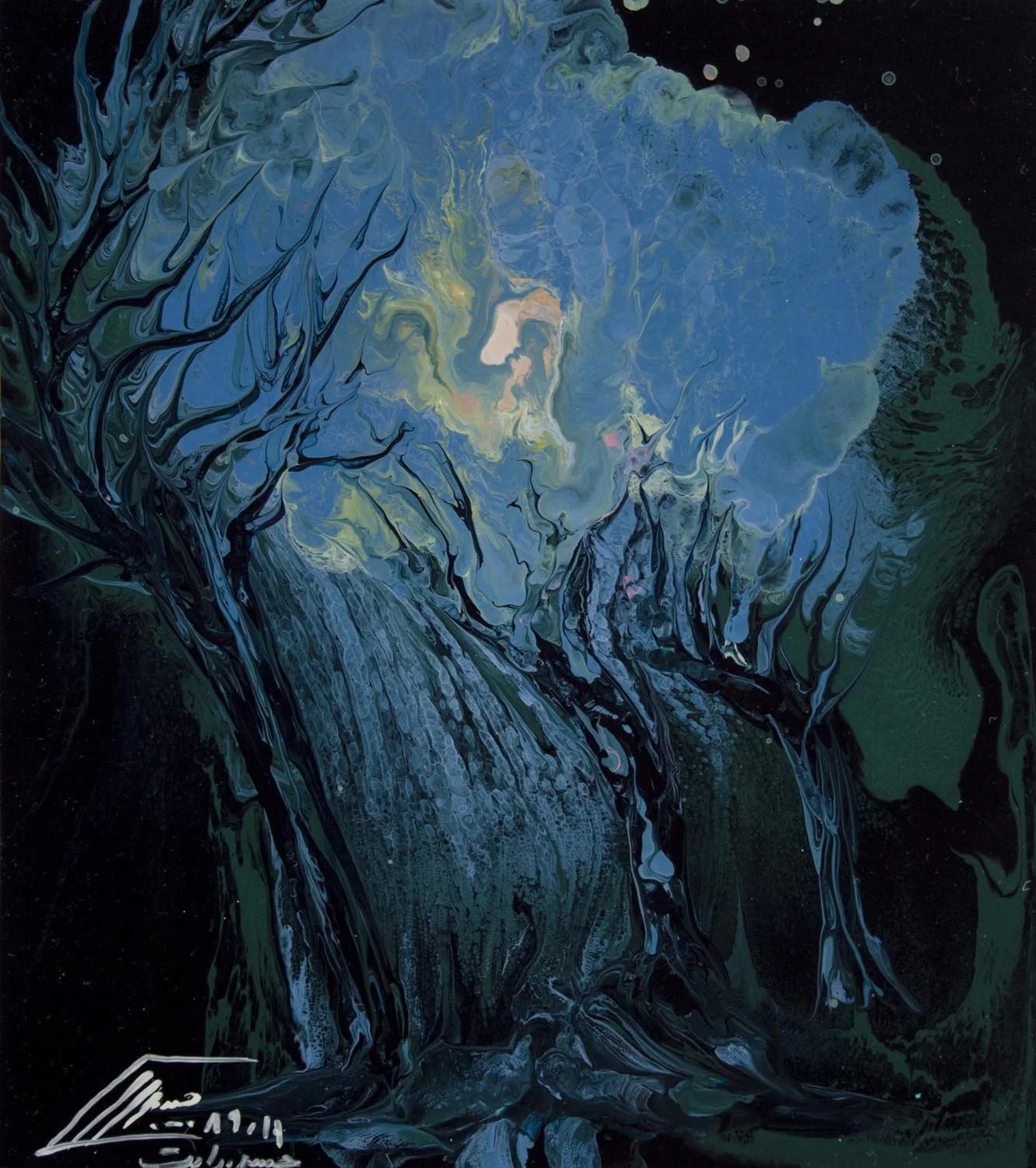
Warm accents of yellow enter the composition, carrying sparks of hope. She redirects the flow, using a painting knife to manifest the emerging image. A human figure gradually appears—first the body, then the head—where blue and yellow move into close relation and the face comes into focus. Here, each color performs a distinct function: blue preserves the weight of grief, while yellow sustains life and the possibility of hope.
Warm accents of yellow enter the composition, carrying sparks of hope. She redirects the flow, using a painting knife to manifest the emerging image. A human figure gradually appears—first the body, then the head—where blue and yellow move into close relation and the face comes into focus. Here, each color performs a distinct function: blue preserves the weight of grief, while yellow sustains life and the possibility of hope.
As the painting develops, the two colors become functionally interdependent, each altering how the other operates. Yellow prevents grief from dominating the canvas and claiming sole interpretation, while blue anchors hope to the reality of pain—preventing it from becoming a reassurance that abandons the wound. By leveraging one another’s affordances and minimizing their mismatch, hope and grief enter a consonant relation that accomplishes what neither emotion could achieve in isolation, resolving in a gaze that is deeply sorrowful, yet alive.
Painful, Yet Alive
Grief introduces a palette of violet and blue to the surface, where fluid paint shifts as Brumand tilts the canvas. Each movement alters the field without fixing its final form. Deliberate yet indeterminate, the process unfolds through a continuous exchange between intention and discovery.
As the painting develops, the two colors become functionally interdependent, each altering how the other operates. Yellow prevents grief from dominating the canvas and claiming sole interpretation, while blue anchors hope to the reality of pain—preventing it from becoming a reassurance that abandons the wound. By leveraging one another’s affordances and minimizing their mismatch, hope and grief enter a consonant relation that accomplishes what neither emotion could achieve in isolation, resolving in a gaze that is deeply sorrowful, yet alive.
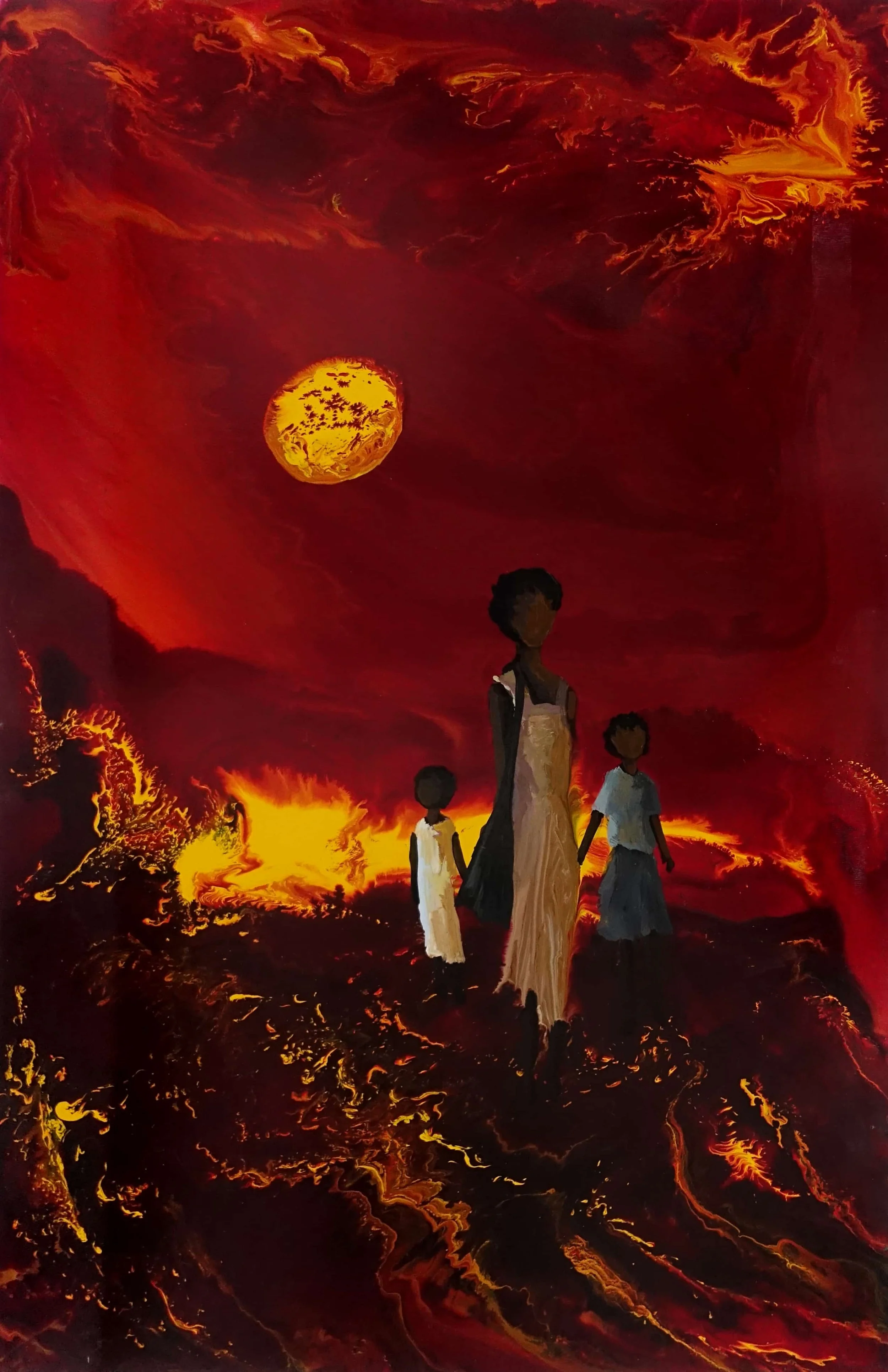
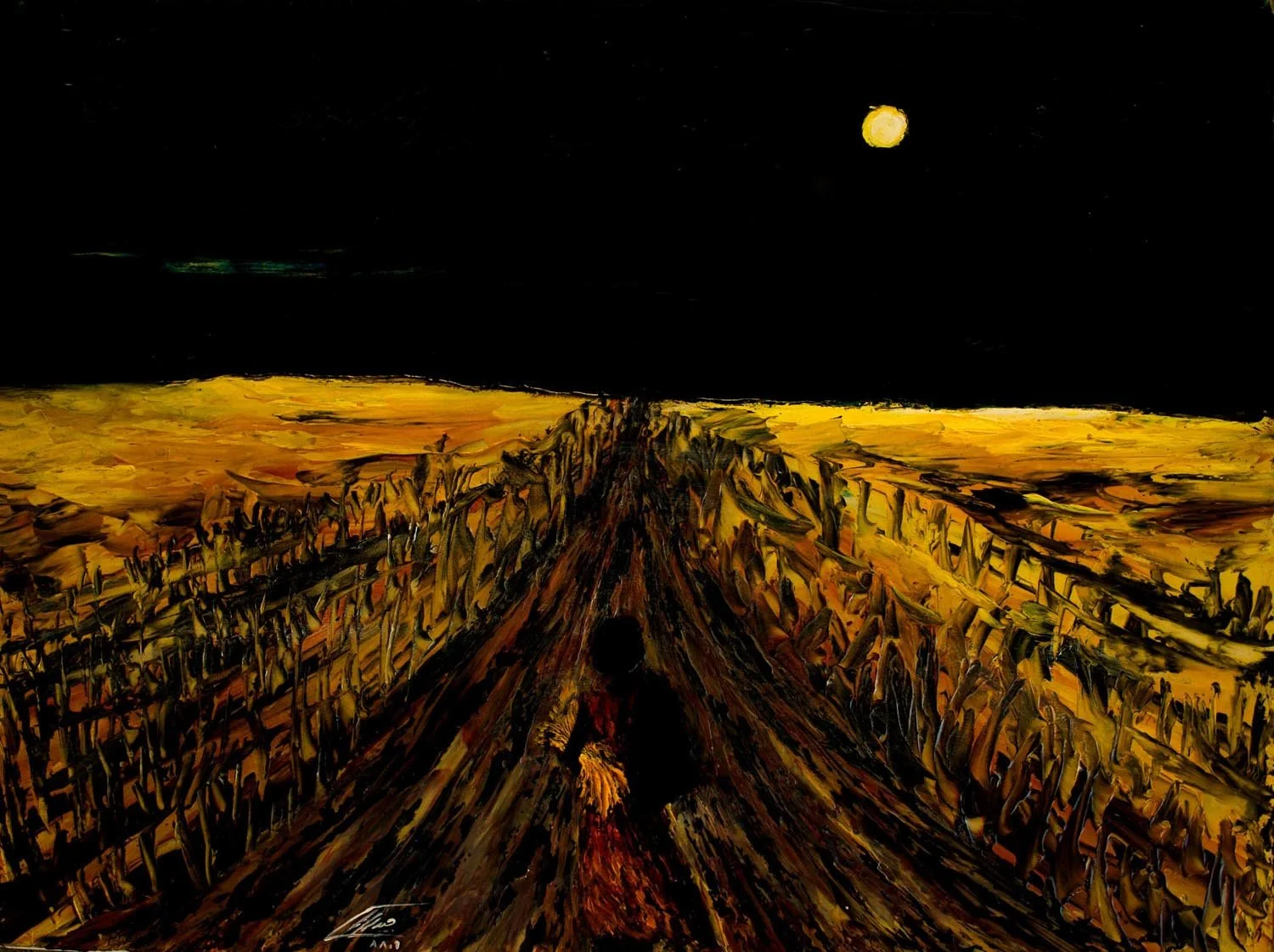
A psychological reference is a learned cognitive-affective organization governing how experience is interpreted and which responses emerge as coherent. Hearing footsteps late at night, a person who interprets them as evidence of an intruder undergoes immediate reorganization: attention sharpens toward further sounds, memories of danger become accessible, unrelated thoughts recede, and actions like locking the door or calling for help become newly necessary. A reference does not prescribe a single action; rather, it orders feeling, memory, perception, judgment, and response around a governing criterion.
Psychological life is organized through numerous such references, accumulated across inherited structures, formative experiences, trauma, relationships, education, and newly acquired knowledge. Some become maladaptive references, organizing rigid, erroneous, or harmful patterns that produce impairment or suffering; others operate as corrective references, carrying adaptive capacities. Still others remain partial or newly formed, generating conflicting continuations or patterns that established references cannot yet accommodate. These references coexist as potential governing structures, each capable of assuming command when conditions call it forward.
Every reference is historical—formed under particular circumstances and limited by the knowledge, capacities, and possibilities available at its inception. Events such as loss, contradiction, unfamiliar intimacy, new responsibility, and disruptive change continually expose the limits of existing references. When references remain insulated, knowledge organized under one becomes inaccessible to a process governed by another: a person may consciously reject a harmful conclusion, yet repeatedly enact it whenever the corresponding wound is activated. The integration of psychological references is therefore a recurrent necessity imposed by an ever-changing reality.
Consonist art provides a persistent field in which psychological references that rarely operate simultaneously can acquire a shared history. While a reference is active, artistic possibilities are evaluated against what it organizes: a color, form, gesture, or image may register as true, false, necessary, incomplete, or intolerable. The felt, embodied, or reflective recognition of this relation constitutes artistic judgment. Such judgment alters the work by guiding selection— the artist retains, revises, rejects, emphasizes, repeats, or develops configurations according to how they are evaluated and felt. This process also operates through somatic action, manifesting in movements of the hand and body that respond directly to the judgment as an intuitive, affective impulse.
Through these judgments and actions, an active reference enters the artwork in material form. Fidelity is achieved when enough of its organizing demands, sensitivities, valid functions, and constraints are preserved to ensure its output remains consequential in the developing work. Once externalized, these material consequences persist long after the psychological condition that produced them recedes. A subsequent reference can then encounter a field already altered by what came before, leaving its own imprint in return. Each artistic act thus unfolds within the accumulated effects of preceding actions, transforming the canvas from a mere surface of expression into a recursive field of psychological development.
Composition begins when a consequence produced under one reference alters what another notices, judges, preserves, resists, or creates. The response of the second then reshapes the conditions confronting the first, establishing a reciprocal exchange in which neither can continue as it would in isolation. As reciprocity deepens, each reference must perform its function within conditions generated by the others, discovering capacities it can leverage and limits it cannot ignore. Relations that more effectively utilize mutual capacities while respecting shared constraints acquire greater stability. This stable relation constitutes a Consonant Bond. Bond names their functional interdependence; consonant names their minimized functional dissonance. Such bonds are durable because participating references extend what each can accomplish while requiring less recurrent regulatory work—such as suppression or correction—due to their minimized mismatch.
The significance of this durability lies in what the bond carries beyond the artwork that formed it: by holding previously divided references in an integrated relation, it alters how they shape subsequent perception, judgment, and action. Consonism does not seek a final state of integration; rather, it cultivates the psyche’s capacity for continual transformation and reintegration. Repeated artistic practice renews this potential by bringing distinct references into reciprocal relations through which they can reorganize one another. Psychological health, in this framework, lies in the ability to integrate what life divides, transform what has become restrictive, and compose the psyche anew.
Consonism and Psychological Reorganization
Consonism and Psychological Reorganization
A psychological reference is a learned cognitive-affective organization governing how experience is interpreted and which responses emerge as coherent. Hearing footsteps late at night, a person who interprets them as evidence of an intruder undergoes immediate reorganization: attention sharpens toward further sounds, memories of danger become accessible, unrelated thoughts recede, and actions like locking the door or calling for help become newly necessary. A reference does not prescribe a single action; rather, it orders feeling, memory, perception, judgment, and response around a governing criterion.
Psychological life is organized through numerous such references, accumulated across inherited structures, formative experiences, trauma, relationships, education, and newly acquired knowledge. Some become maladaptive references, organizing rigid, erroneous, or harmful patterns that produce impairment or suffering; others operate as corrective references, carrying adaptive capacities. Still others remain partial or newly formed, generating conflicting continuations or patterns that established references cannot yet accommodate. These references coexist as potential governing structures, each capable of assuming command when conditions call it forward.
Every reference is historical—formed under particular circumstances and limited by the knowledge, capacities, and possibilities available at its inception. Events such as loss, contradiction, unfamiliar intimacy, new responsibility, and disruptive change continually expose the limits of existing references. When references remain insulated, knowledge organized under one becomes inaccessible to a process governed by another: a person may consciously reject a harmful conclusion, yet repeatedly enact it whenever the corresponding wound is activated. The integration of psychological references is therefore a recurrent necessity imposed by an ever-changing reality.
Consonist art provides a persistent field in which psychological references that rarely operate simultaneously can acquire a shared history. While a reference is active, artistic possibilities are evaluated against what it organizes: a color, form, gesture, or image may register as true, false, necessary, incomplete, or intolerable. The felt, embodied, or reflective recognition of this relation constitutes artistic judgment. Such judgment alters the work by guiding selection— the artist retains, revises, rejects, emphasizes, repeats, or develops configurations according to how they are evaluated and felt. This process also operates through somatic action, manifesting in movements of the hand and body that respond directly to the judgment as an intuitive, affective impulse.
Through these judgments and actions, an active reference enters the artwork in material form. Fidelity is achieved when enough of its organizing demands, sensitivities, valid functions, and constraints are preserved to ensure its output remains consequential in the developing work. Once externalized, these material consequences persist long after the psychological condition that produced them recedes. A subsequent reference can then encounter a field already altered by what came before, leaving its own imprint in return. Each artistic act thus unfolds within the accumulated effects of preceding actions, transforming the canvas from a mere surface of expression into a recursive field of psychological development.
Composition begins when a consequence produced under one reference alters what another notices, judges, preserves, resists, or creates. The response of the second then reshapes the conditions confronting the first, establishing a reciprocal exchange in which neither can continue as it would in isolation. As reciprocity deepens, each reference must perform its function within conditions generated by the others, discovering capacities it can leverage and limits it cannot ignore. Relations that more effectively utilize mutual capacities while respecting shared constraints acquire greater stability. This stable relation constitutes a Consonant Bond. Bond names their functional interdependence; consonant names their minimized functional dissonance. Such bonds are durable because participating references extend what each can accomplish while requiring less recurrent regulatory work—such as suppression or correction—due to their minimized mismatch.
The significance of this durability lies in what the bond carries beyond the artwork that formed it: by holding previously divided references in an integrated relation, it alters how they shape subsequent perception, judgment, and action. Consonism does not seek a final state of integration; rather, it cultivates the psyche’s capacity for continual transformation and reintegration. Repeated artistic practice renews this potential by bringing distinct references into reciprocal relations through which they can reorganize one another. Psychological health, in this framework, lies in the ability to integrate what life divides, transform what has become restrictive, and compose the psyche anew.
The Evolution of Her Art
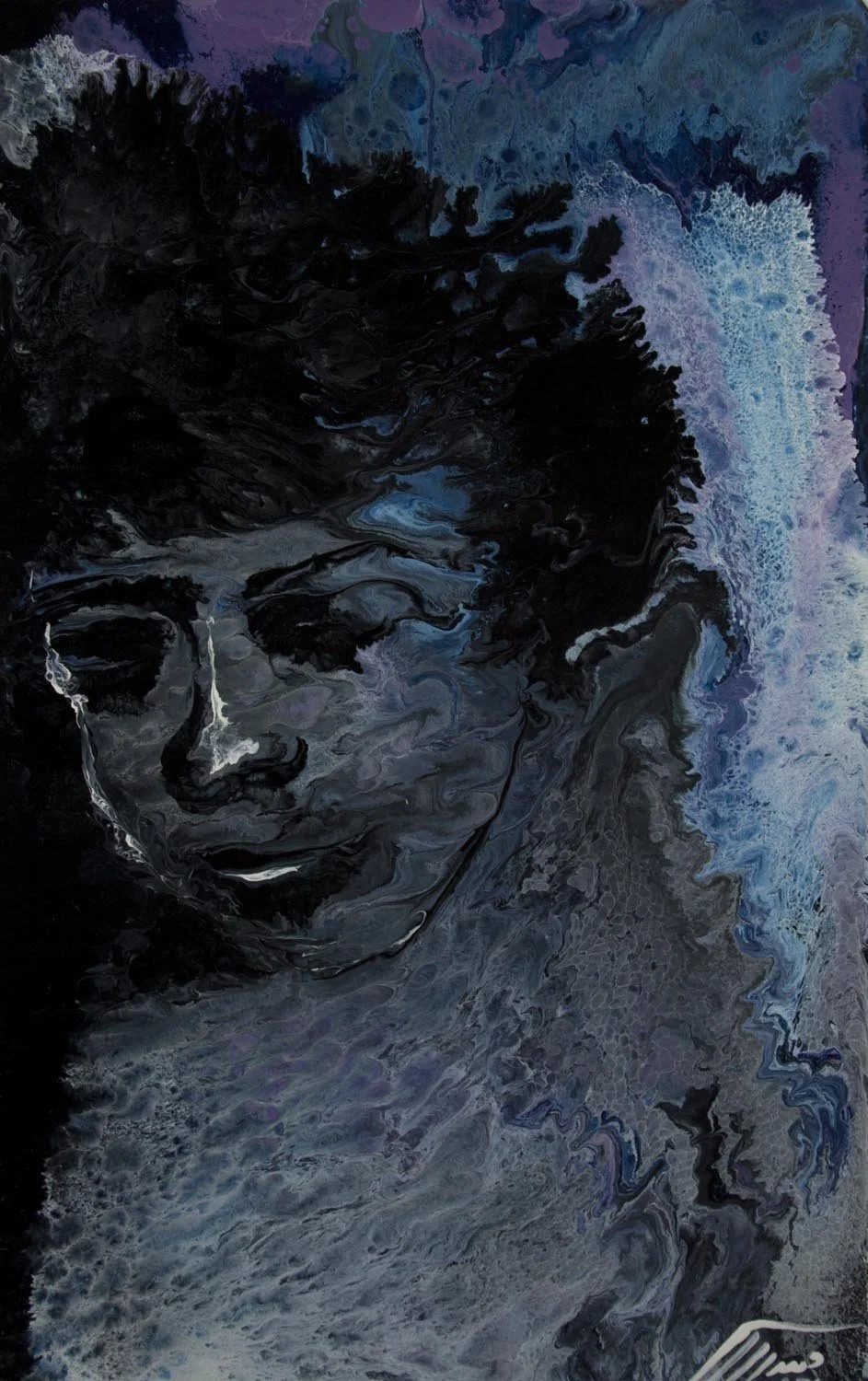
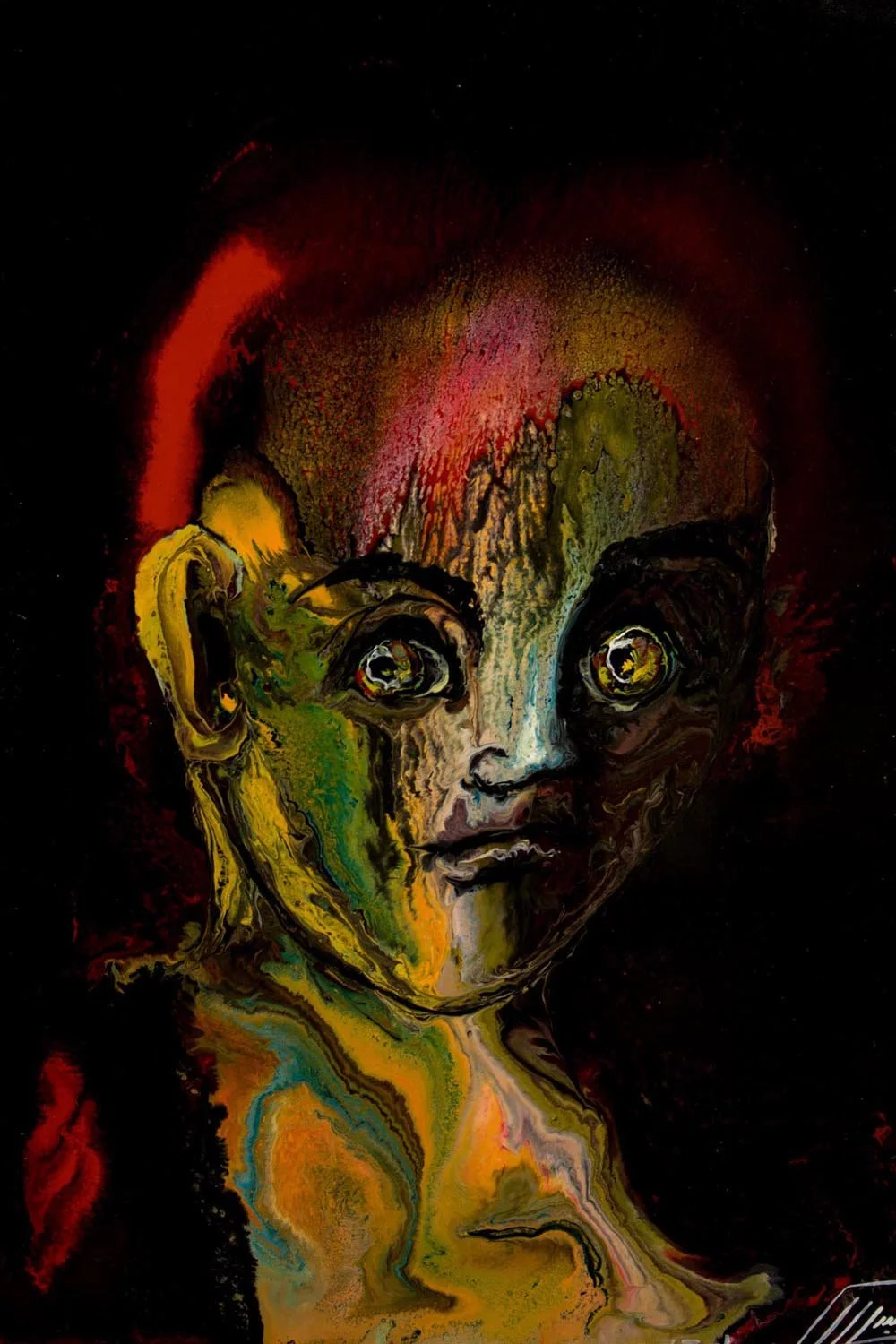
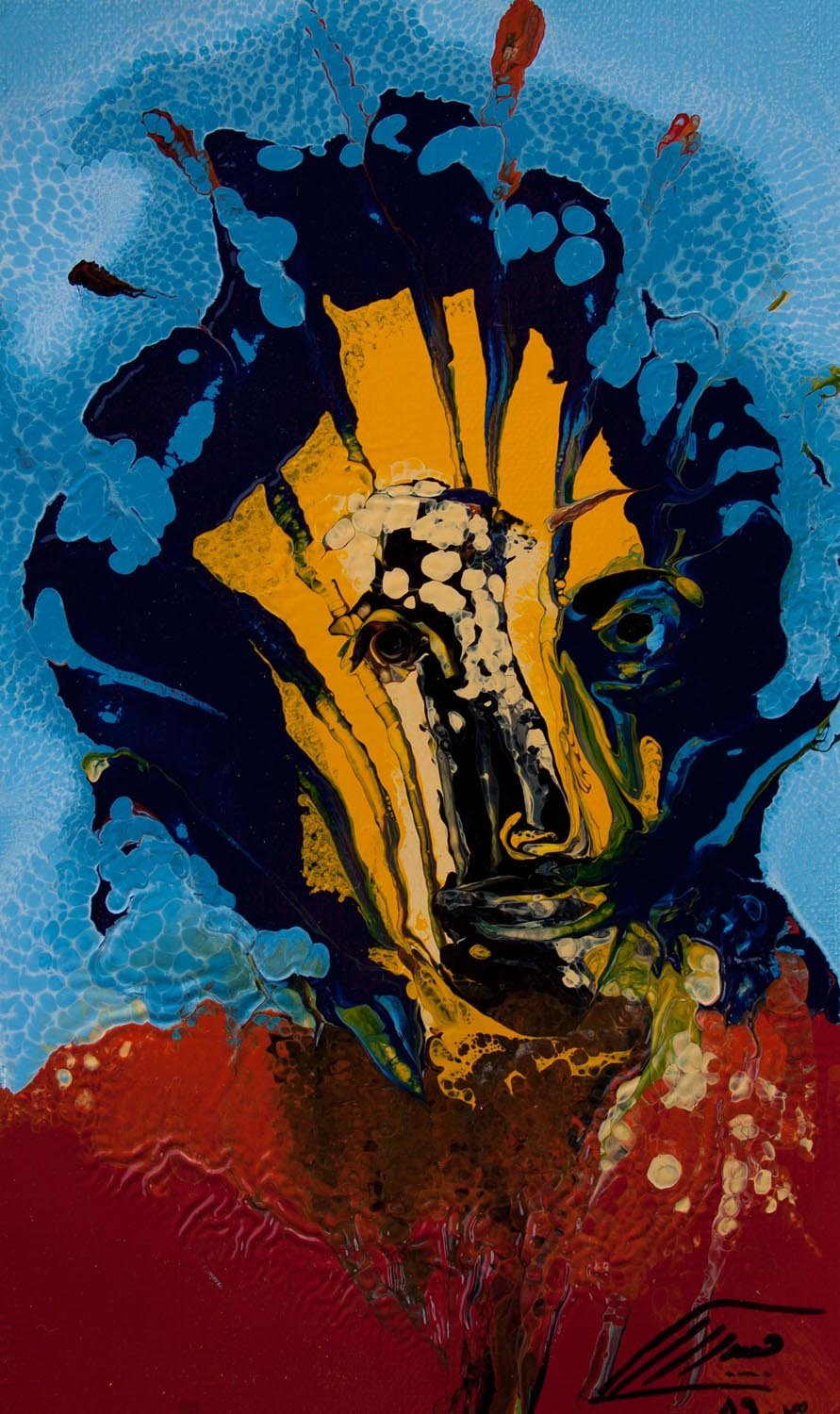
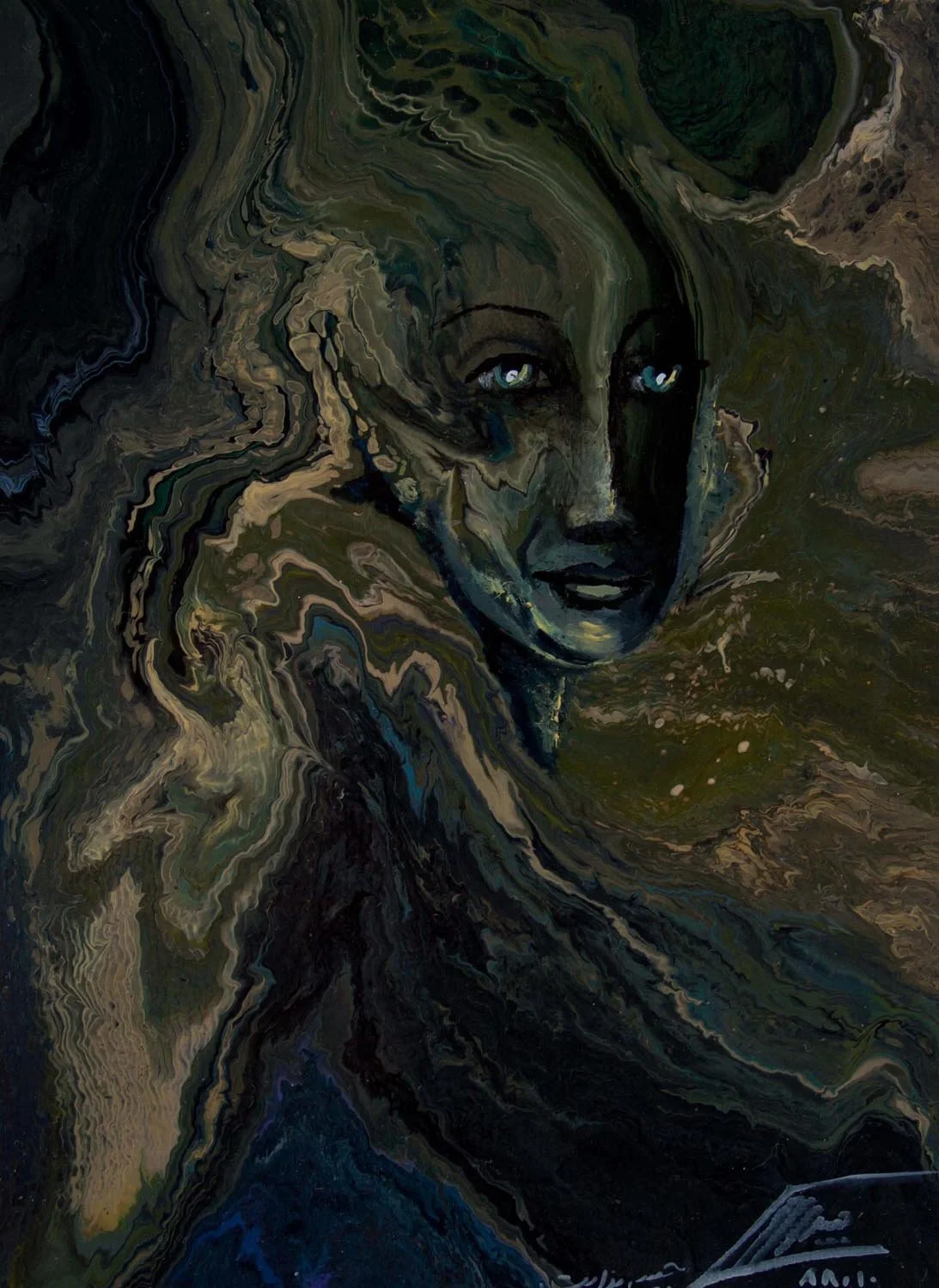
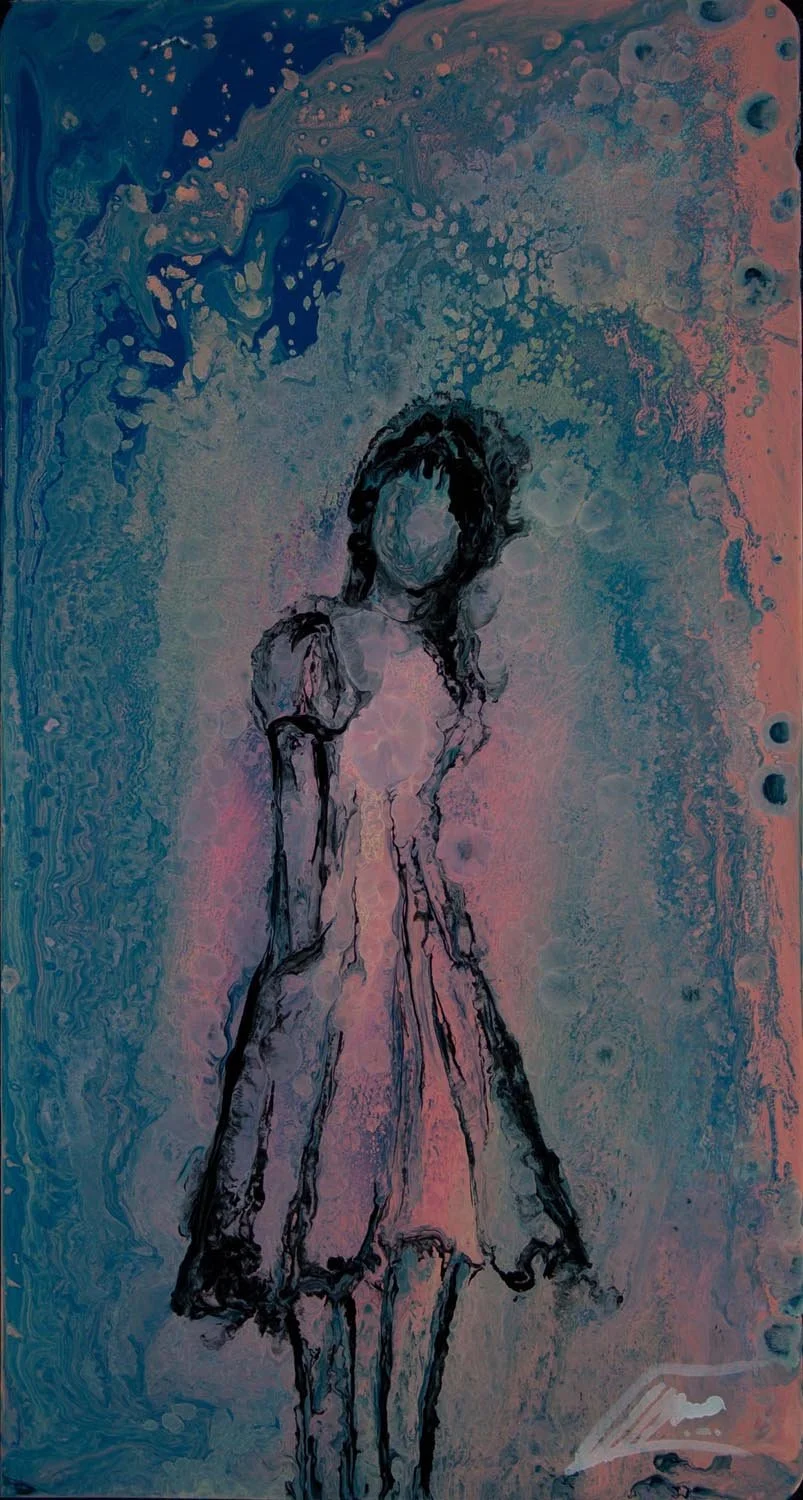
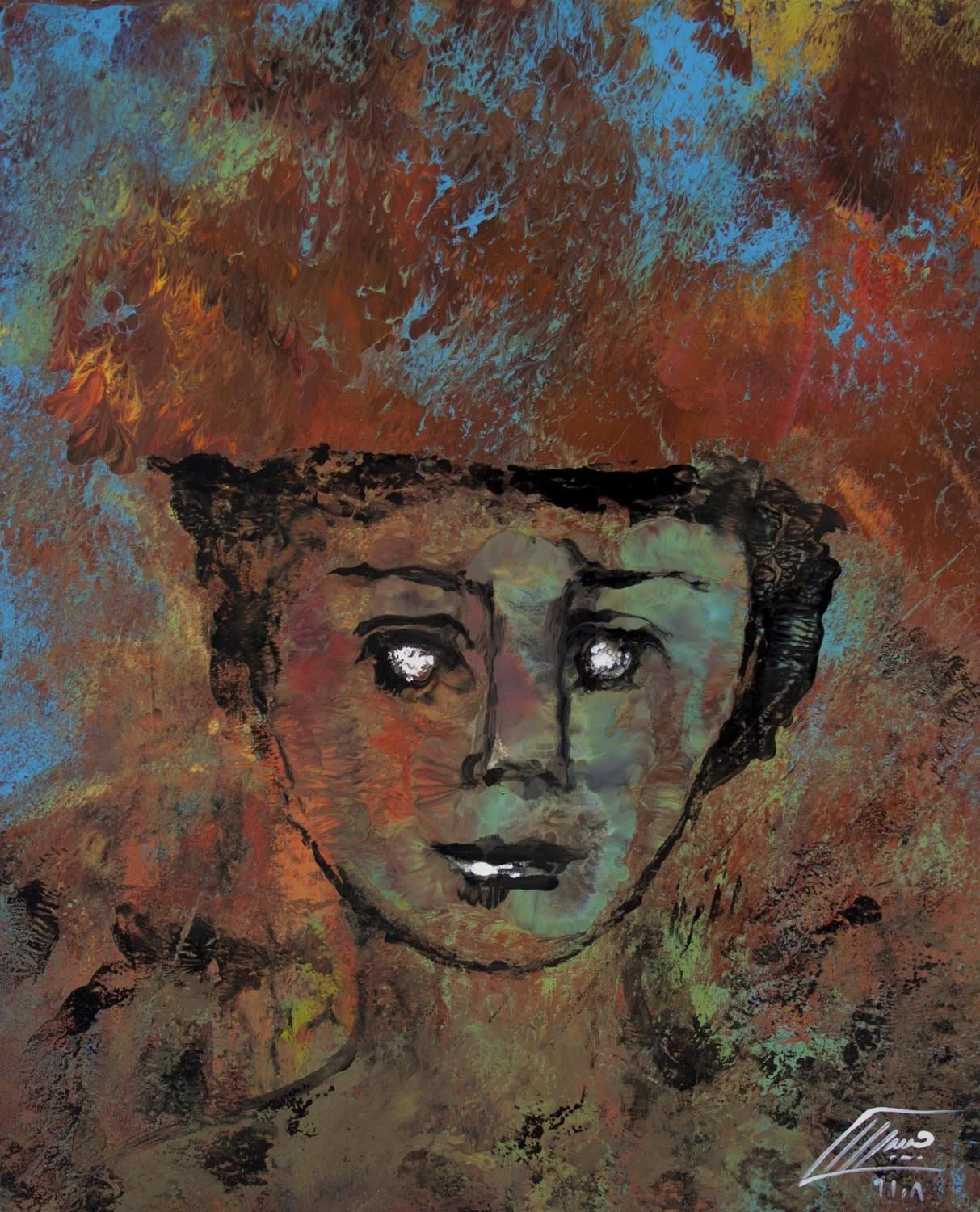
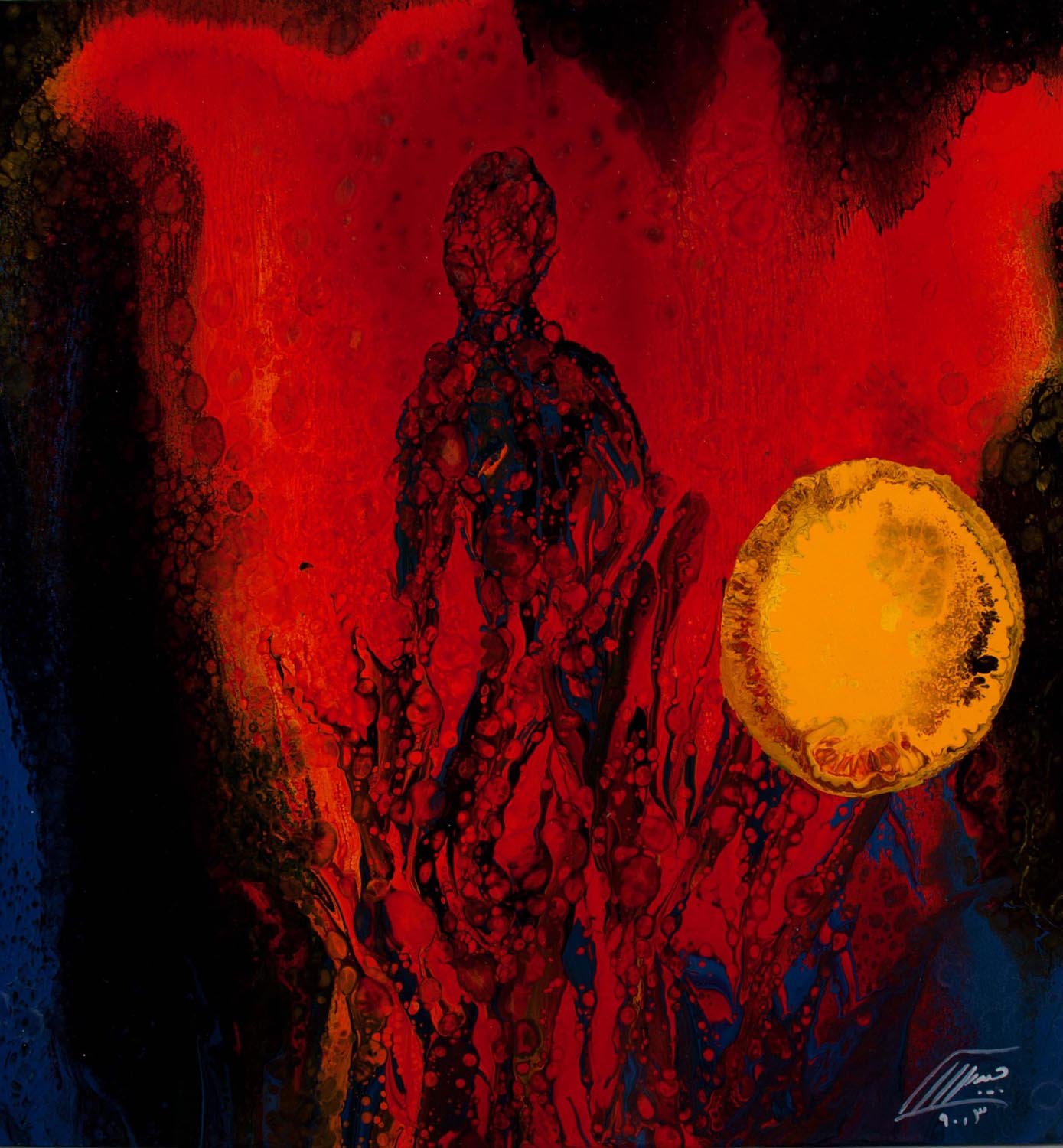
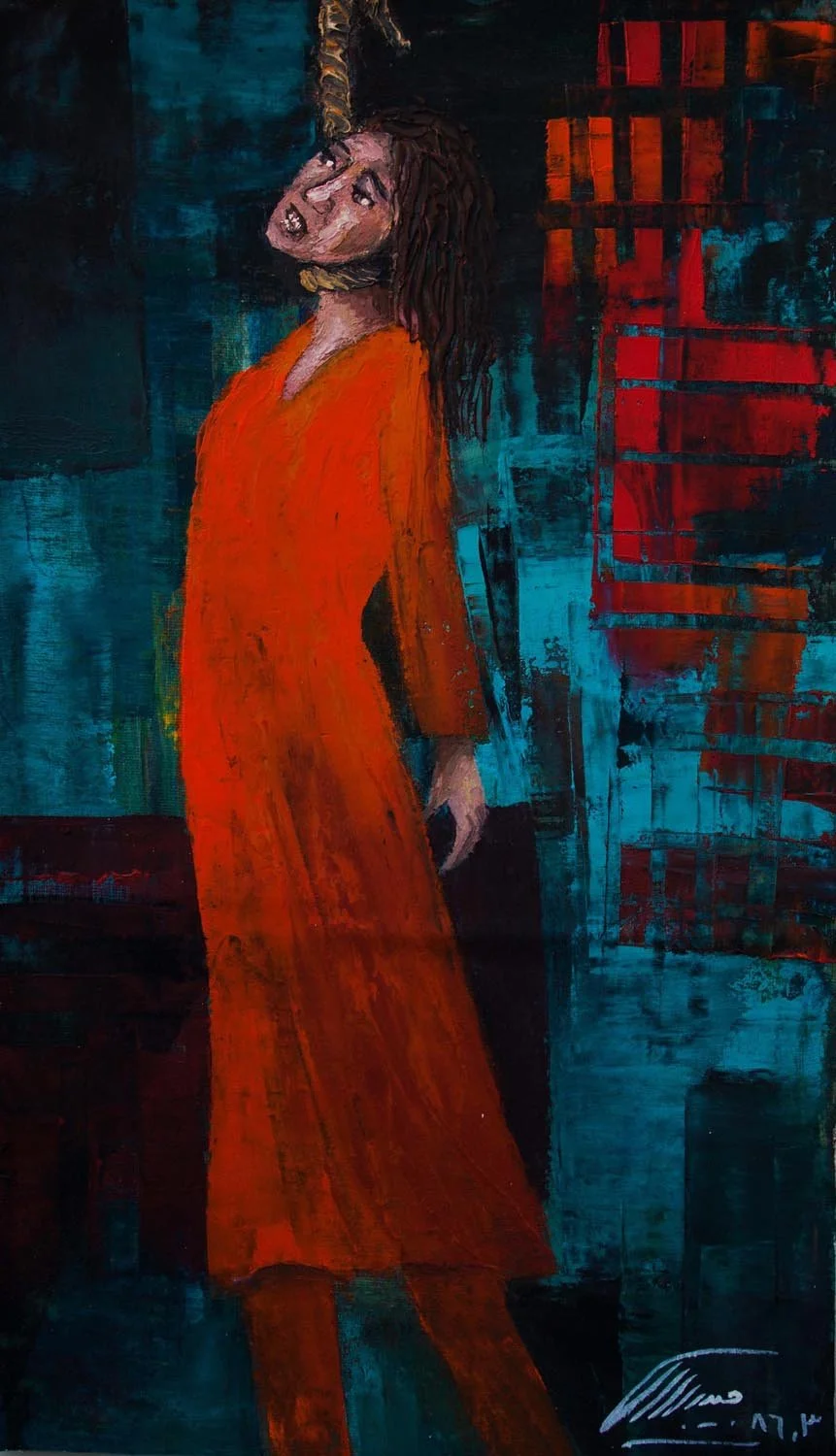
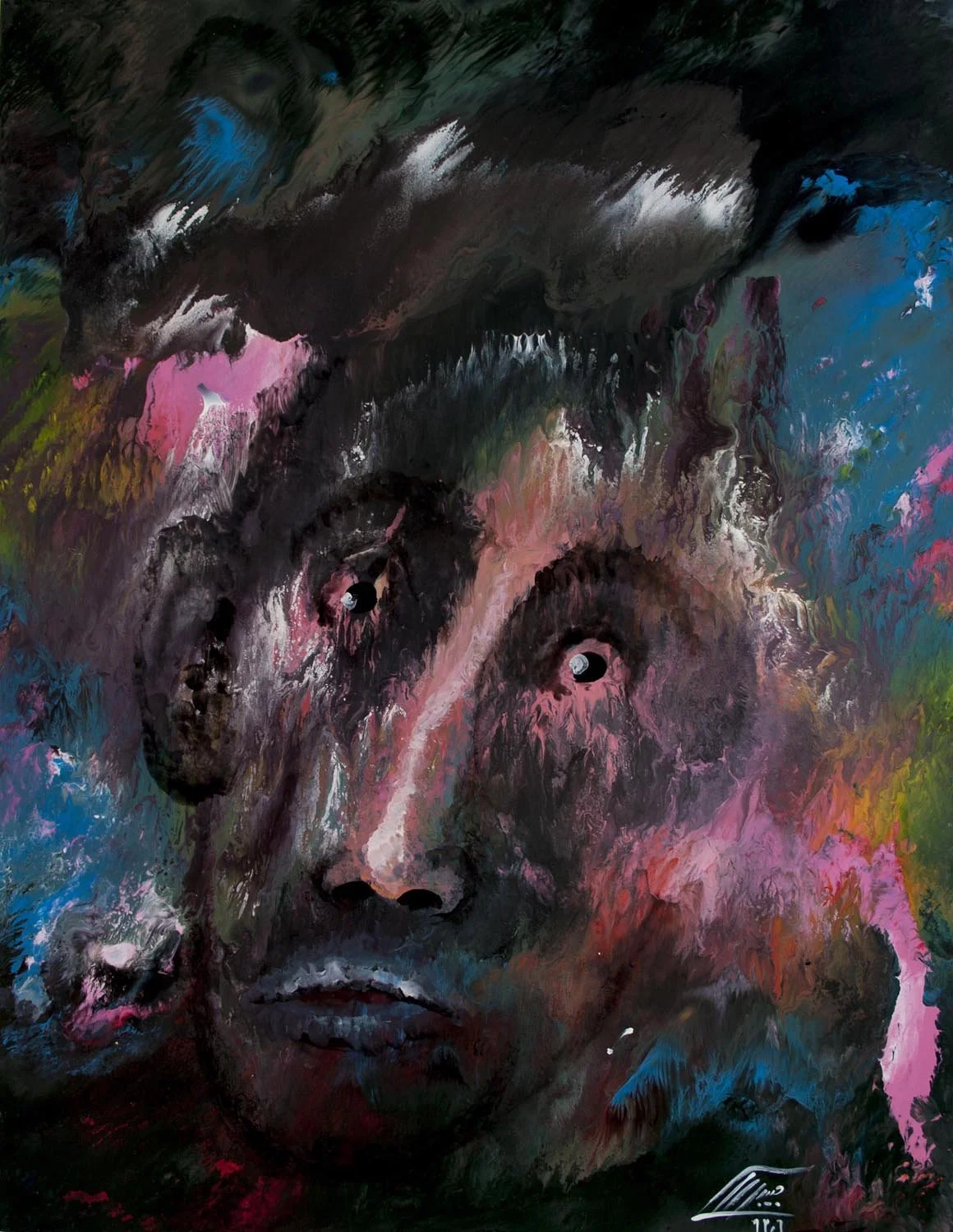
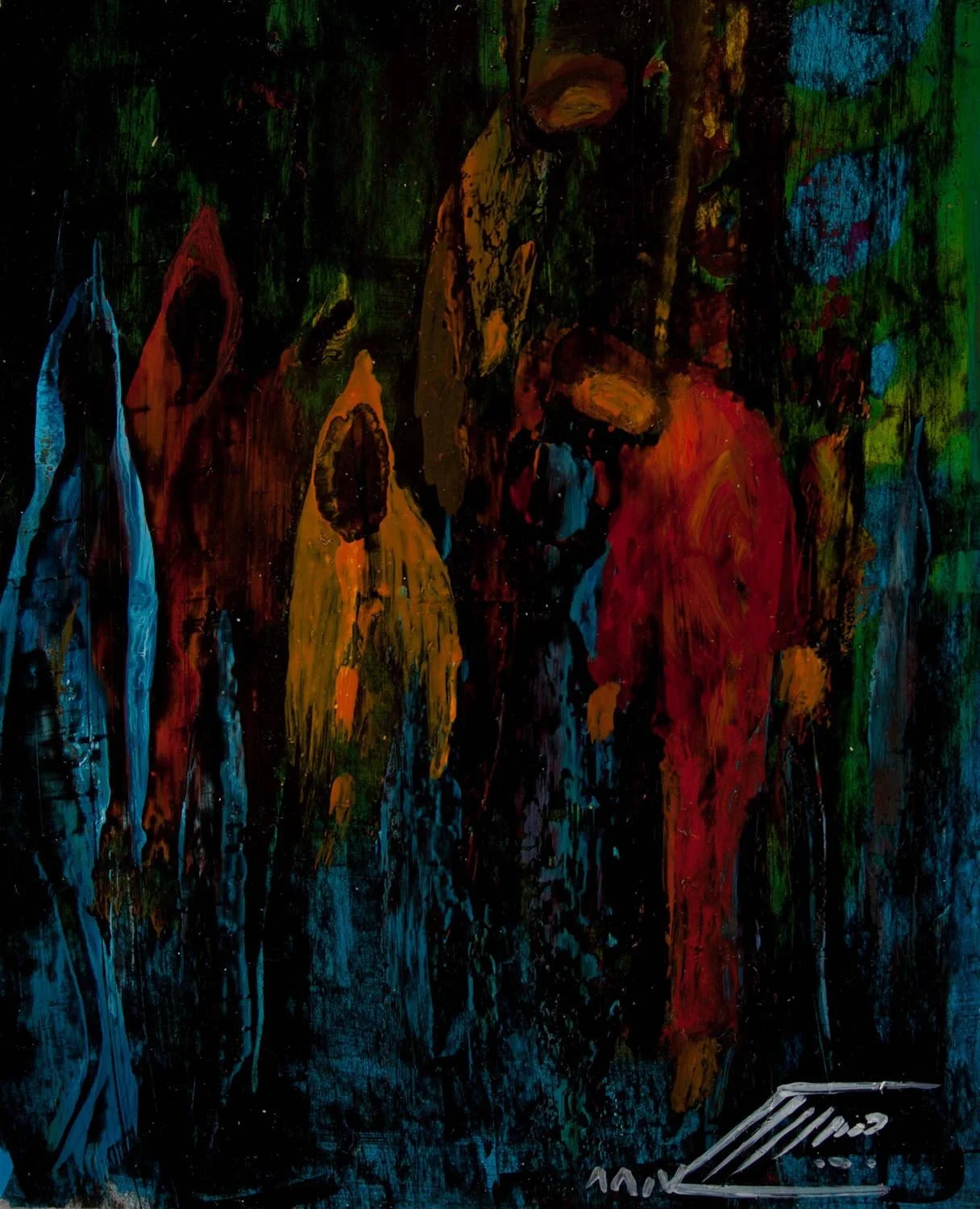
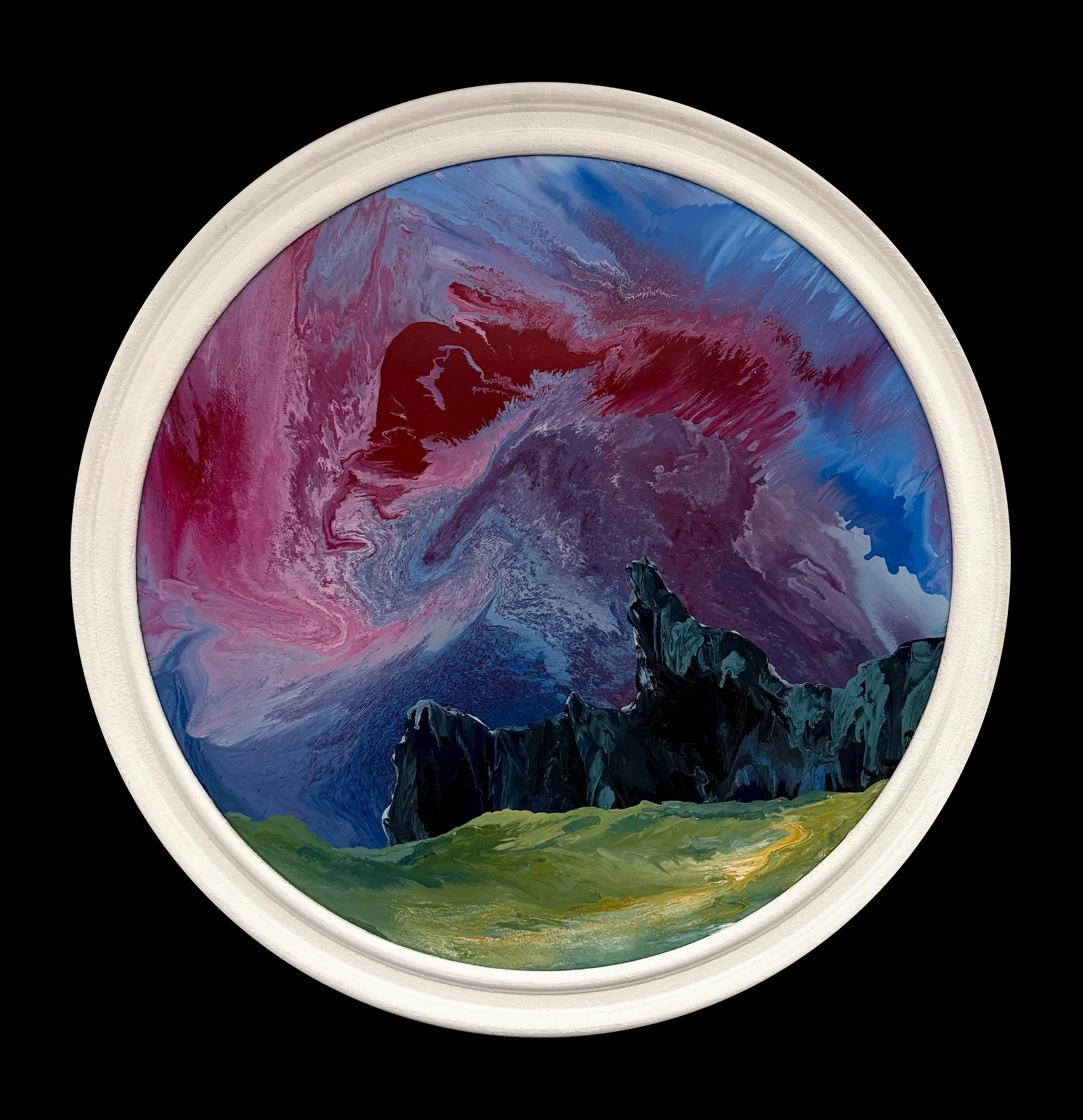
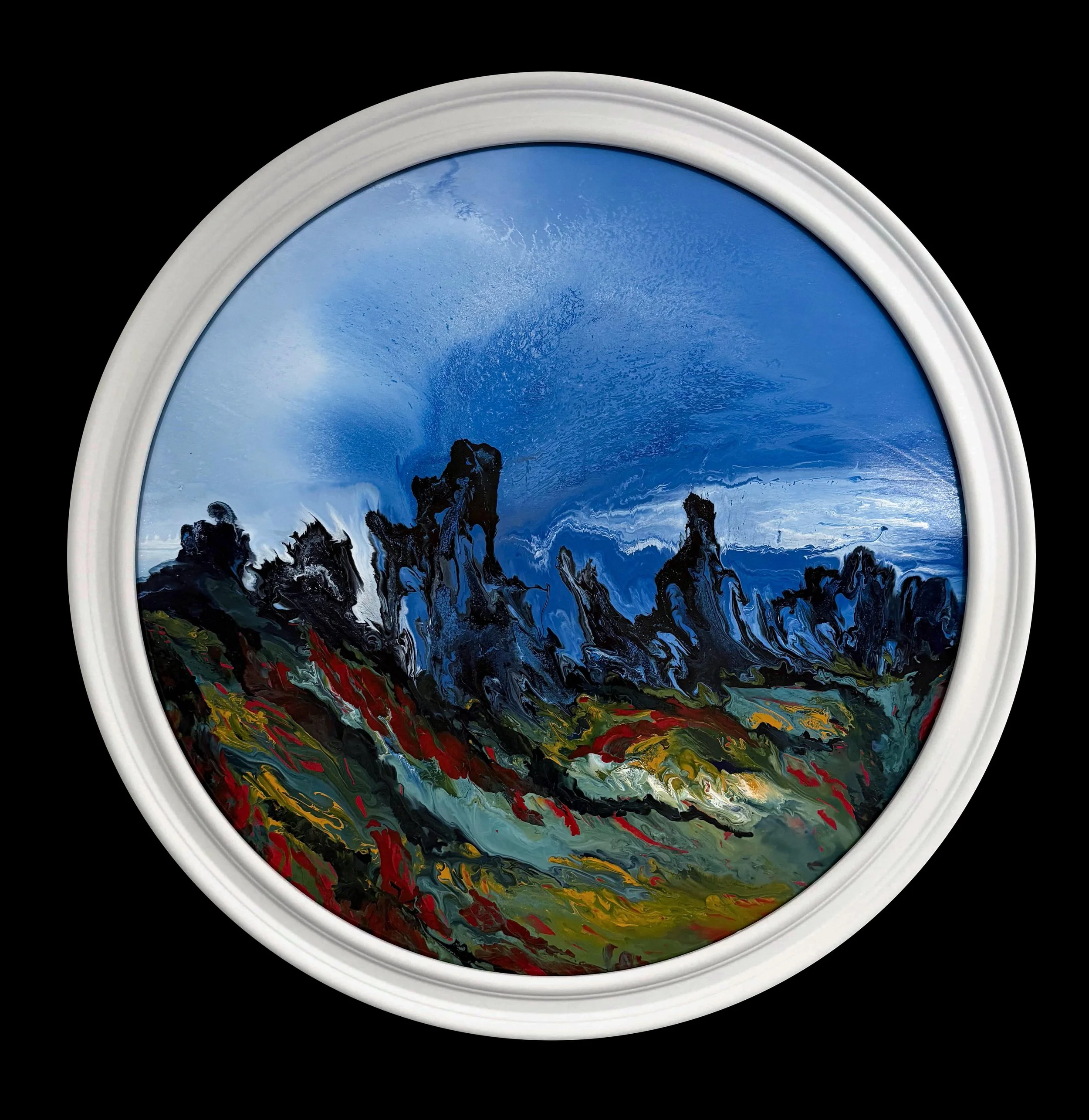
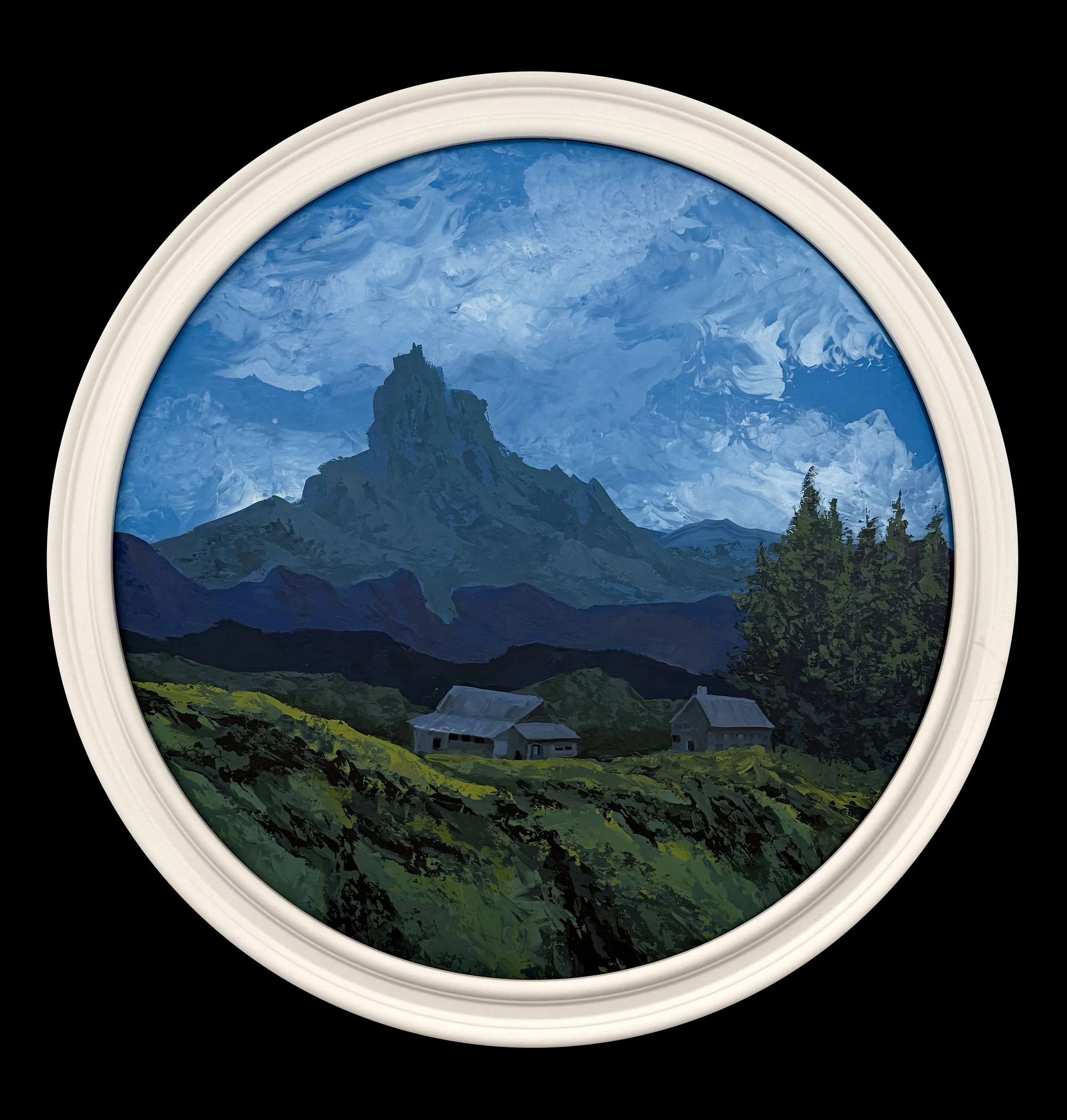
Brumand’s artistic evolution is not a succession of styles, but a history of evolving demands placed on artistic fidelity. For her, fidelity is realized when expression preserves the truth of what is perceived, understood, or felt. As experience disclosed realities her existing visual language could no longer contain, the demands placed upon representation changed. Structures once necessary to truth could become sources of distortion; new freedoms emerged through a more exact recognition of what the work could not betray.
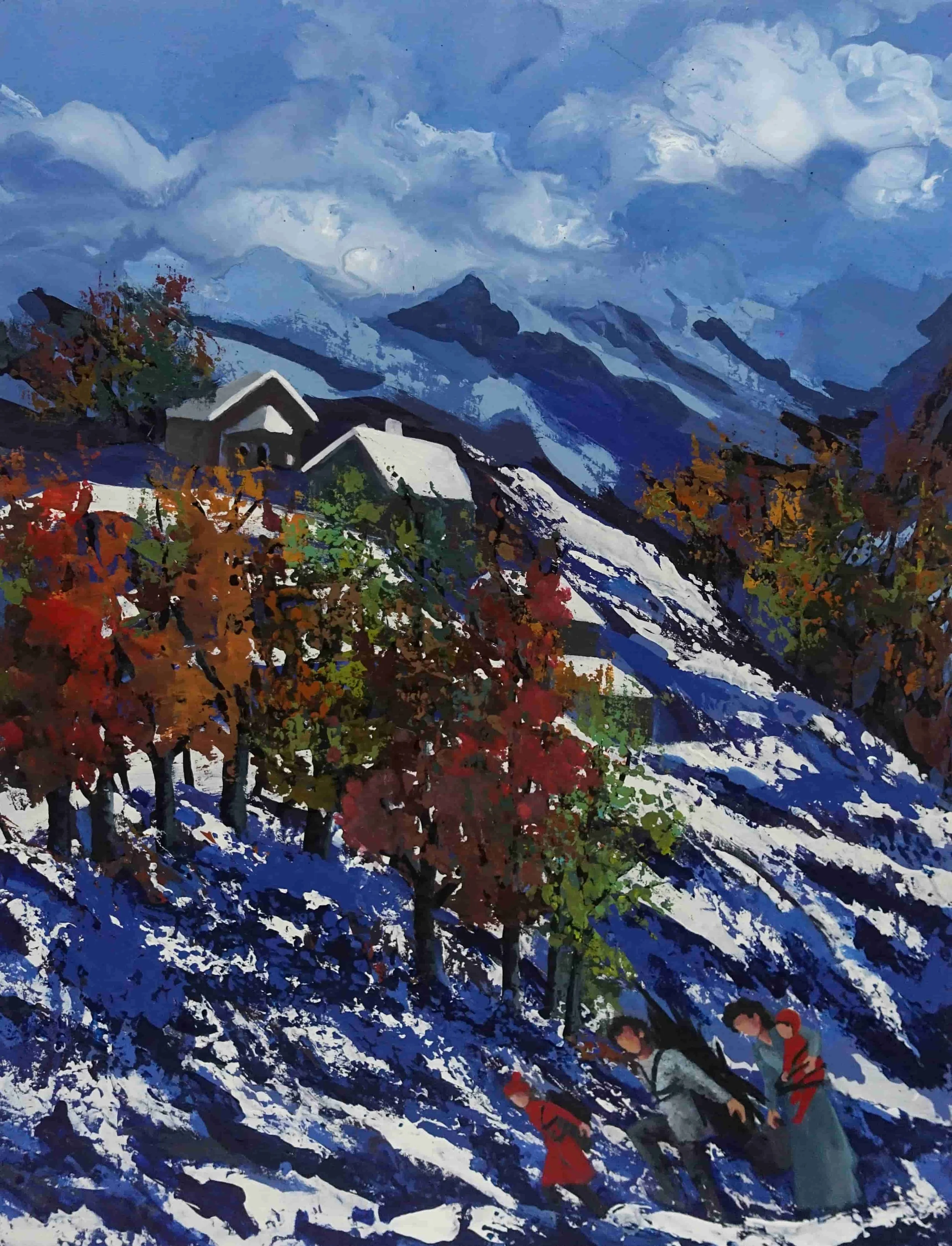
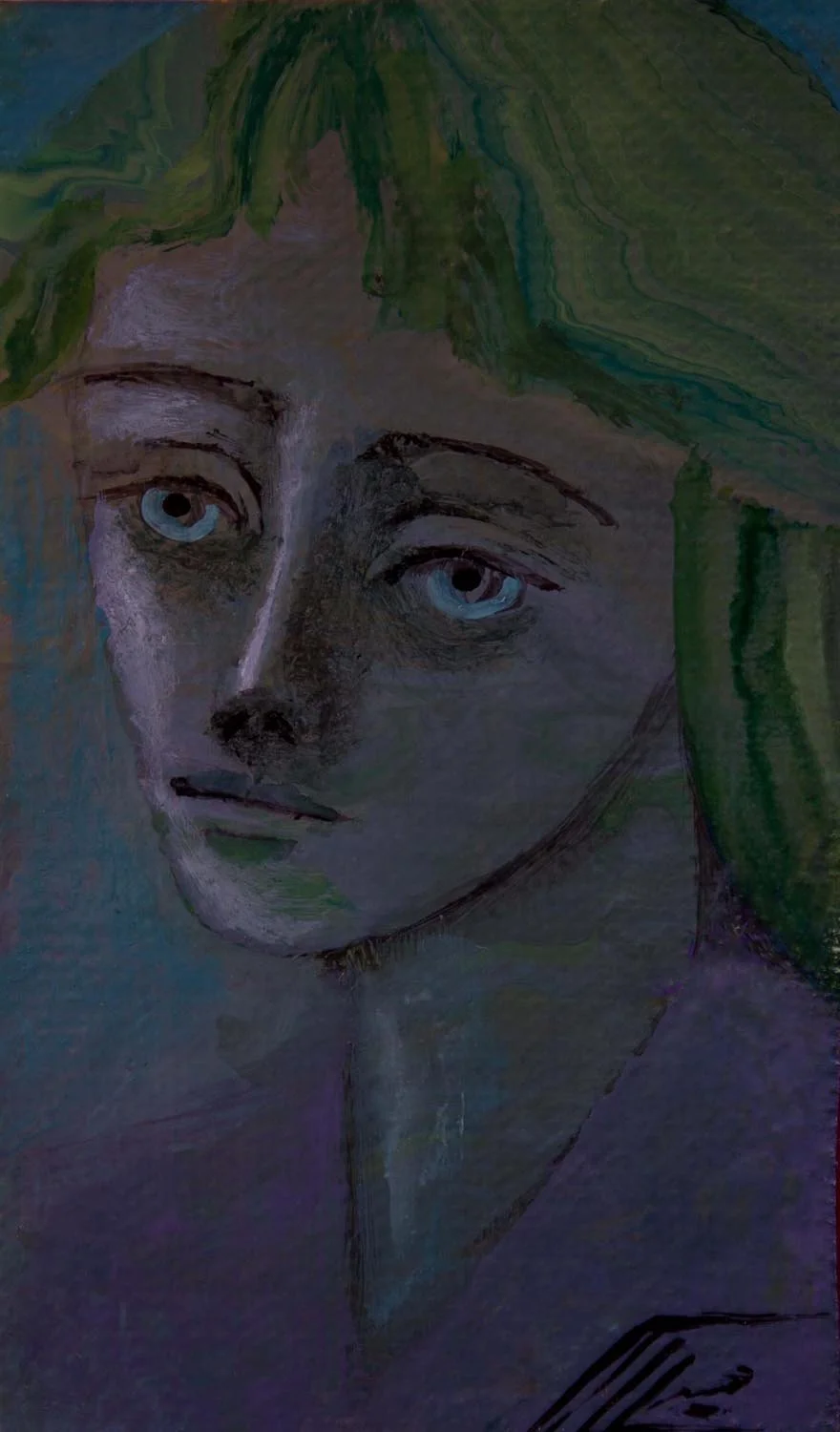
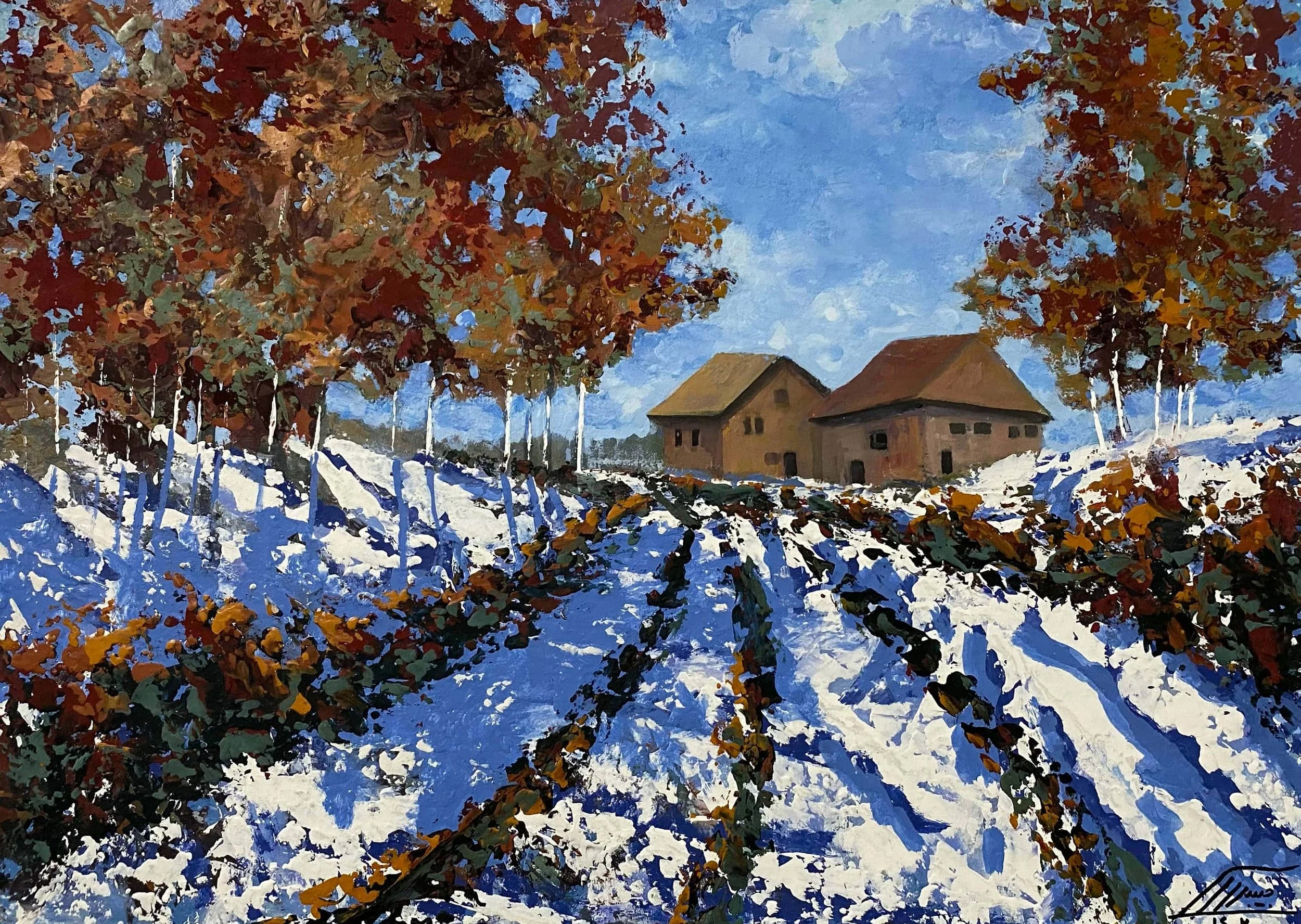
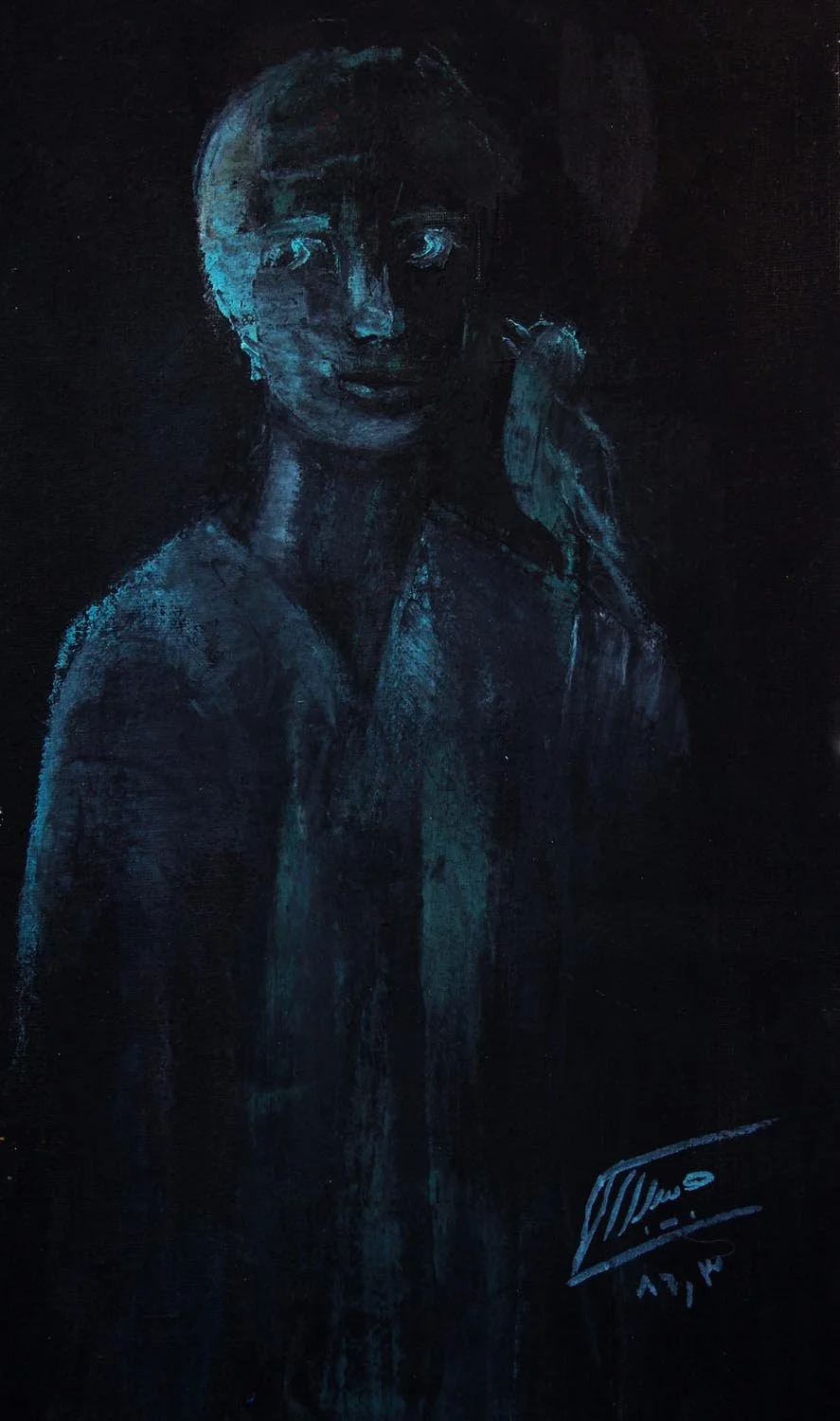
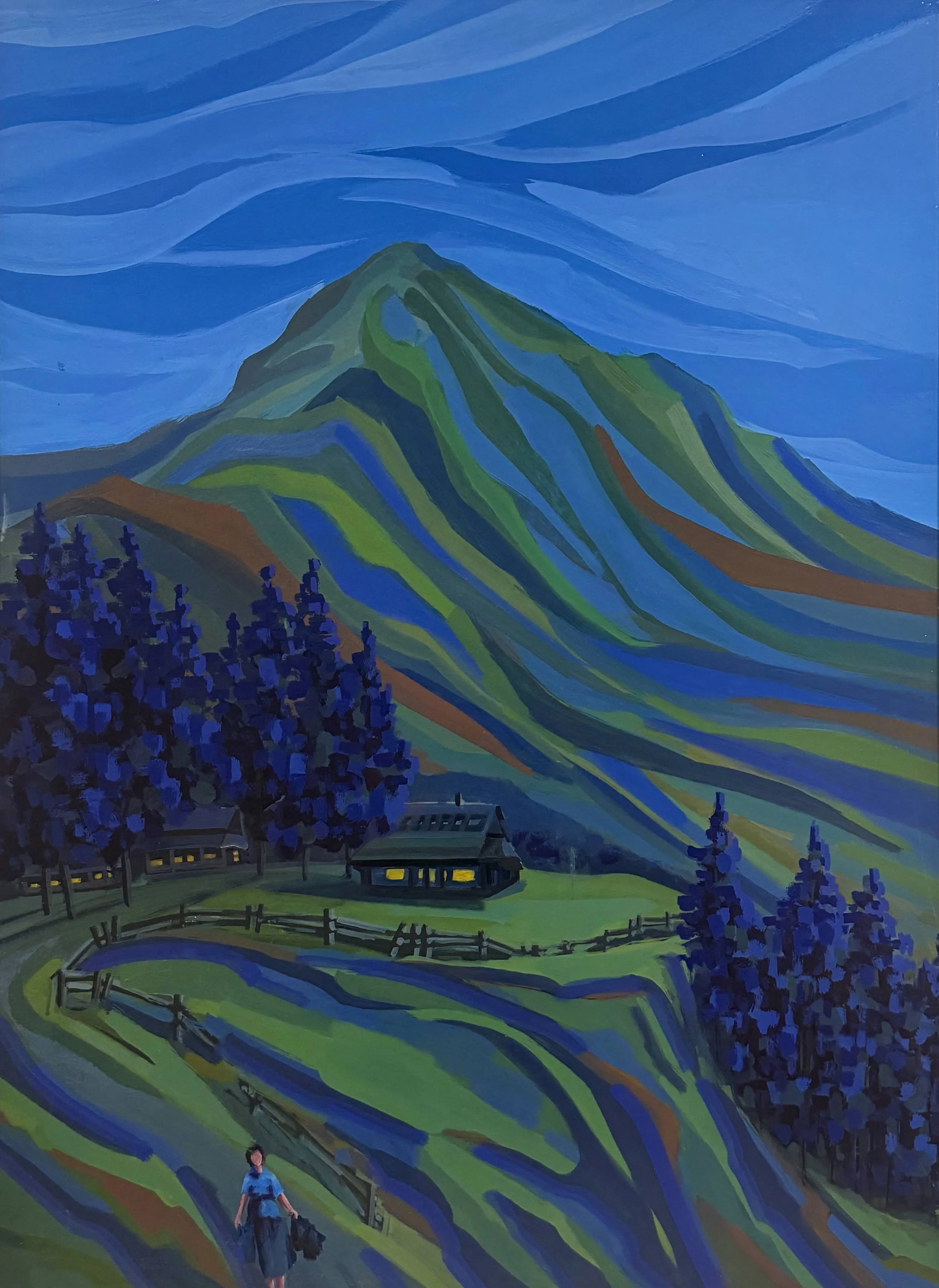
Around the age of sixteen, she began painting realist portraits and landscapes, using precise description, proportion, perspective, balance, and spatial organization to keep representation answerable to visible reality. Realism provided the formal mastery that later rendered her departure from it deliberate. She soon discovered that literal detail and fidelity are not identical; description can recede while the relations essential to the subject remain intact. Abstraction emerged from this realization, expanding her visual vocabulary without forsaking representation.
Years of working with her disabled son, Doman, confronted her with the limits of outward appearance: the visible facts of a condition could not disclose the full reality of a life. She came to understand that its deeper organization lay in the emotional dynamics through which experience was perceived and lived. Fidelity therefore changed its object: external resemblance was no longer sufficient; internal psychological references had to be expressed without distortion, even when accuracy required established form to bend.
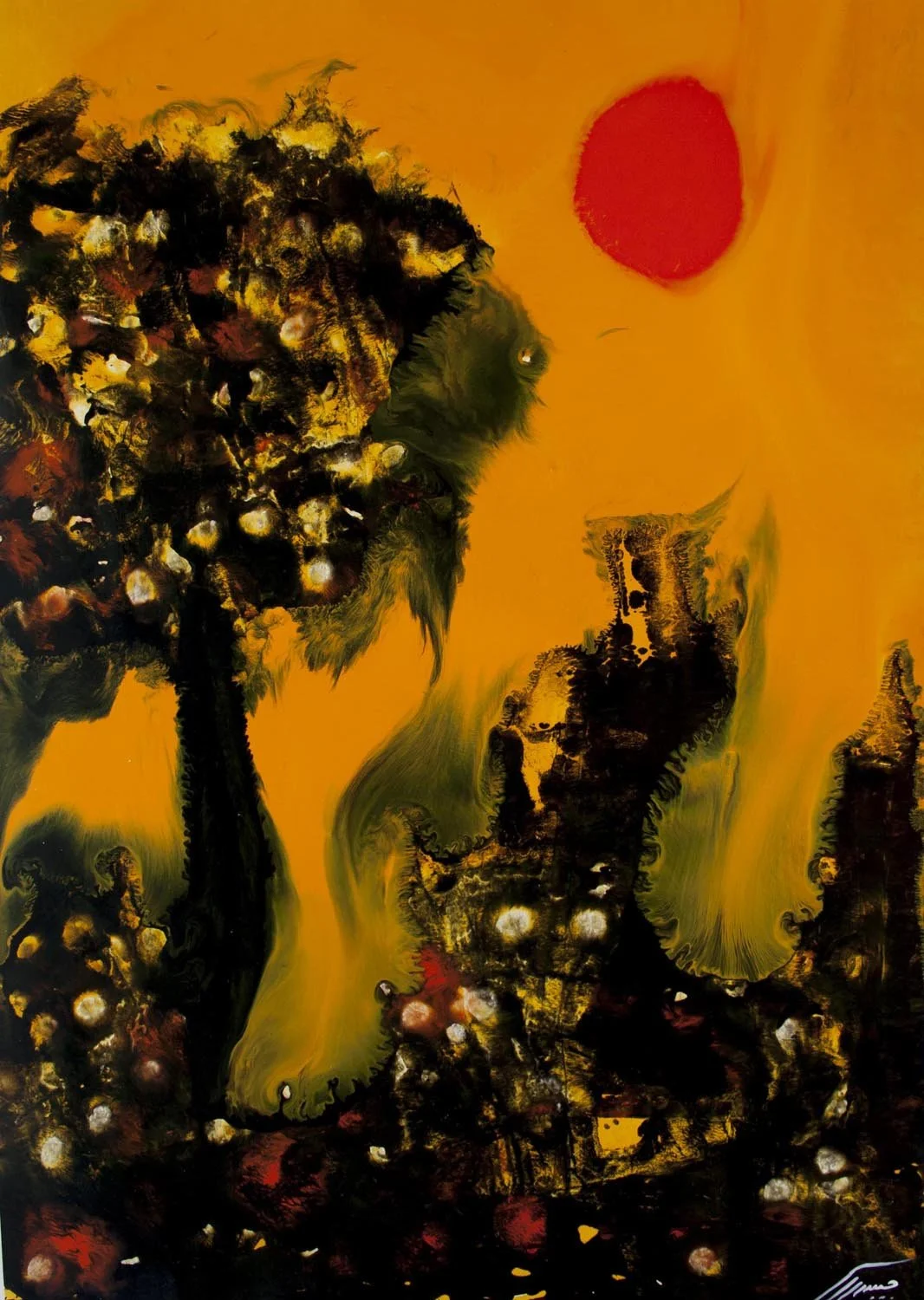
Entering meditative states, she suppresses reflective interference, allowing felt and embodied judgments to directly shape color, gesture, and form. Perspective, balance, and conventional structure were suspended whenever they constrained the psychological references seeking expression. Concurrently, she began bringing distinct emotional references together on the canvas, allowing their visual expressions to generate co-harmonies that united them without erasing their differences—laying the groundwork for Consonism.
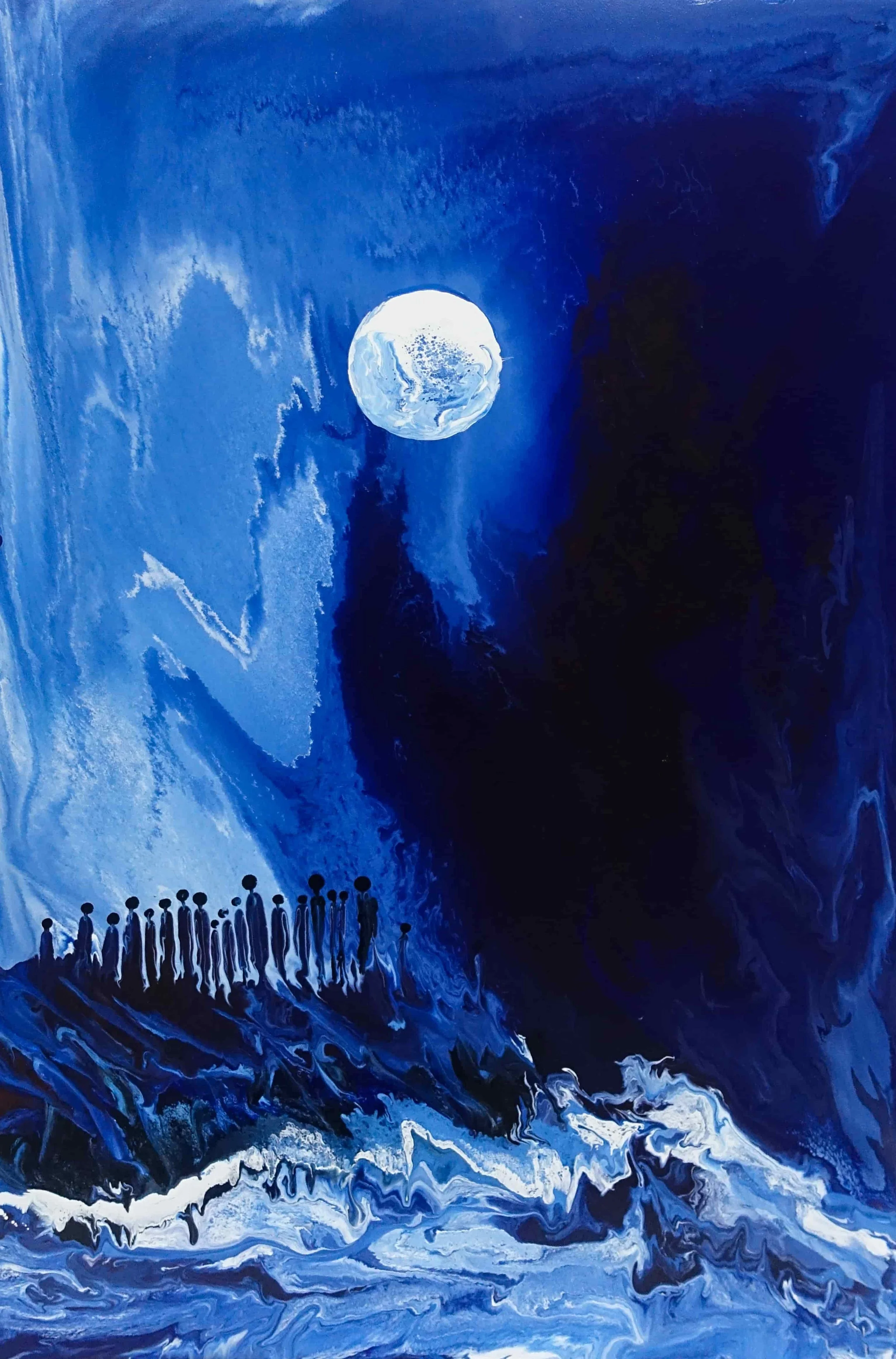
The death of her daughter Zoya exposed the limits of this emerging practice. Her established materials and procedures could no longer express the magnitude of grief while sustaining other emotional realities within the same developing work. Through systematic experimentation, she developed a fluid method in which psychological references entered the painting through color, the surface remained mobile, and each realized configuration altered subsequent perception and action. Tilting the canvas and working with a painting knife allowed her to guide this movement without predetermining its outcome, while the accumulating surface preserved earlier marks for later references to encounter and alter.
Within this persistent field, grief no longer had to disappear for other psychological realities to become consequential. Hope could sustain meaning without denying loss; grief could keep hope answerable to the wound. As their consequences accumulated, these organizations ceased merely to coexist. Each altered the conditions under which the others functioned, supplied capacities they lacked, and constrained responses that obstructed their shared development. Across repeated paintings, relations that accomplished more together while requiring less suppression and correction became durable, forming Consonant Bonds. As these bonds endured, the organization achieved within the artwork began to reshape Brumand’s later perception, judgment, and action. Grief remained faithful to Zoya, but no longer dictated that continued life is meaningless. Through this repeated composition, psychological organizations divided by loss were gradually reintegrated within a shared, viable continuation. Here, Consonism reached maturity: art became not merely the expression of psychological life, but the means through which a psyche fractured by loss could reorganize and heal.
The Evolution of Her Art
Brumand’s artistic evolution is not a succession of styles, but a history of evolving demands placed on artistic fidelity. For her, fidelity is realized when expression preserves the truth of what is perceived, understood, or felt. As experience disclosed realities her existing visual language could no longer contain, the demands placed upon representation changed. Structures once necessary to truth could become sources of distortion; new freedoms emerged through a more exact recognition of what the work could not betray.
Around the age of sixteen, she began painting realist portraits and landscapes, using precise description, proportion, perspective, balance, and spatial organization to keep representation answerable to visible reality. Realism provided the formal mastery that later rendered her departure from it deliberate. She soon discovered that literal detail and fidelity are not identical; description can recede while the relations essential to the subject remain intact. Abstraction emerged from this realization, expanding her visual vocabulary without forsaking representation.
Years of working with her disabled son, Doman, confronted her with the limits of outward appearance: the visible facts of a condition could not disclose the full reality of a life. She came to understand that its deeper organization lay in the emotional dynamics through which experience was perceived and lived. Fidelity therefore changed its object: external resemblance was no longer sufficient; internal psychological references had to be expressed without distortion, even when accuracy required established form to bend.
Entering meditative states, she suppresses reflective interference, allowing felt and embodied judgments to directly shape color, gesture, and form. Perspective, balance, and conventional structure were suspended whenever they constrained the psychological references seeking expression. Concurrently, she began bringing distinct emotional references together on the canvas, allowing their visual expressions to generate co-harmonies that united them without erasing their differences—laying the groundwork for Consonism.
The death of her daughter Zoya exposed the limits of this emerging practice. Her established materials and procedures could no longer express the magnitude of grief while sustaining other emotional realities within the same developing work. Through systematic experimentation, she developed a fluid method in which psychological references entered the painting through color, the surface remained mobile, and each realized configuration altered subsequent perception and action. Tilting the canvas and working with a painting knife allowed her to guide this movement without predetermining its outcome, while the accumulating surface preserved earlier marks for later references to encounter and alter.
Within this persistent field, grief no longer had to disappear for other psychological realities to become consequential. Hope could sustain meaning without denying loss; grief could keep hope answerable to the wound. As their consequences accumulated, these organizations ceased merely to coexist. Each altered the conditions under which the others functioned, supplied capacities they lacked, and constrained responses that obstructed their shared development. Across repeated paintings, relations that accomplished more together while requiring less suppression and correction became durable, forming Consonant Bonds. As these bonds endured, the organization achieved within the artwork began to reshape Brumand’s later perception, judgment, and action. Grief remained faithful to Zoya, but no longer dictated that continued life is meaningless. Through this repeated composition, psychological organizations divided by loss were gradually reintegrated within a shared, viable continuation. Here, Consonism reached maturity: art became not merely the expression of psychological life, but the means through which a psyche fractured by loss could reorganize and heal.

Her Art Technique
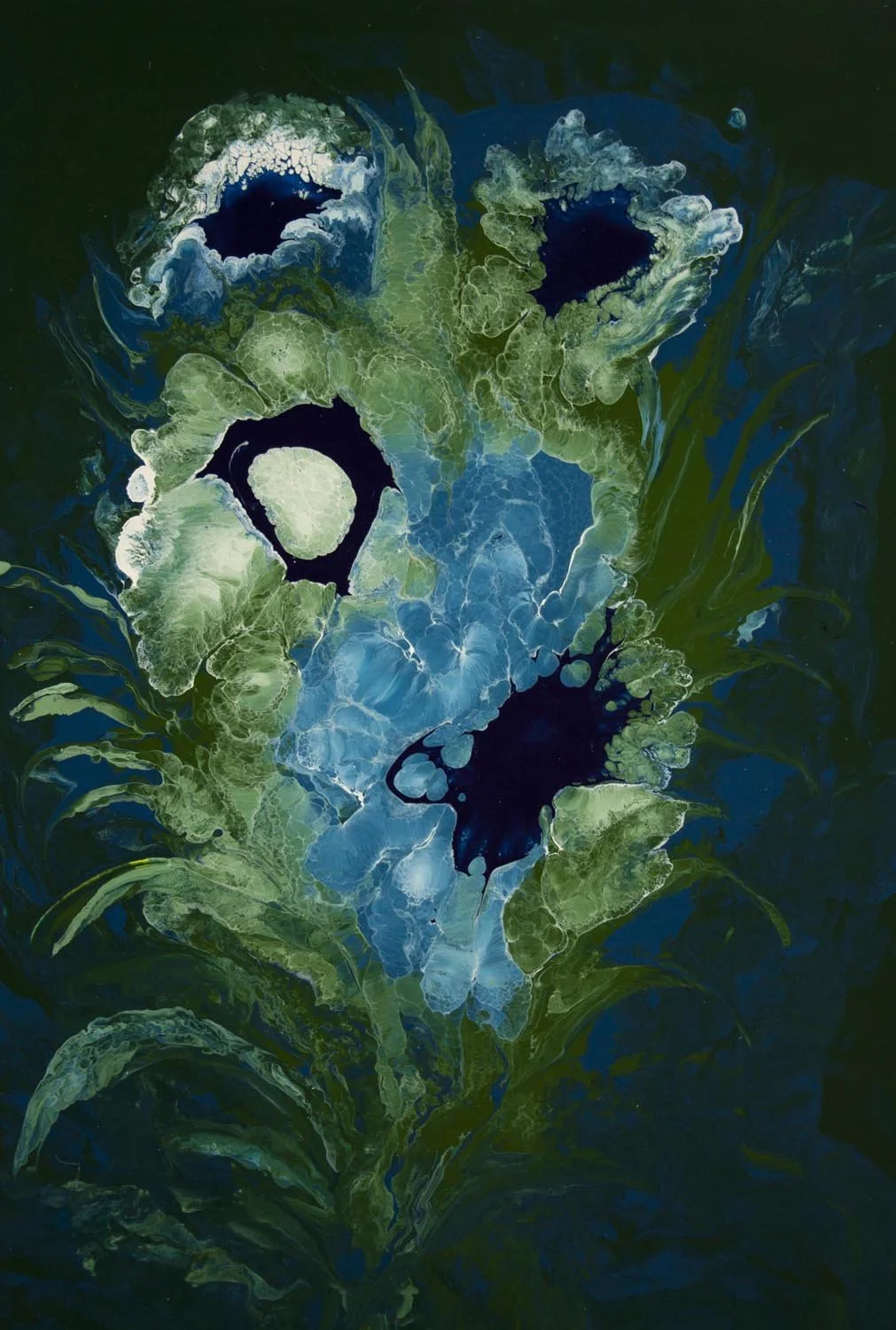
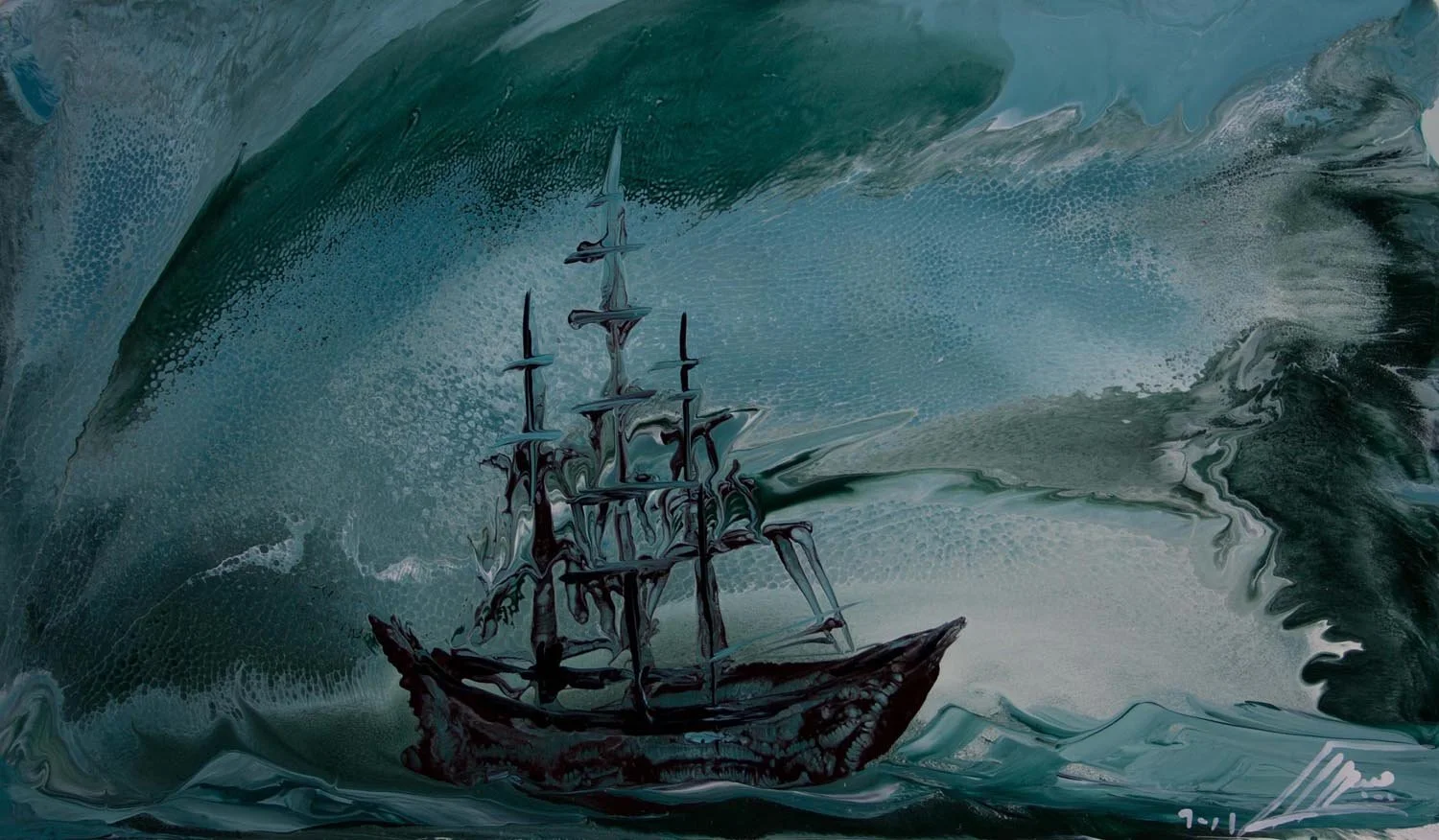
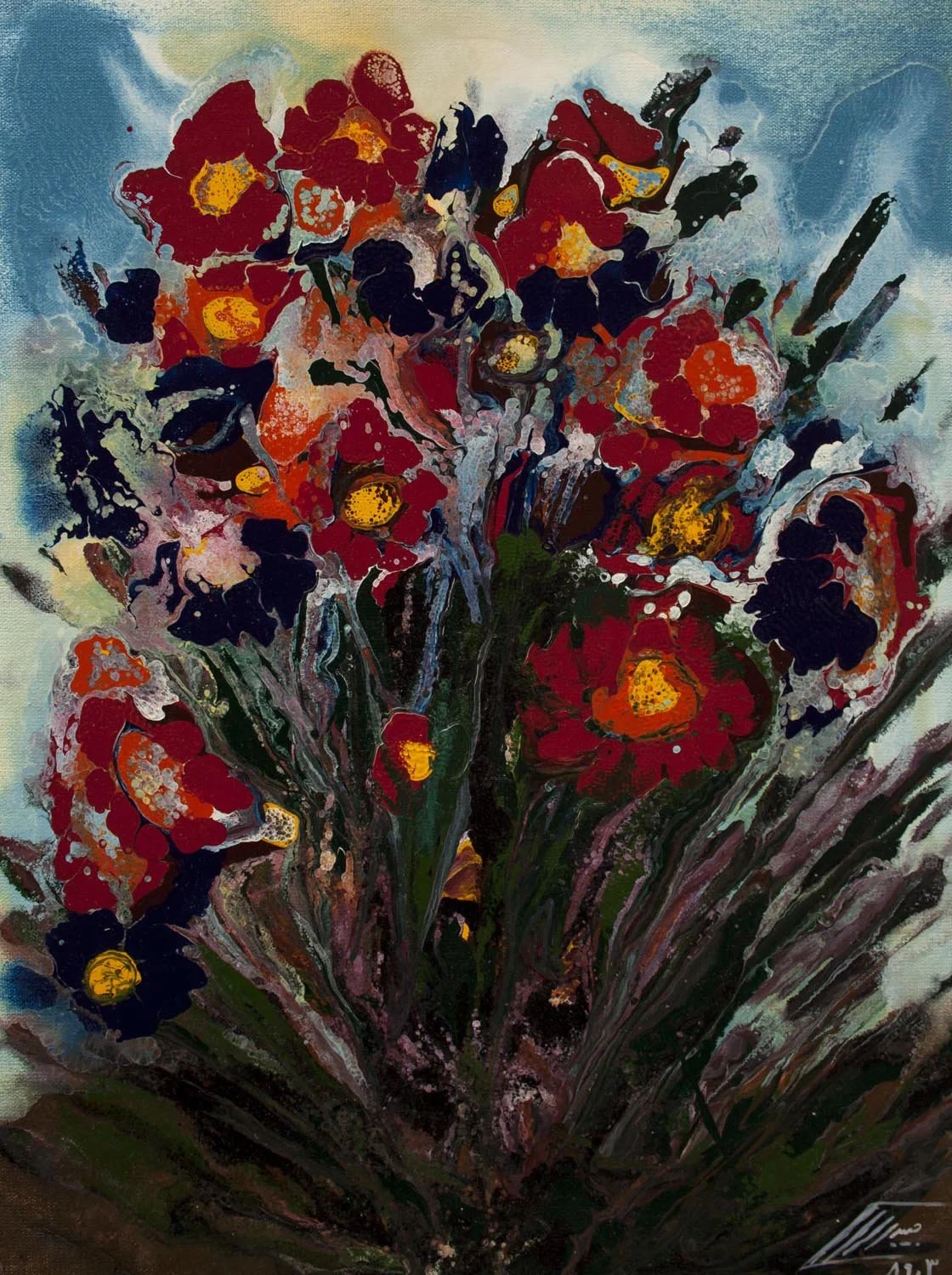
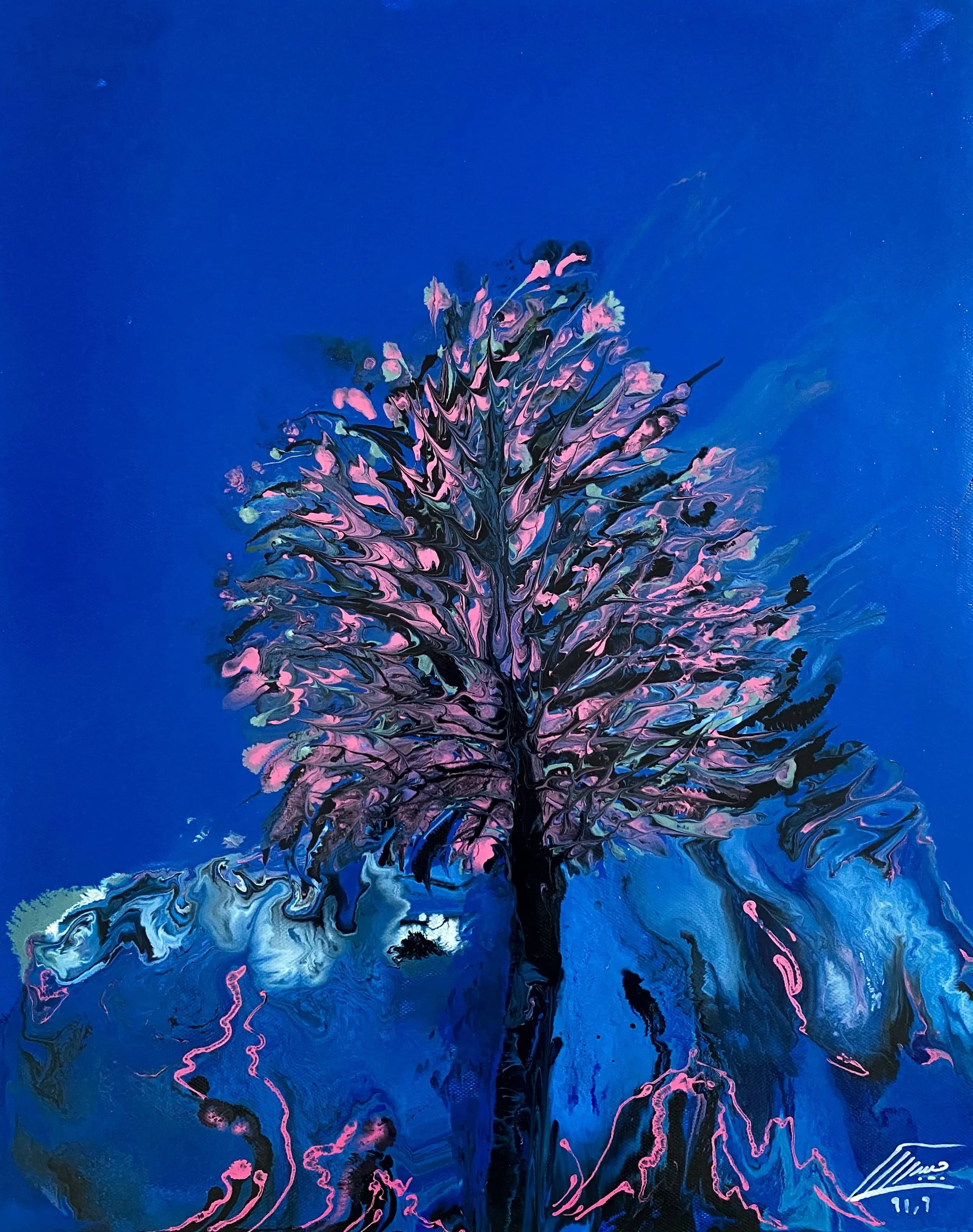
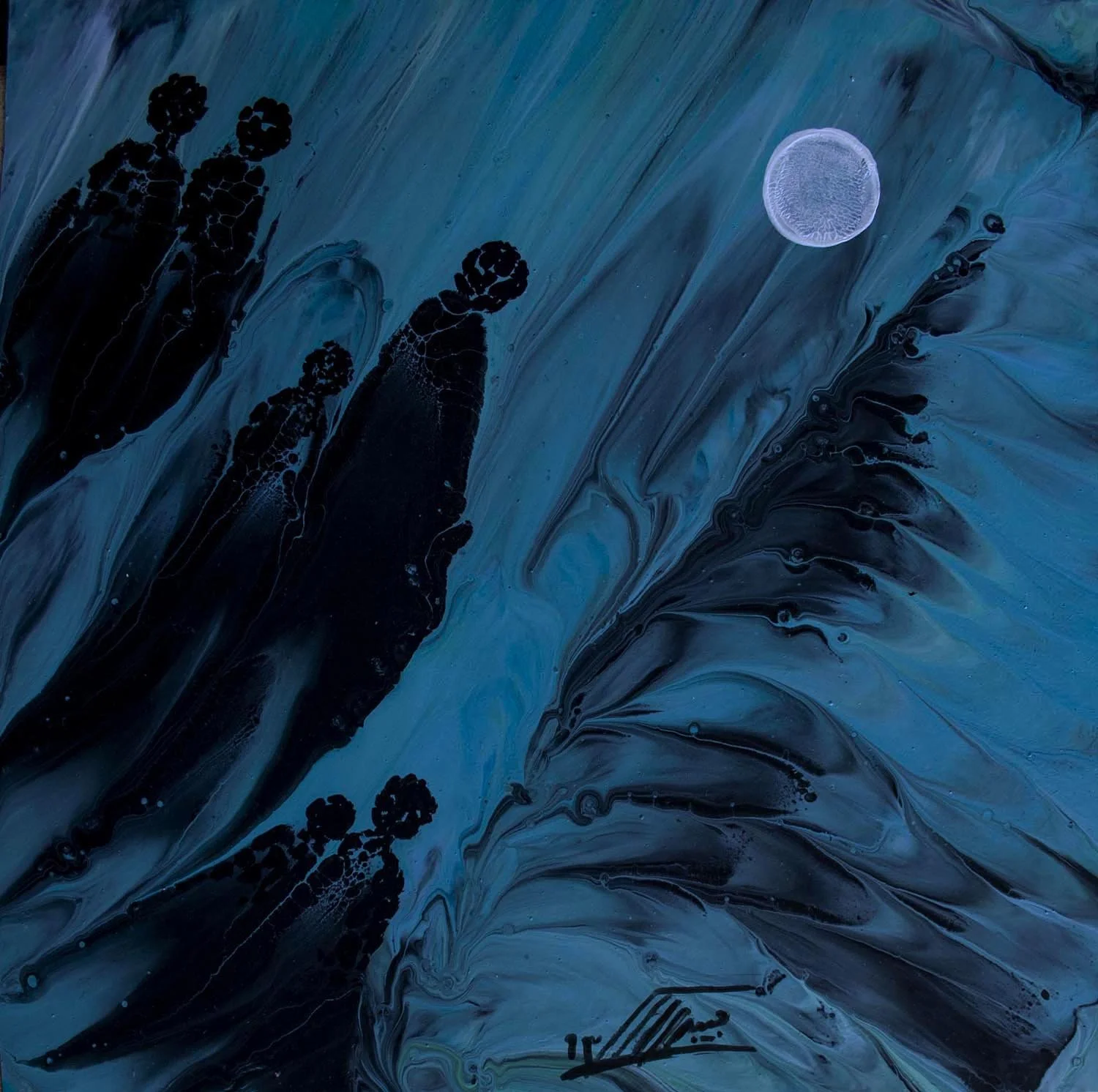
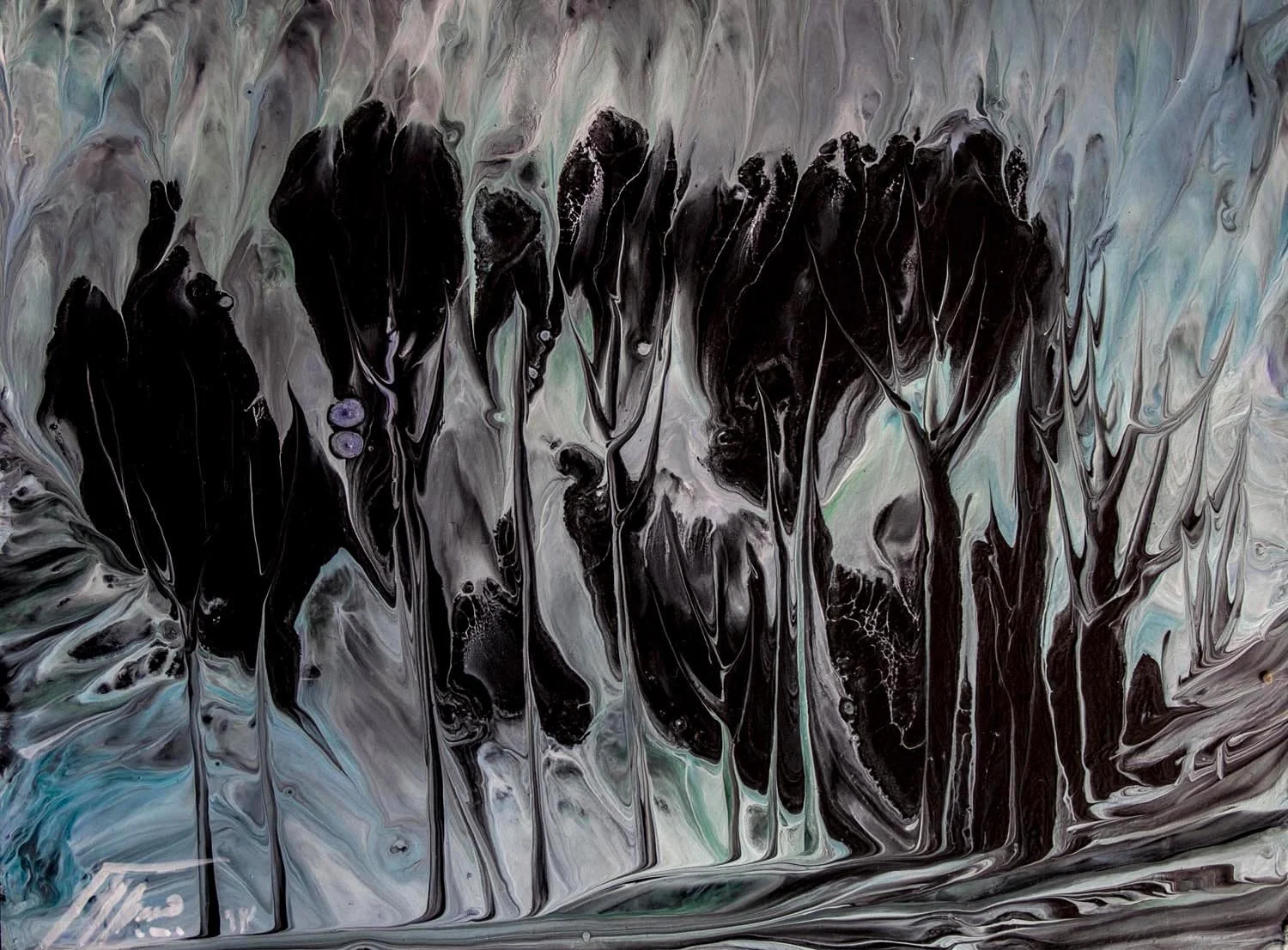
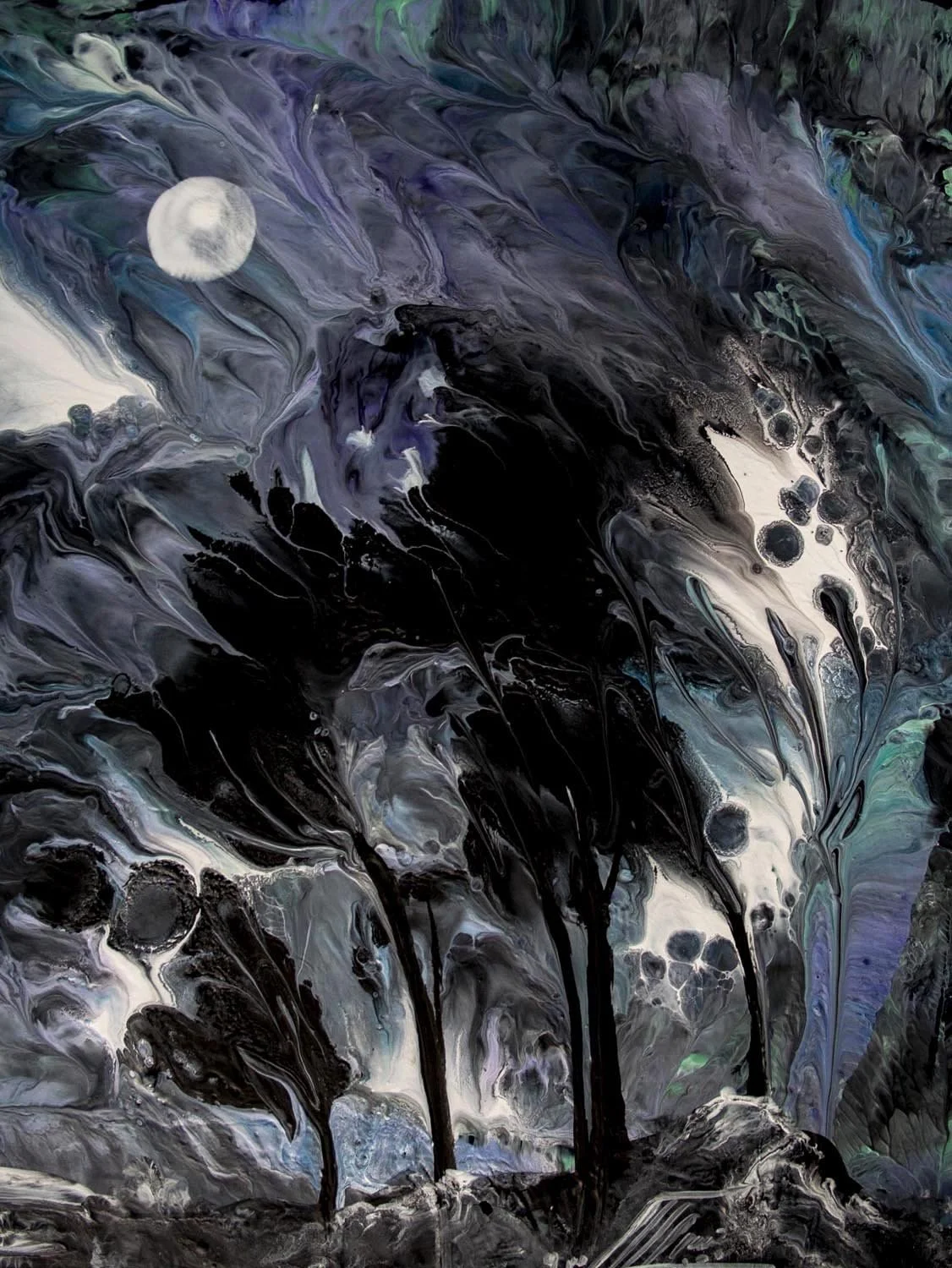
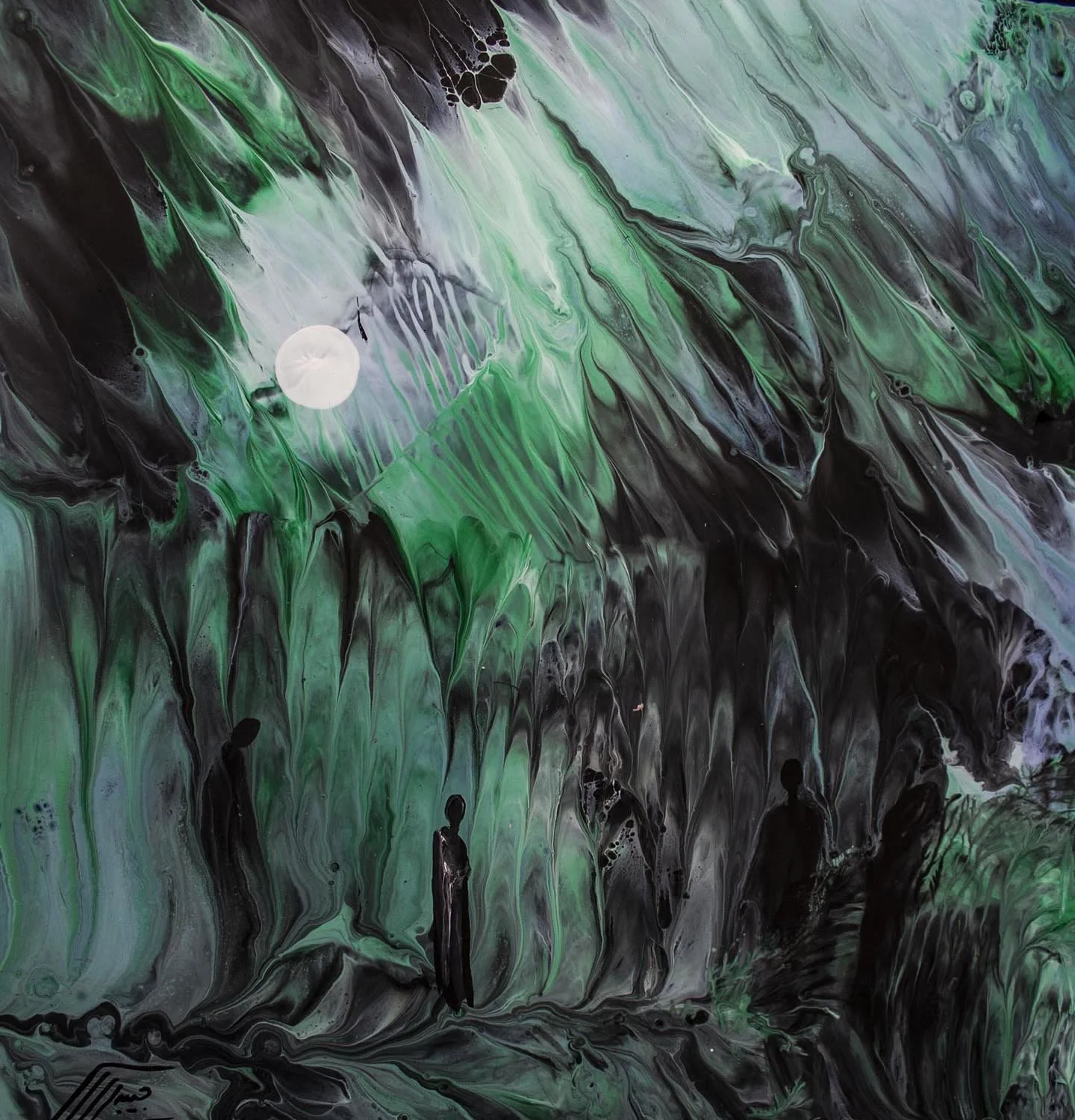
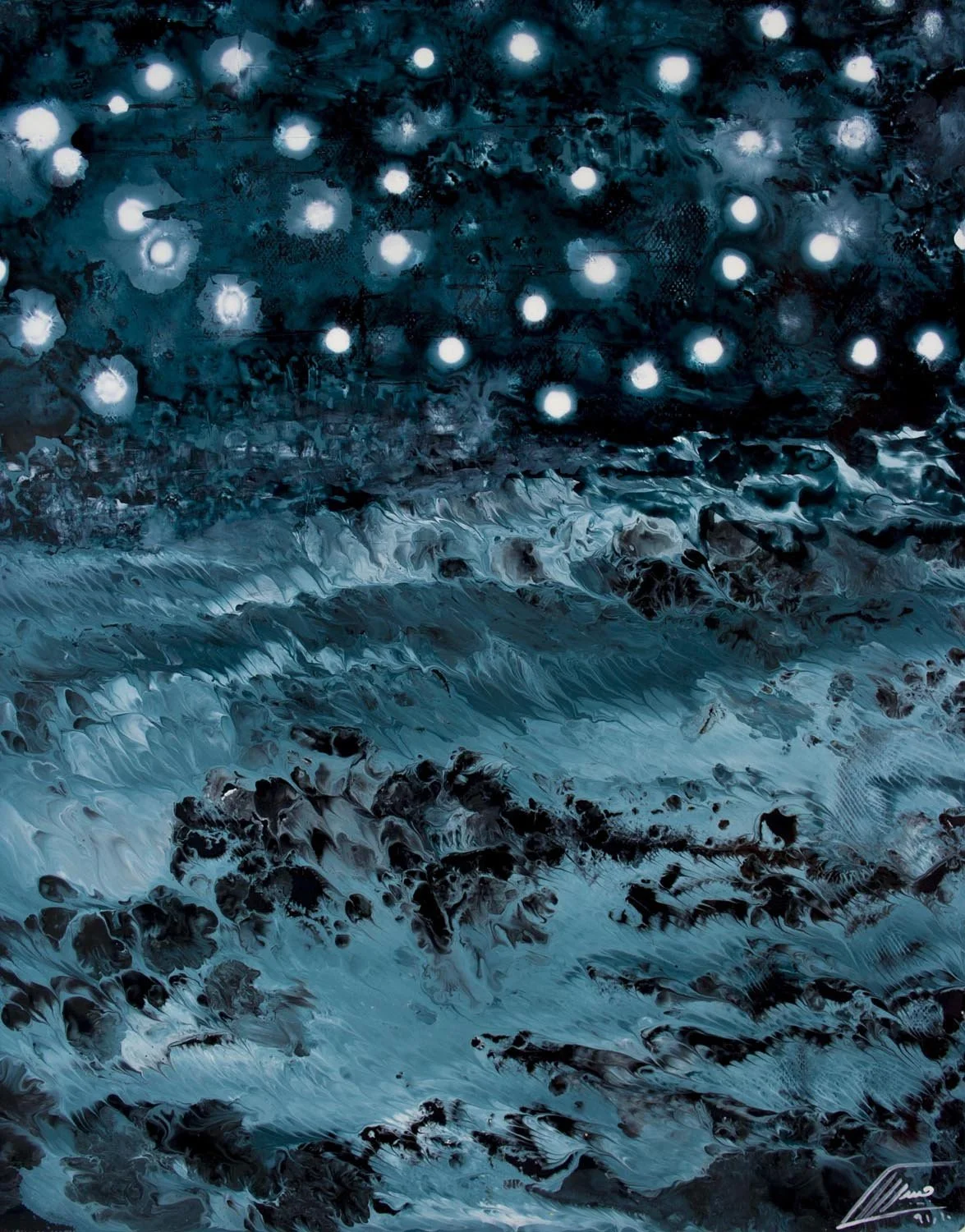
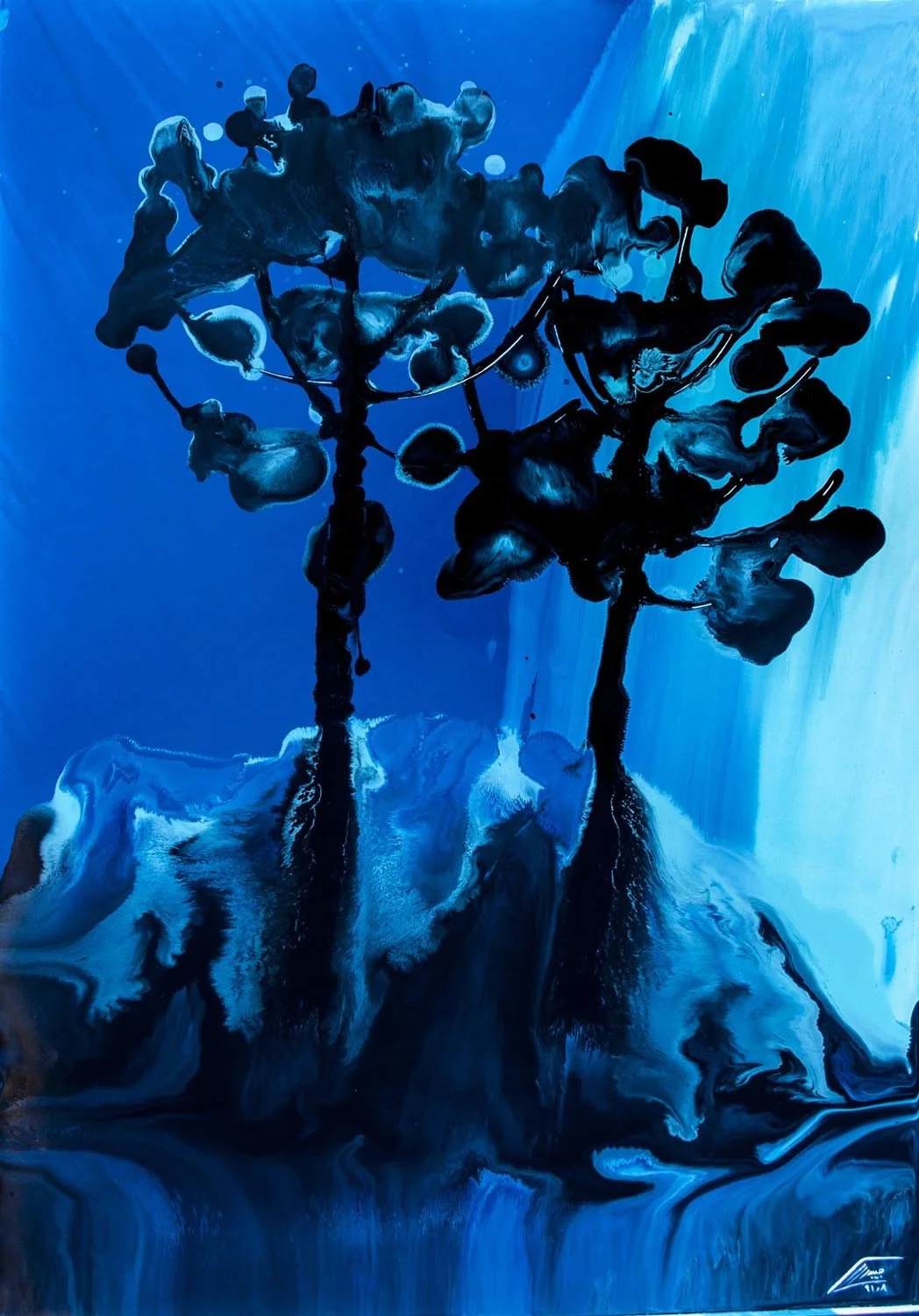
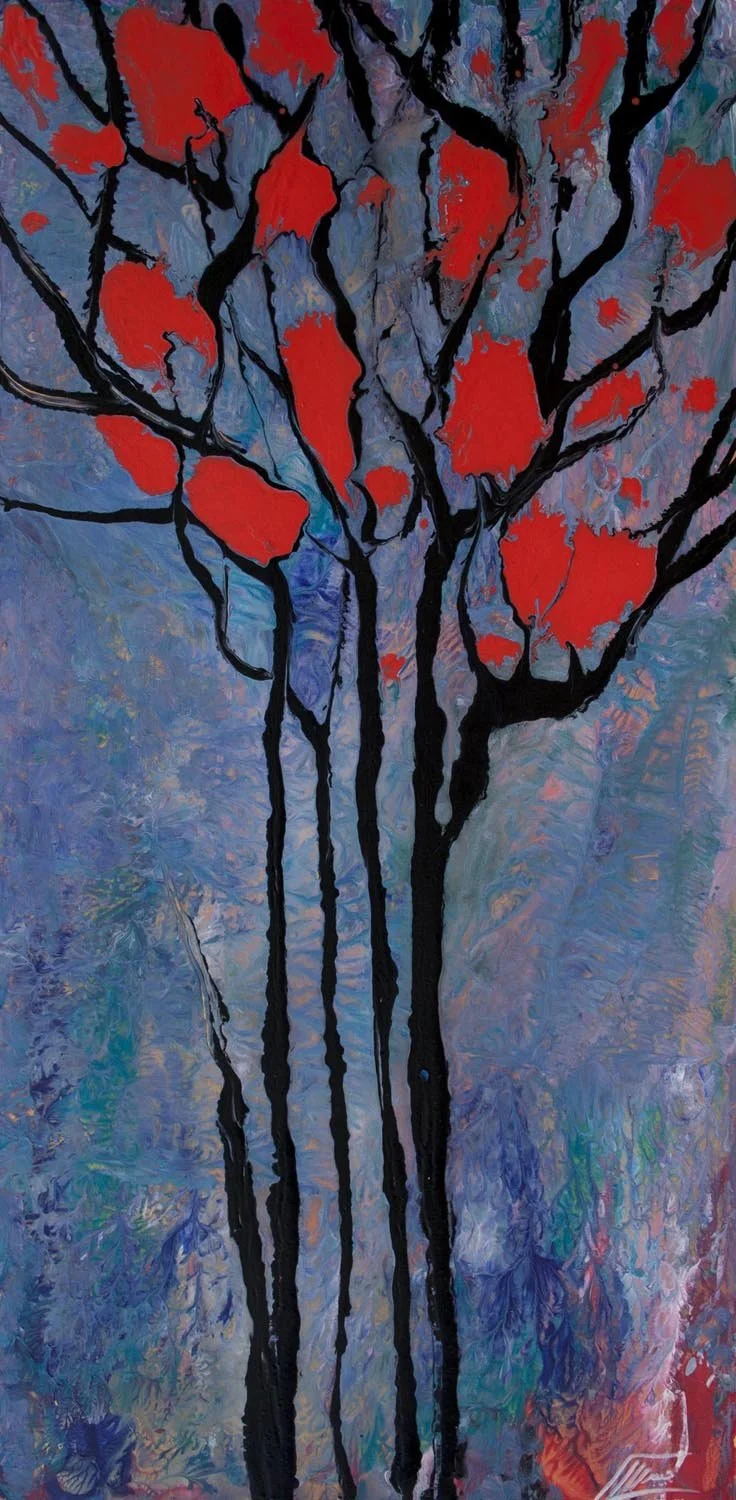
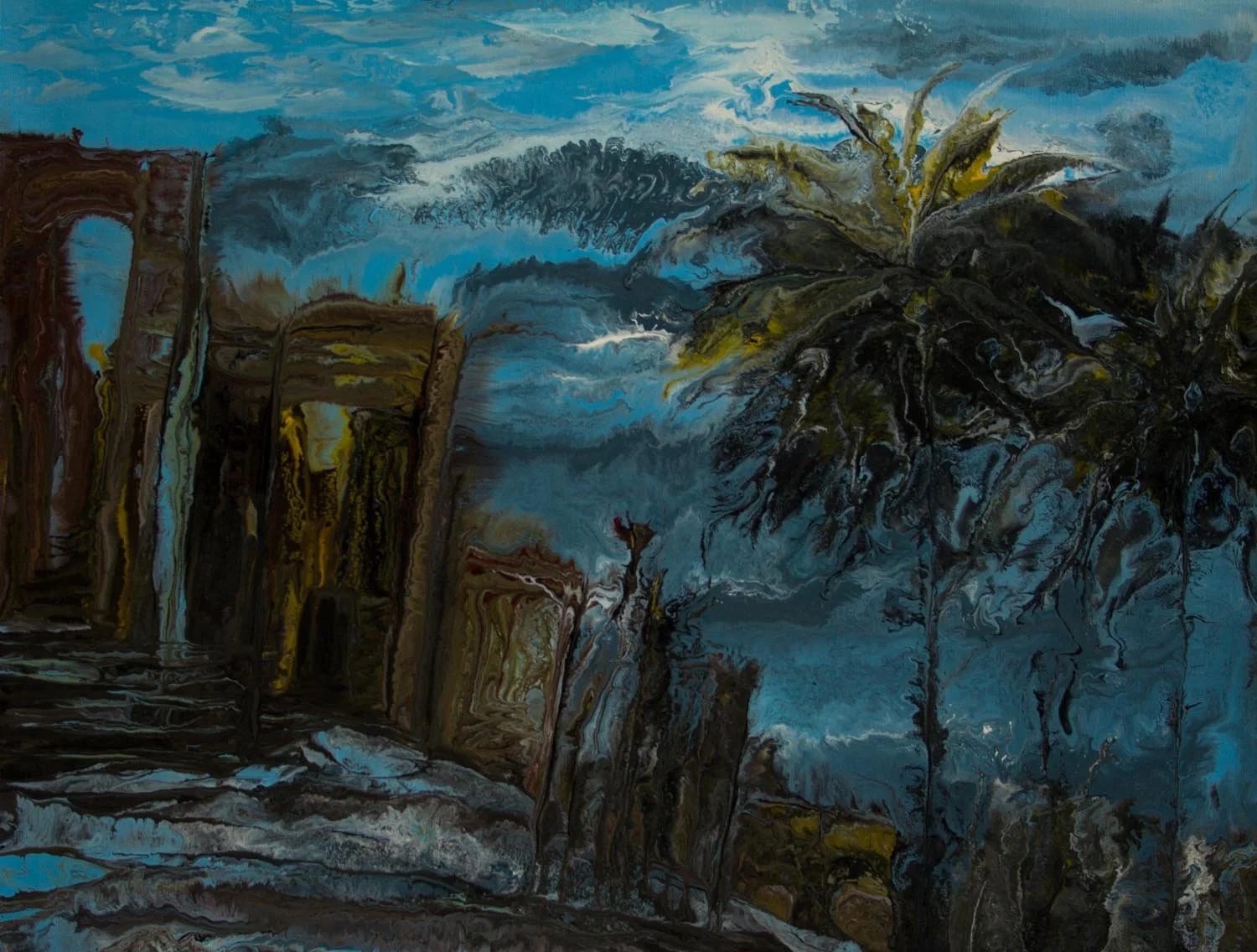
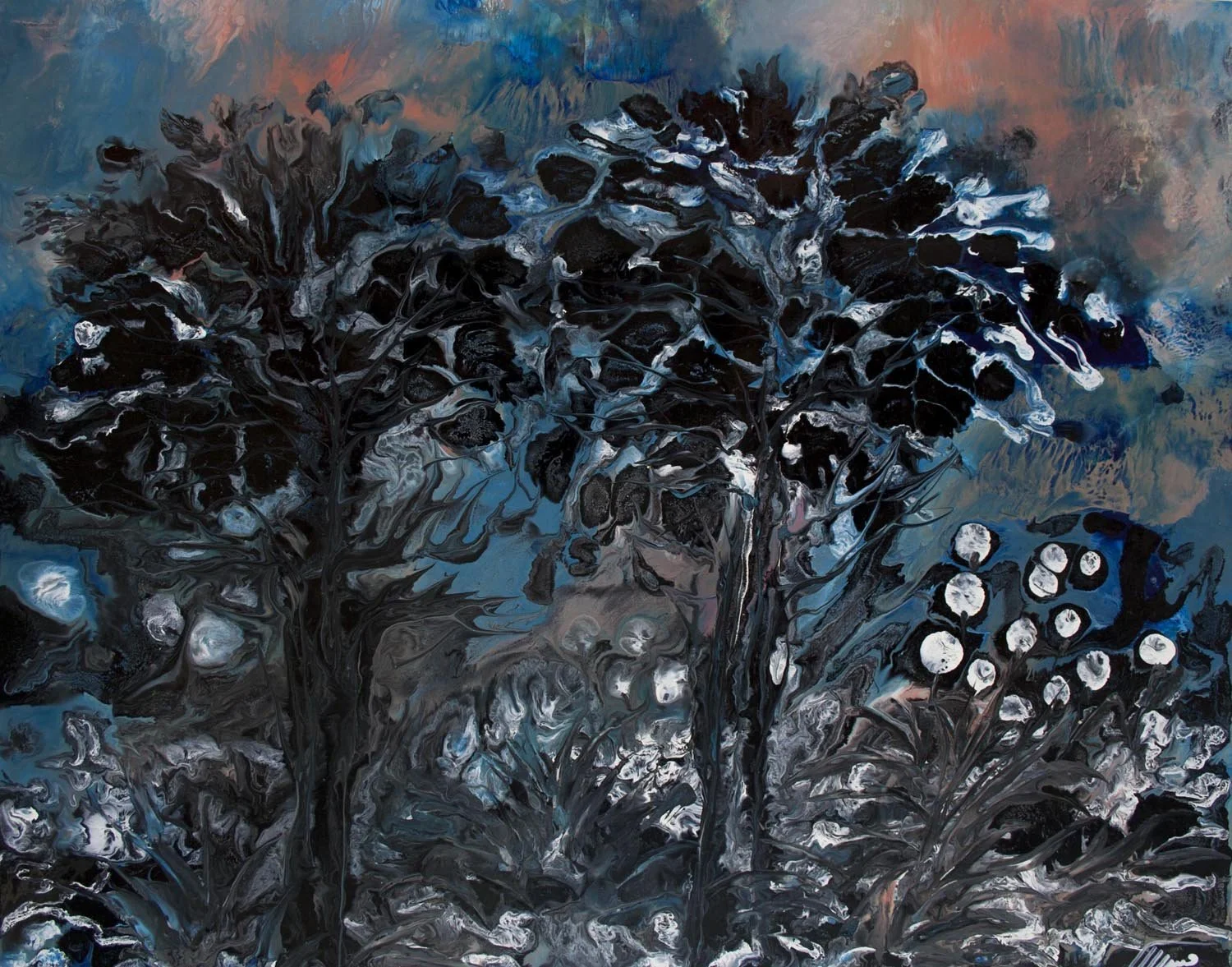
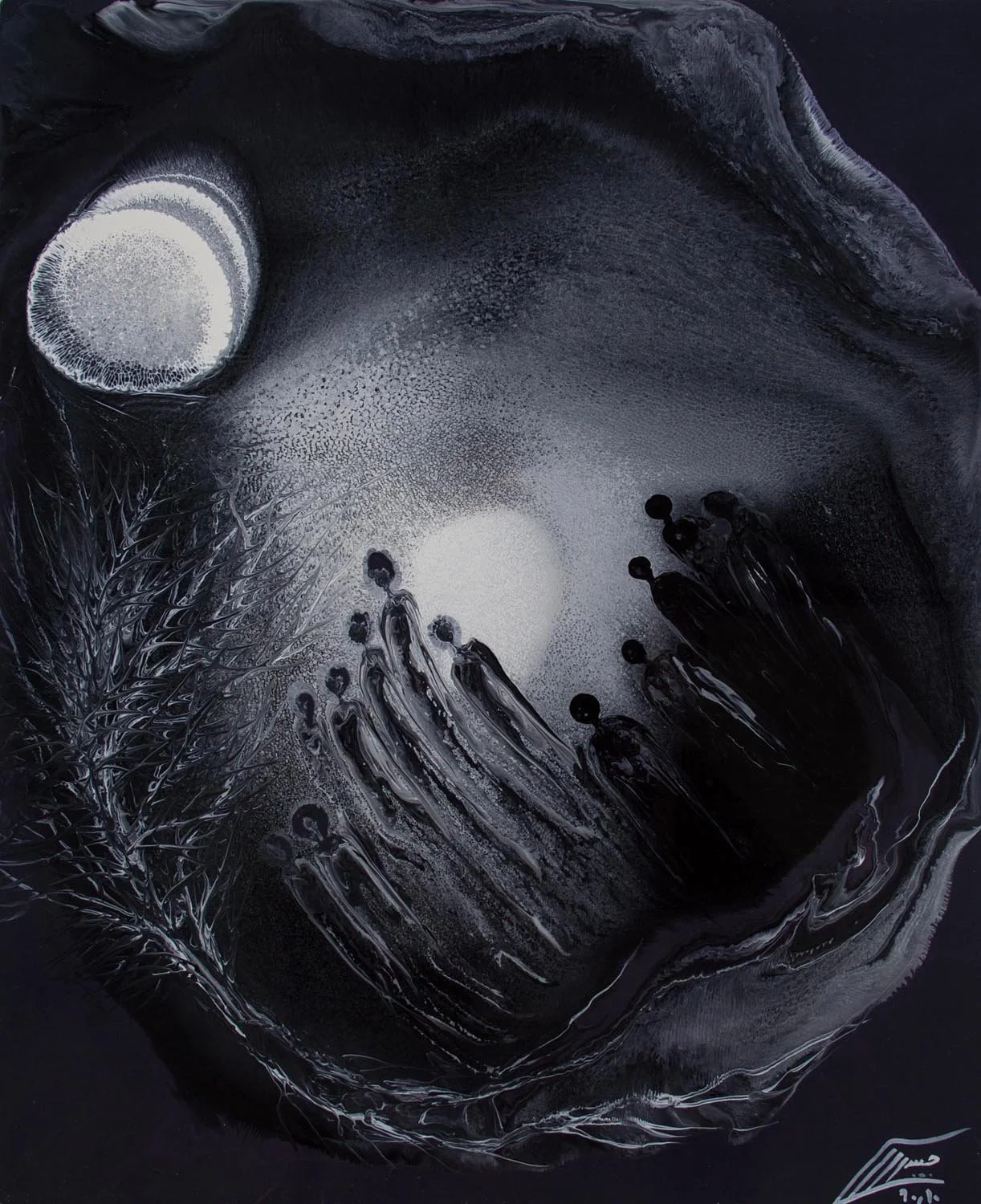
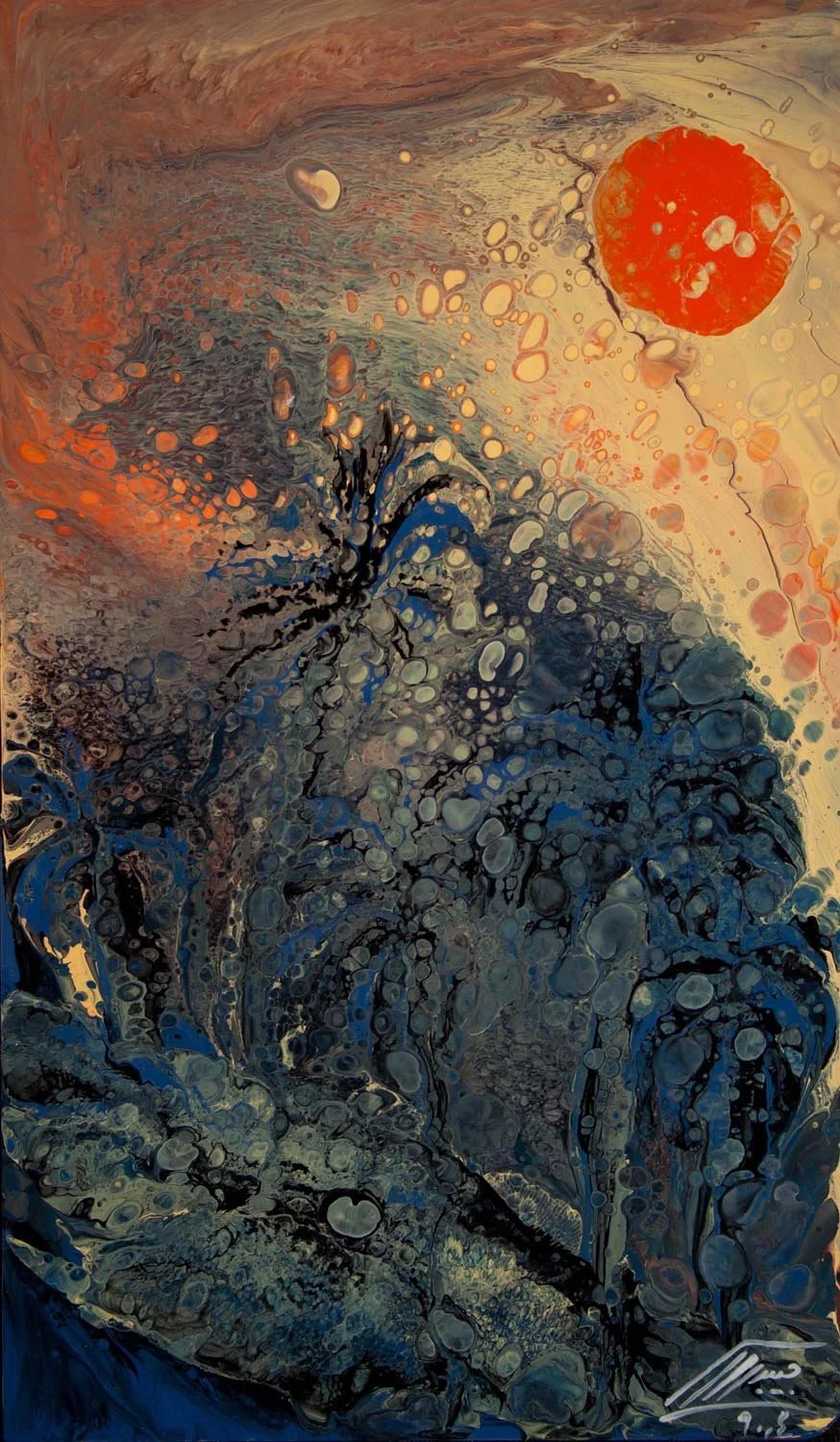
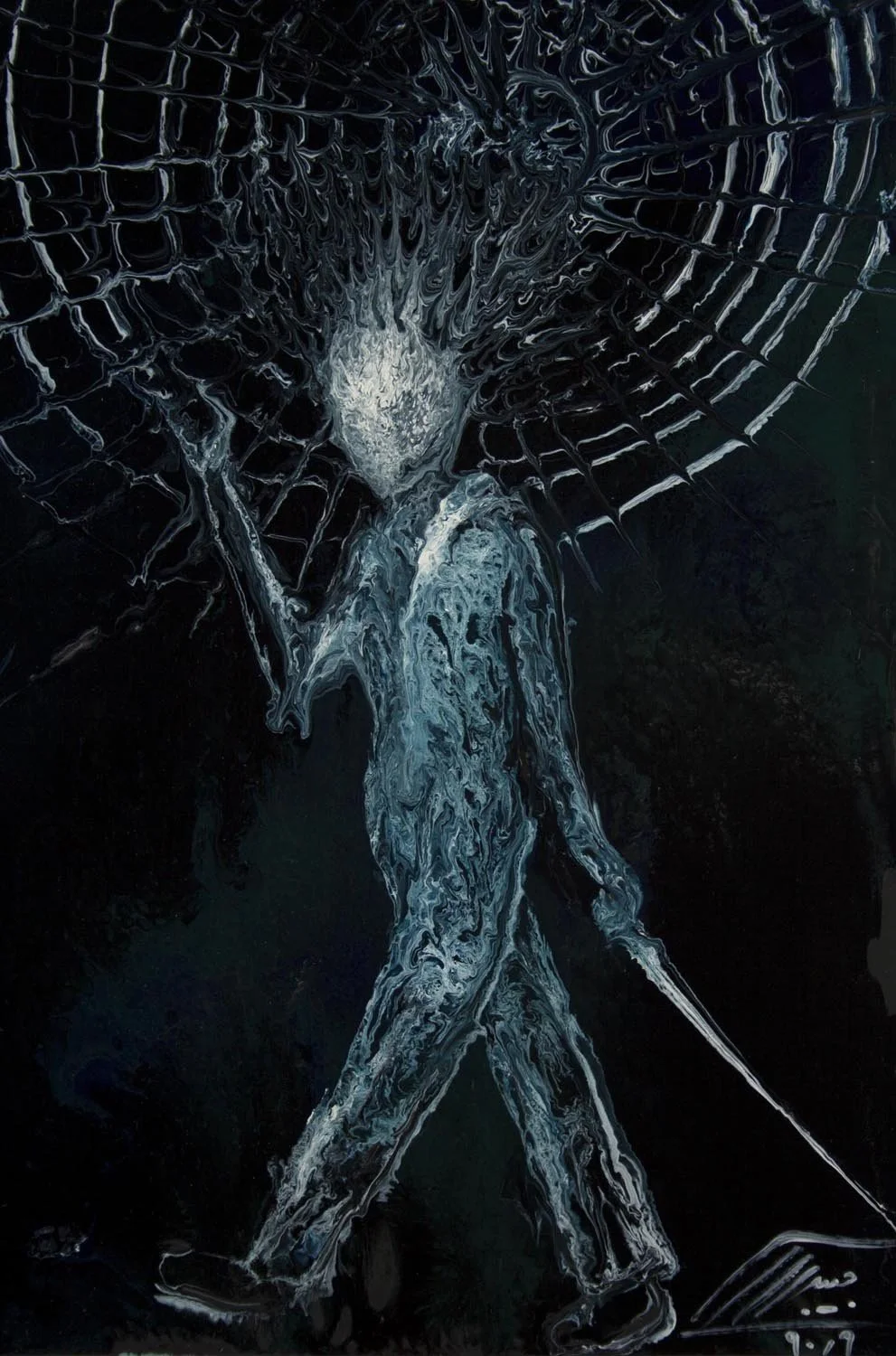
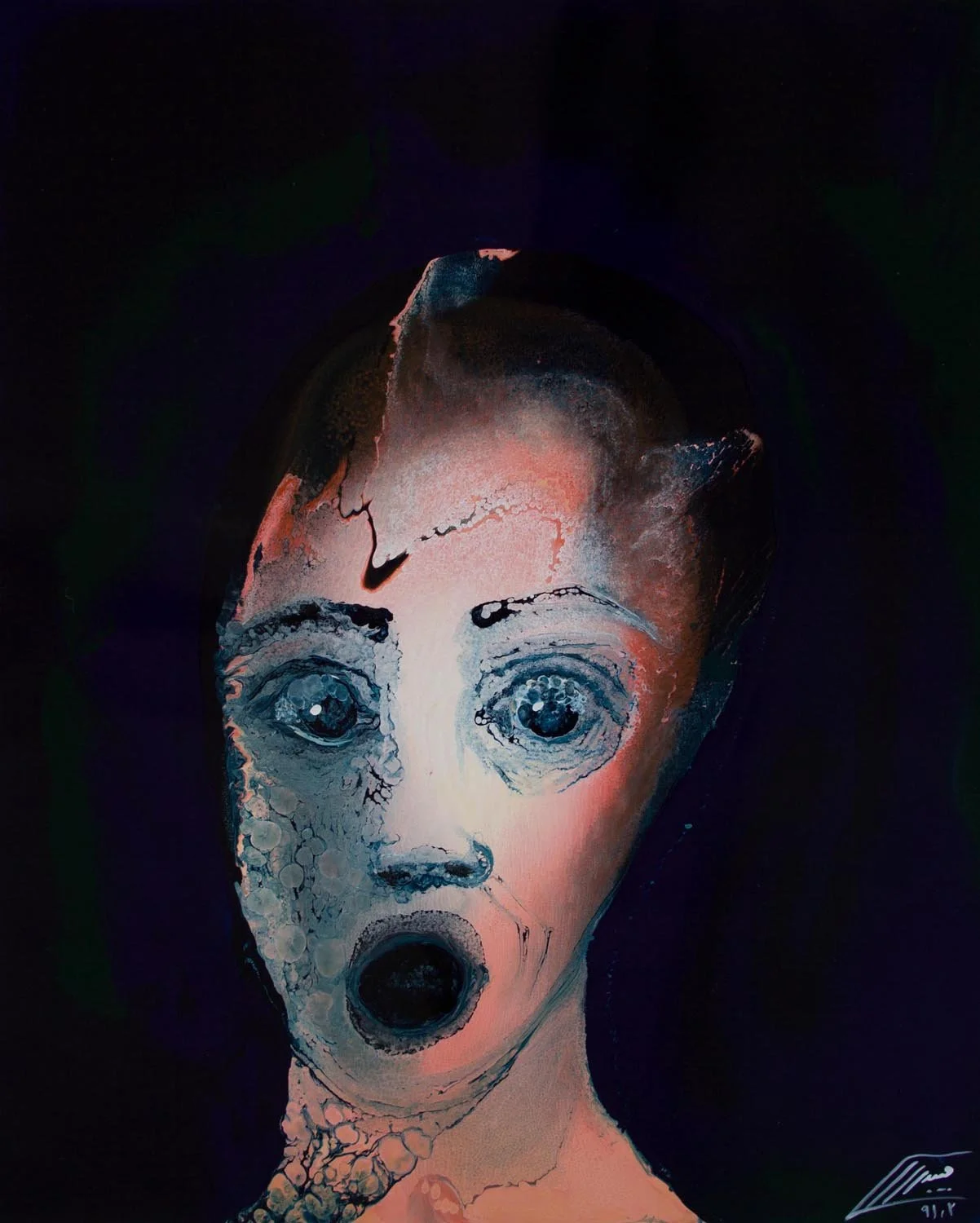
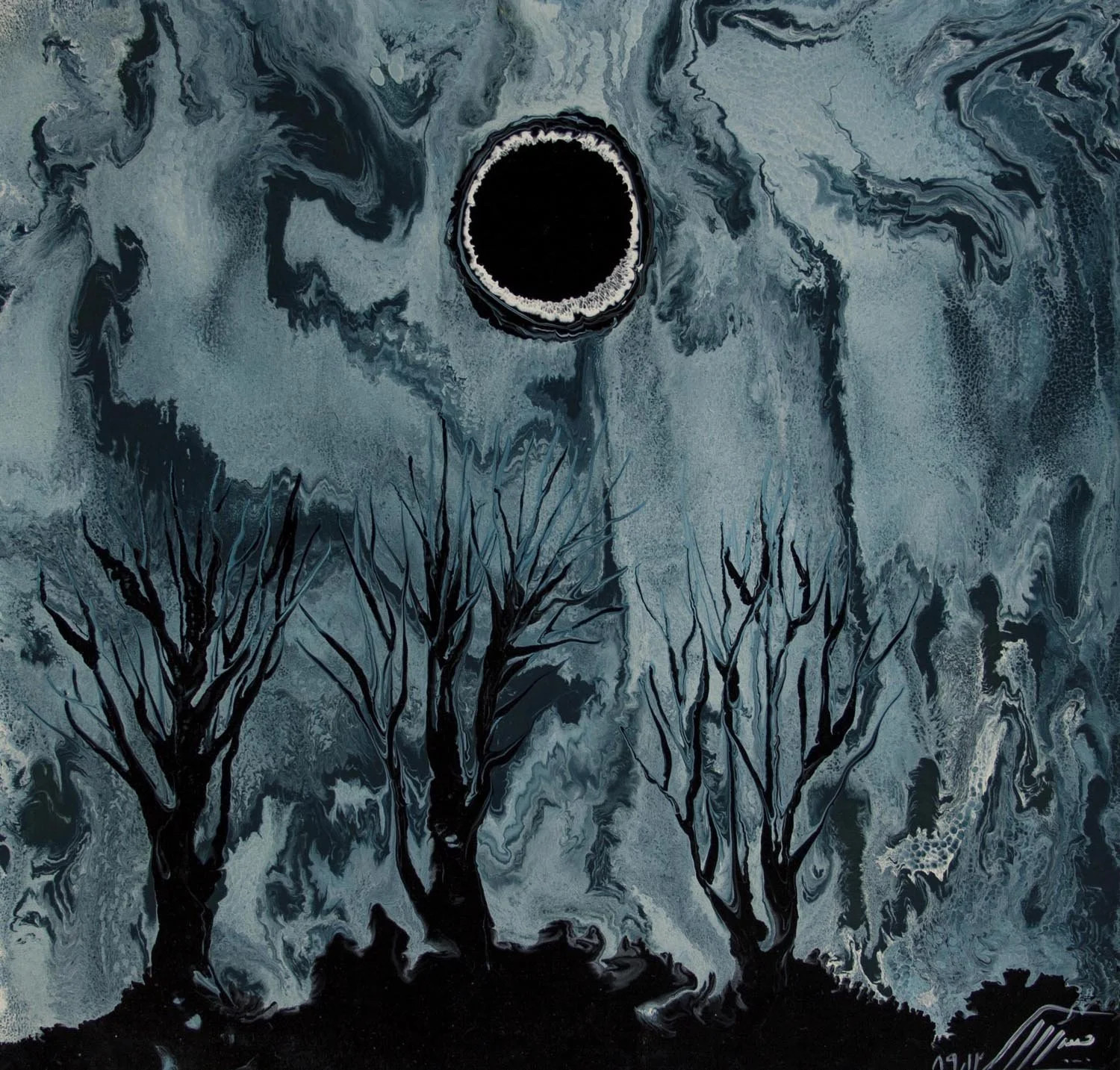
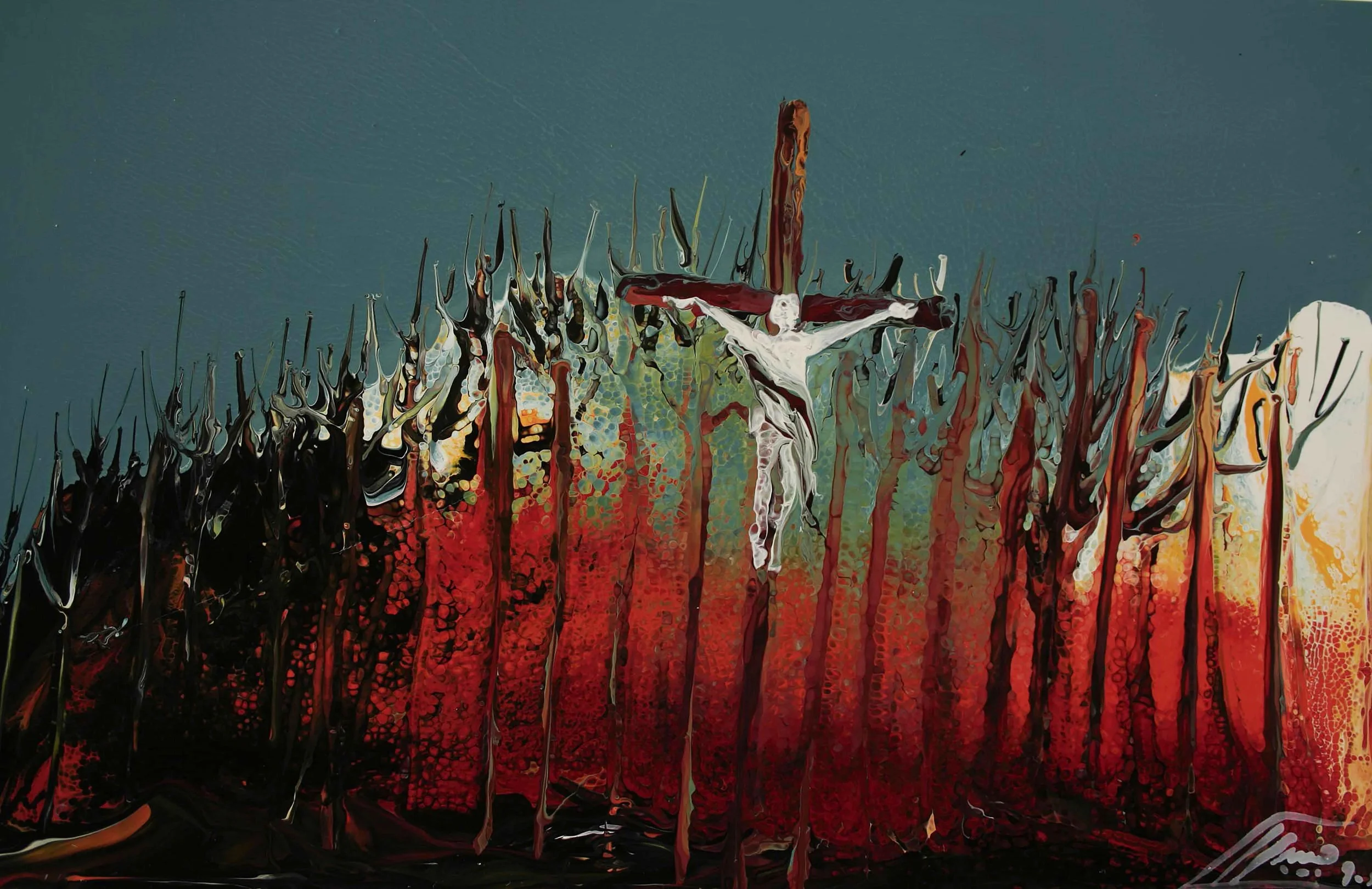
Brumand developed her fluid medium through systematic trials, selecting metallic paint as its base and petroleum as its solvent, calibrating their proportions to achieve the necessary viscosity and drying time. MDF panels and X-ray films were chosen for their capacity to receive and preserve the fluid paint. Each artwork begins with an emotional condition that generates its foundational palette. By entering a meditative state, she weakens conscious reflection, allowing felt and embodied judgments to directly guide her actions. She tilts and rotates the canvas, enabling colors to move, meet, and deform while maintaining sufficient stability to preserve local chromatic relations and the developing history of the work.
Each movement produces a configuration she has influenced but cannot fully foresee. The resulting state alters her perception, expanding or constraining what becomes possible next. She responds by moving the canvas again or working with a painting knife —redirecting flows, preserving edges, joining or separating regions, and developing emergent forms. Emerging figures are neither designed in advance nor passively accepted as accidents; once perceived, they become possibilities she may clarify, transform, preserve, or reject. The painting advances through a recursive sequence of movement, perception, judgment, and intervention. She governs its conditions and development without predetermining the outcome—composing the work through a disciplined exchange between expression and discovery.
Butterflies in Winter
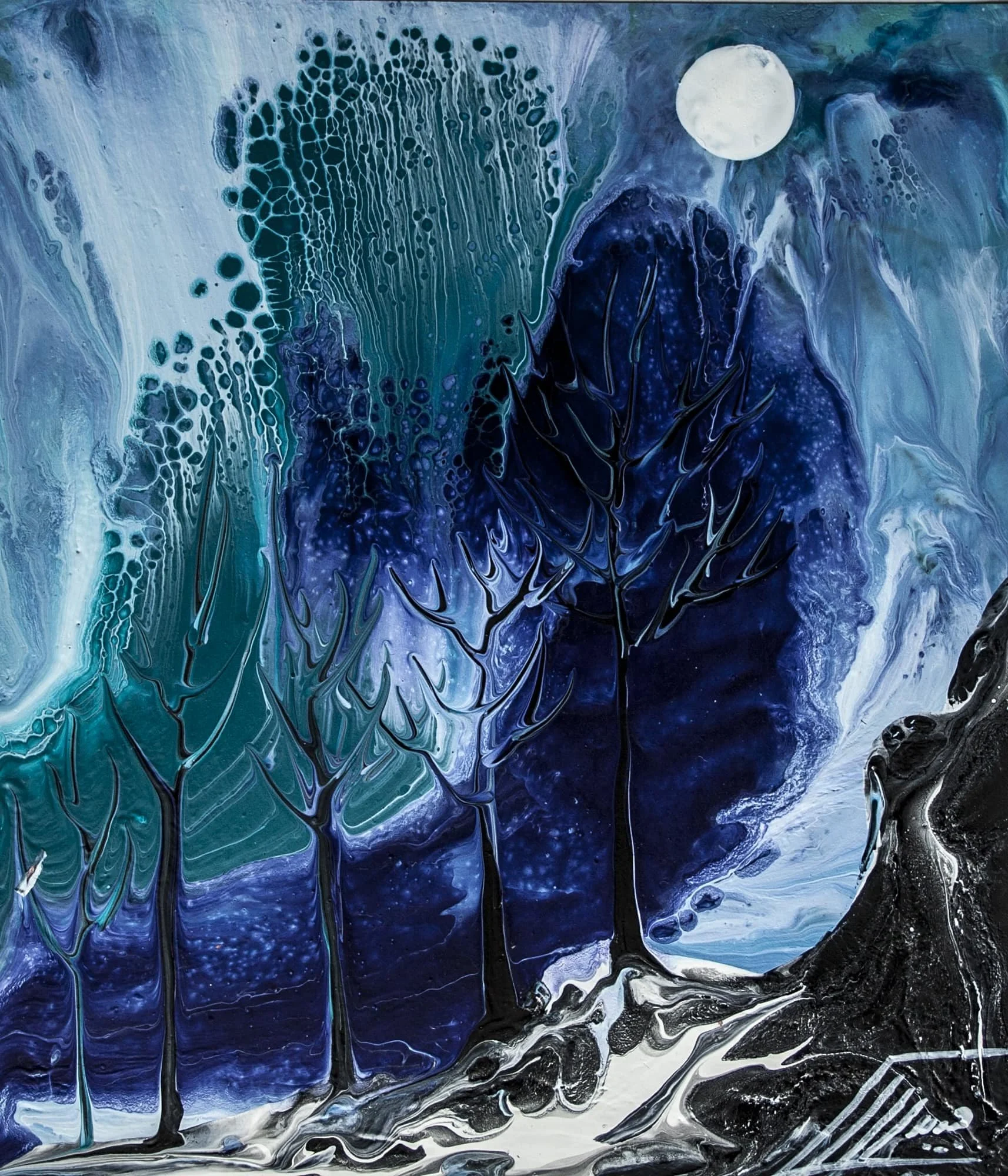
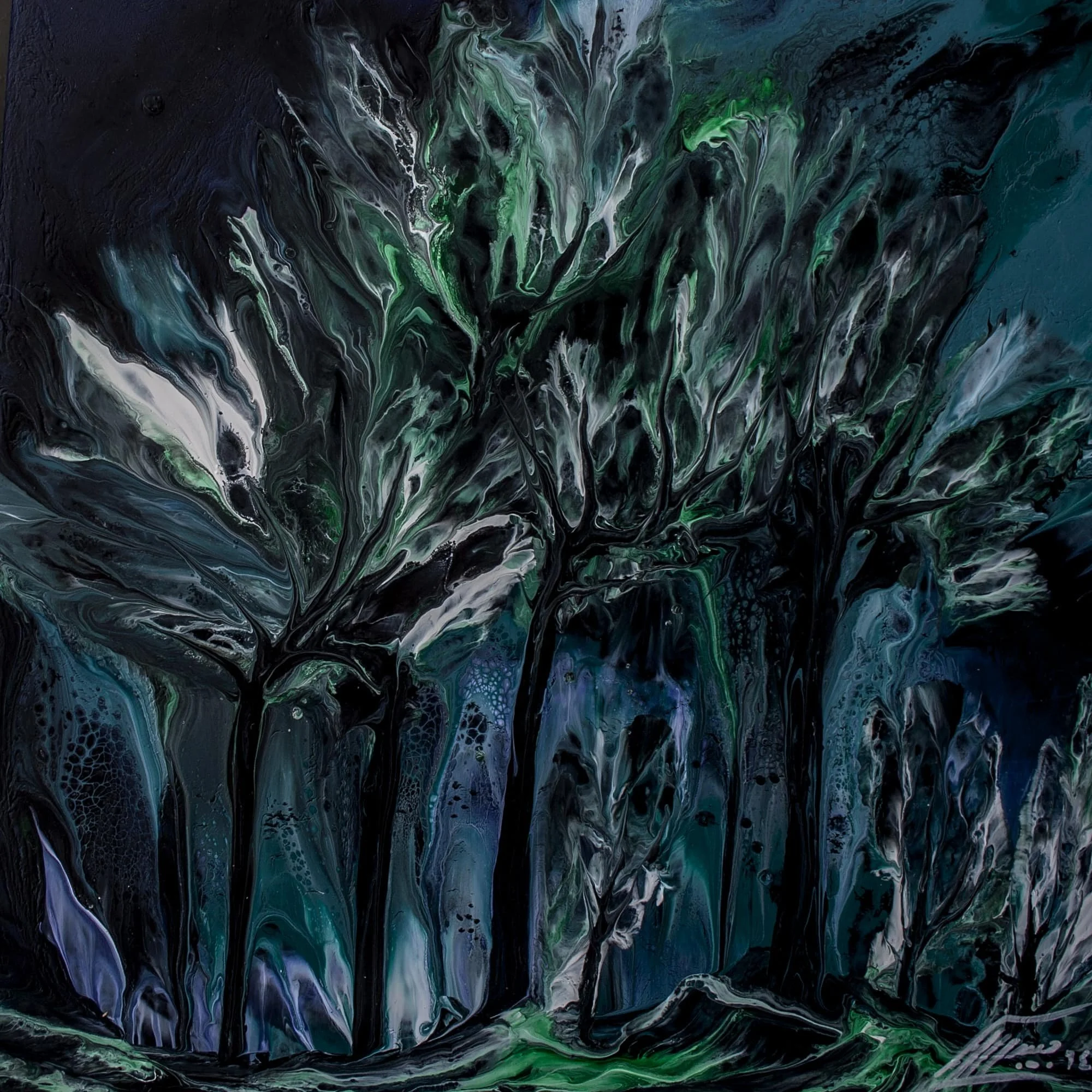
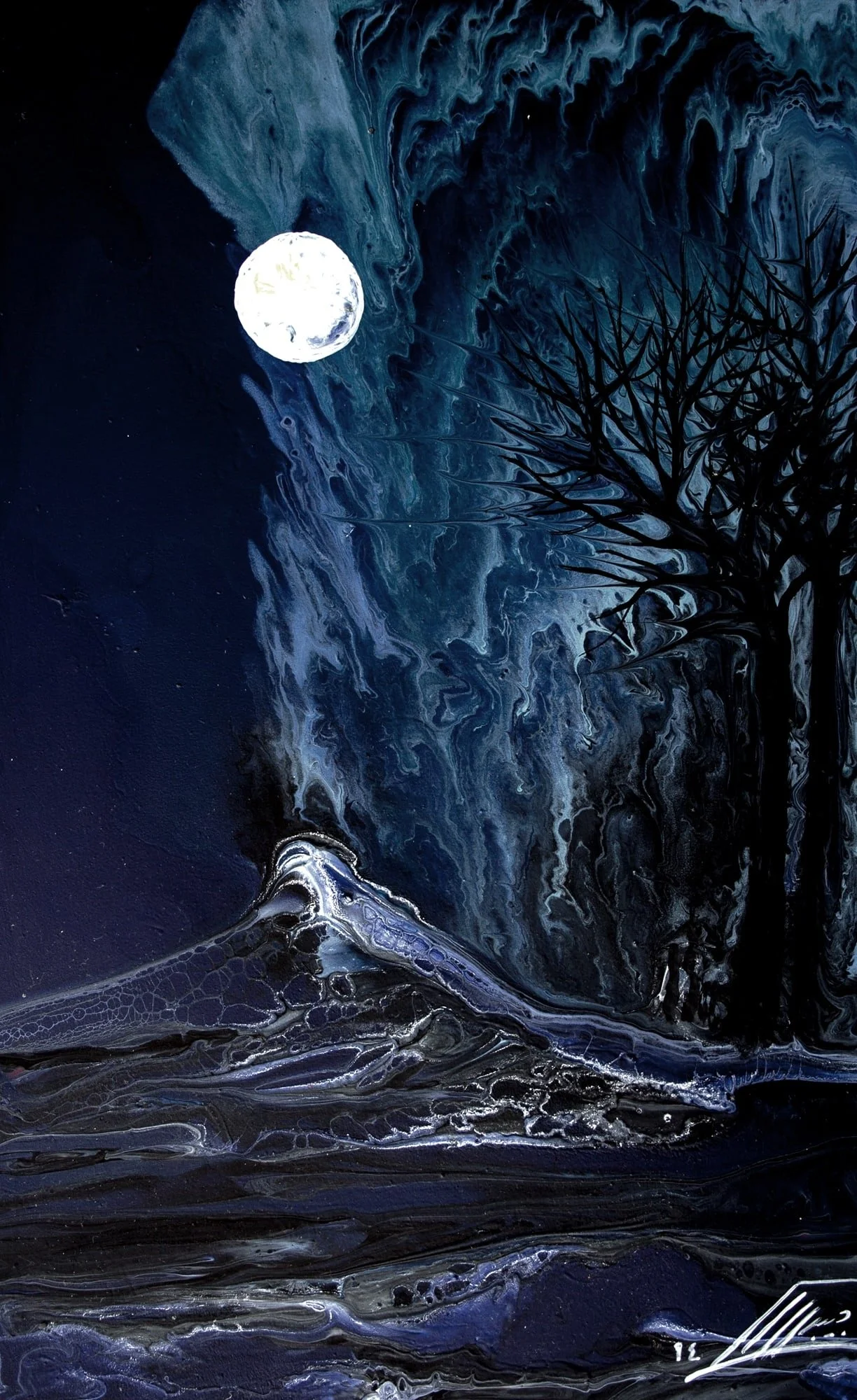
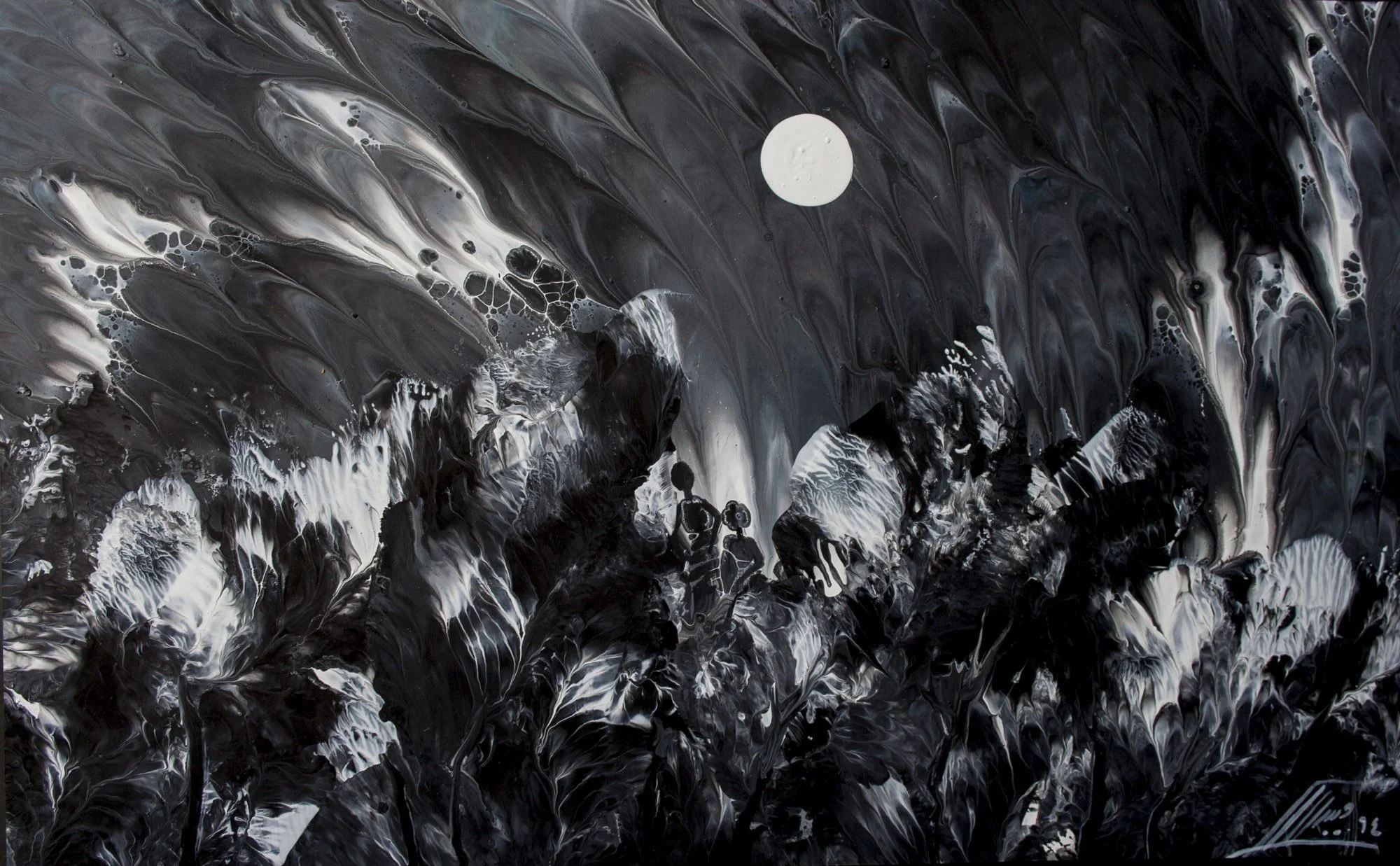
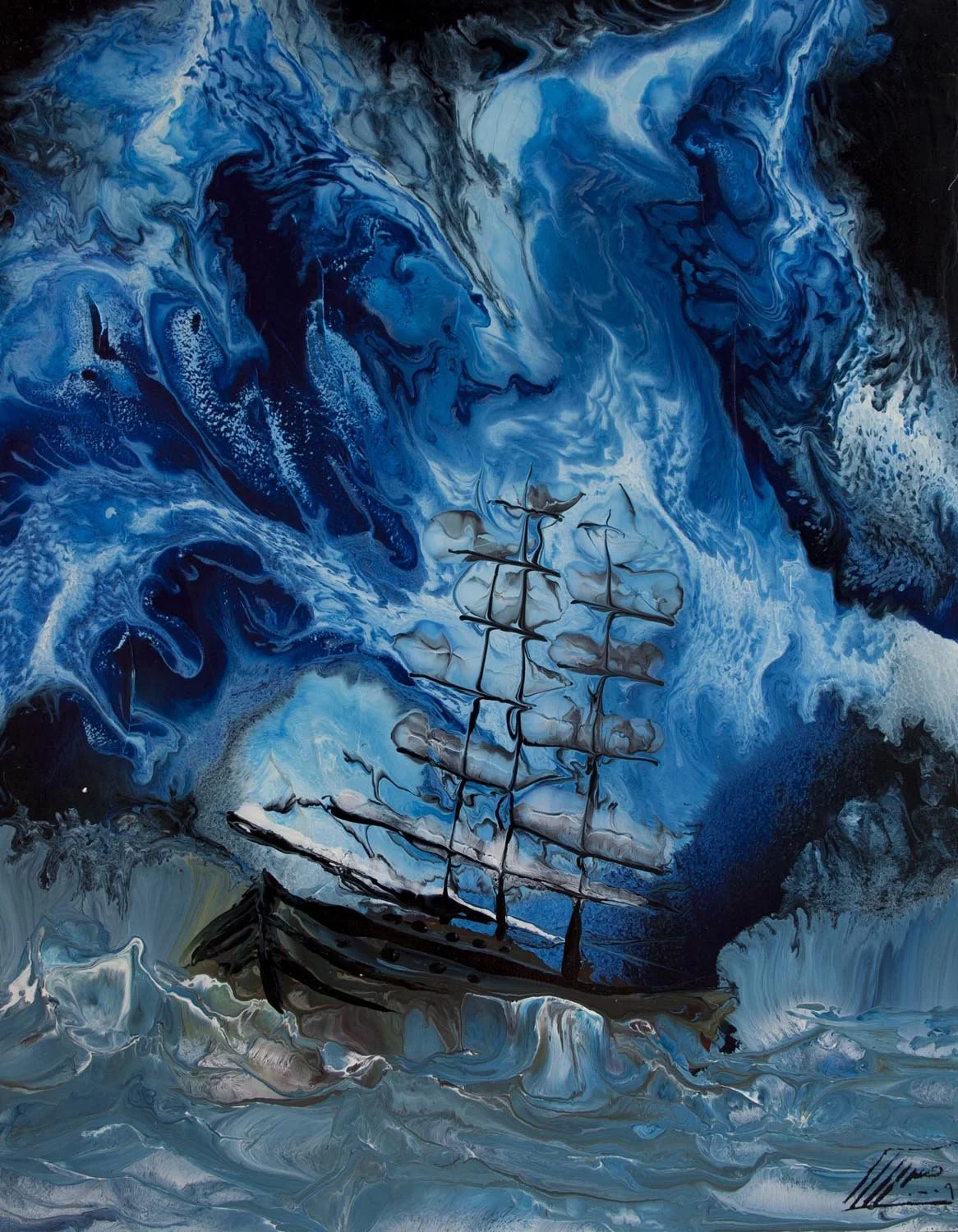
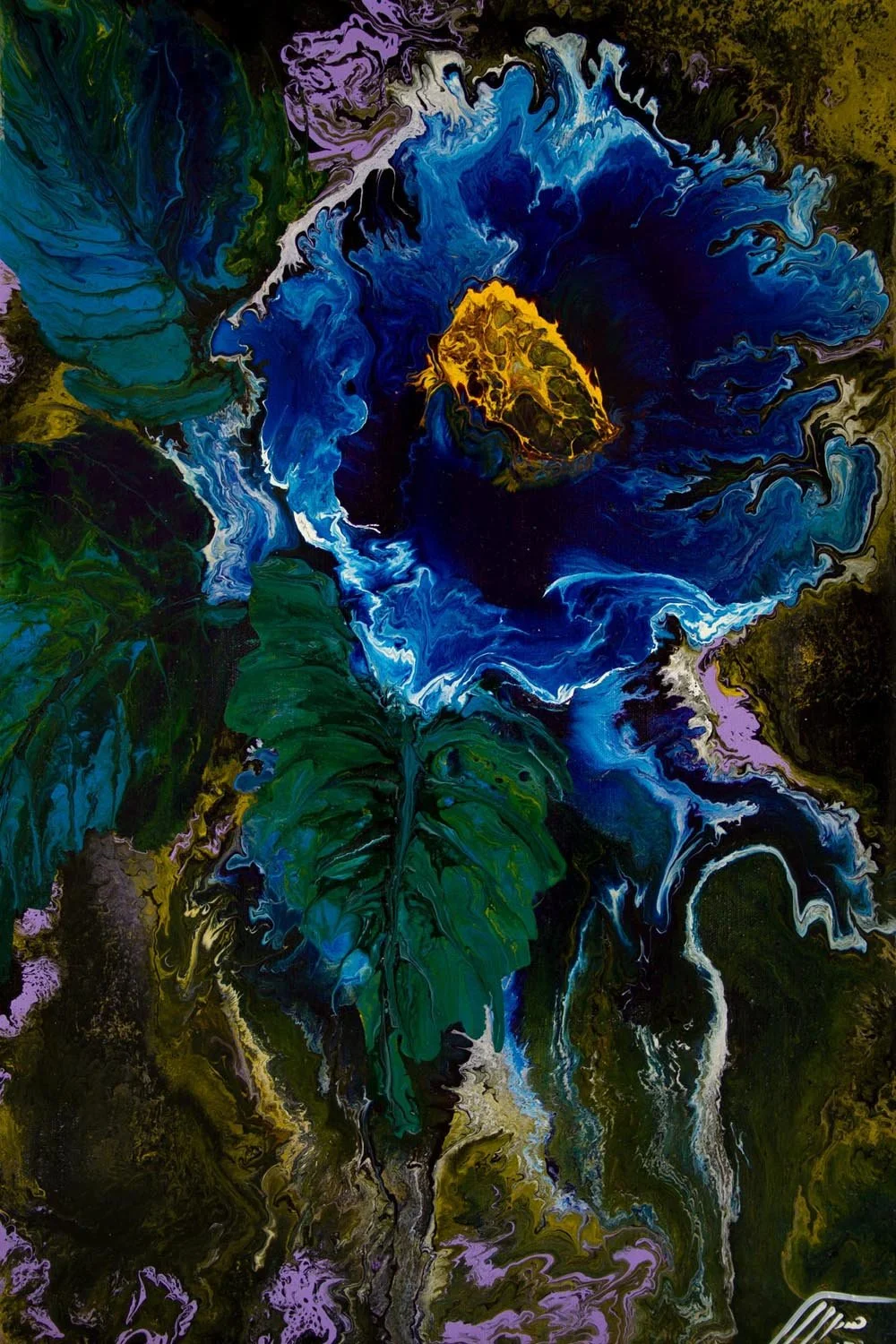
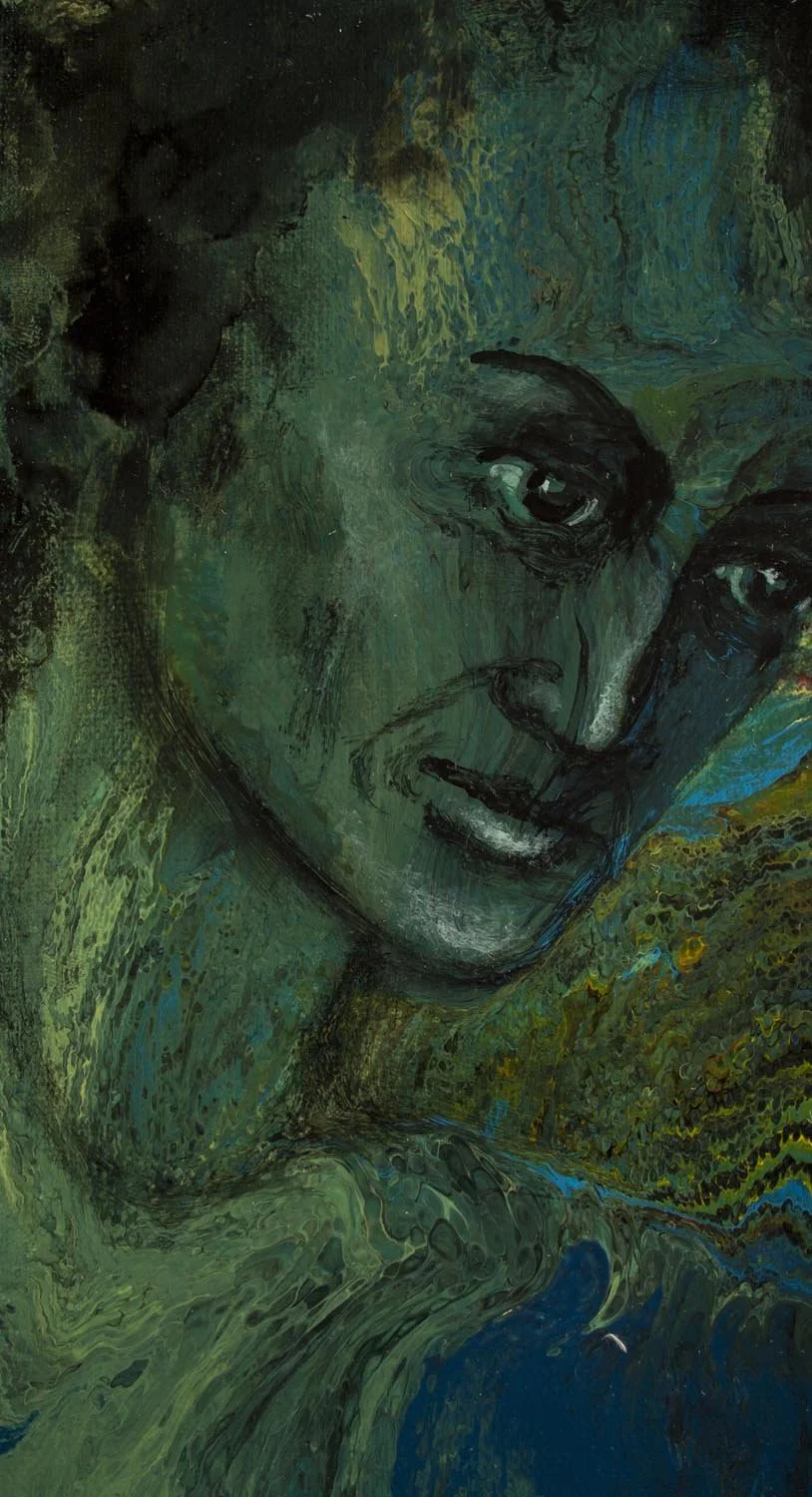
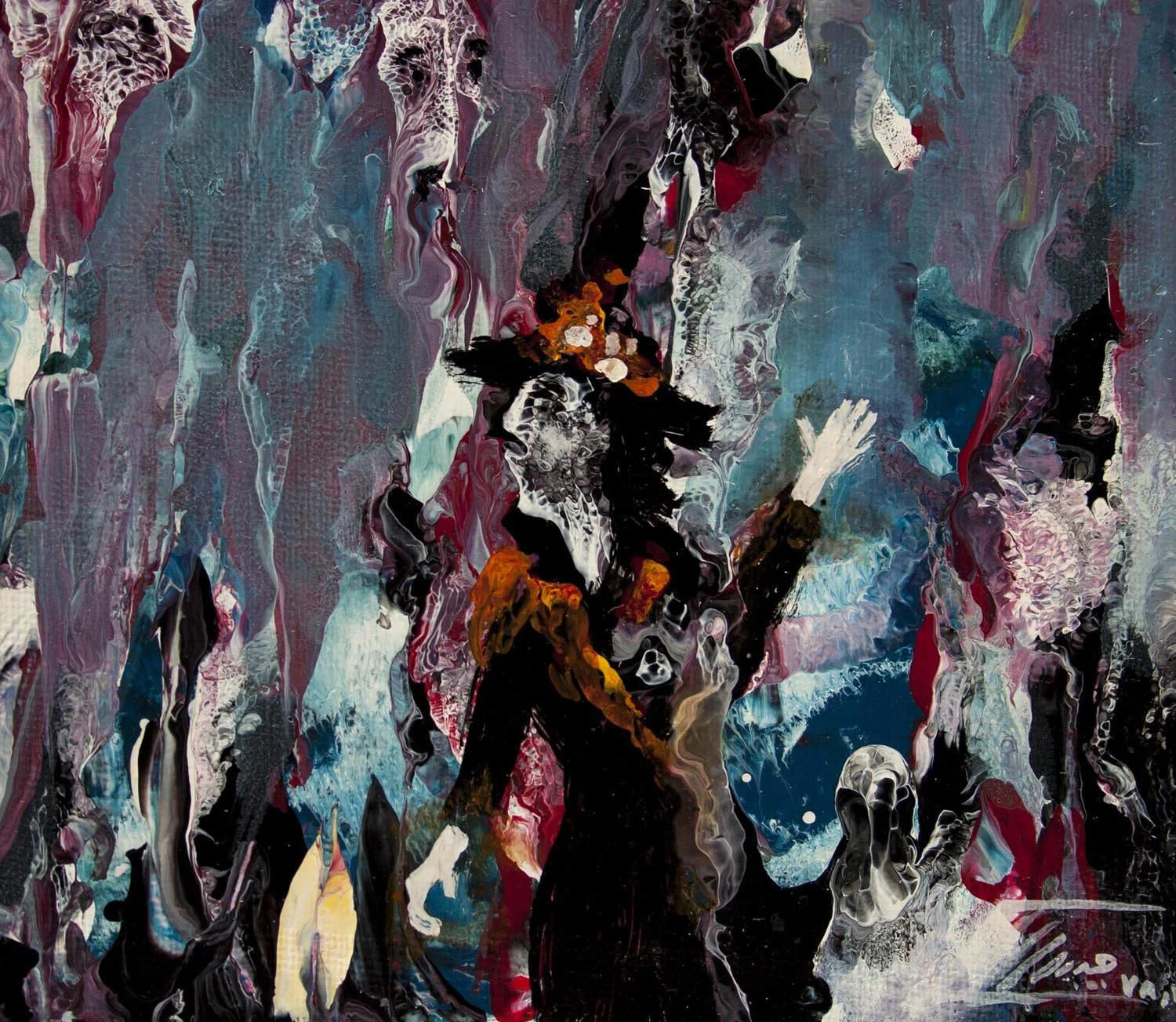
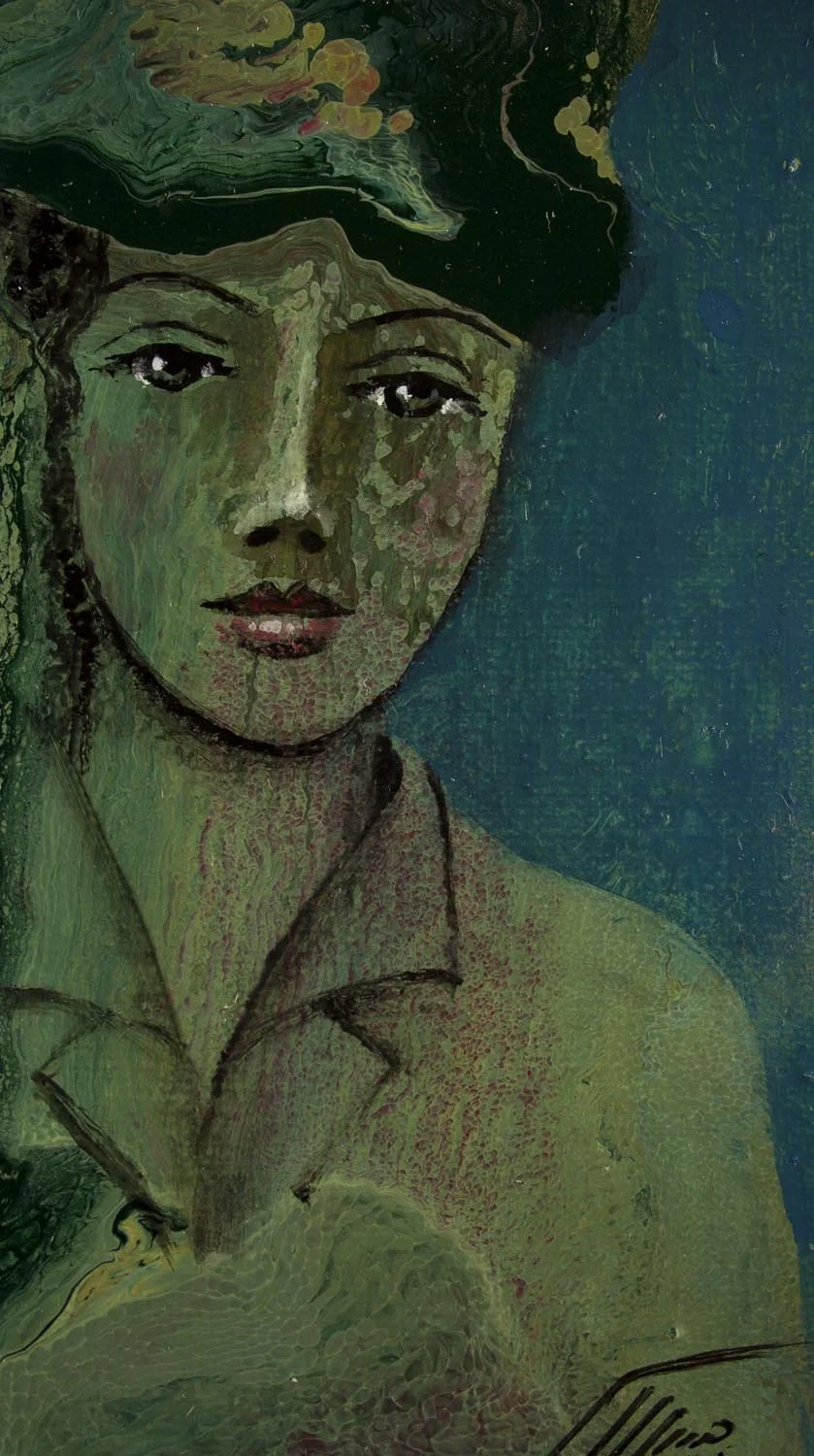
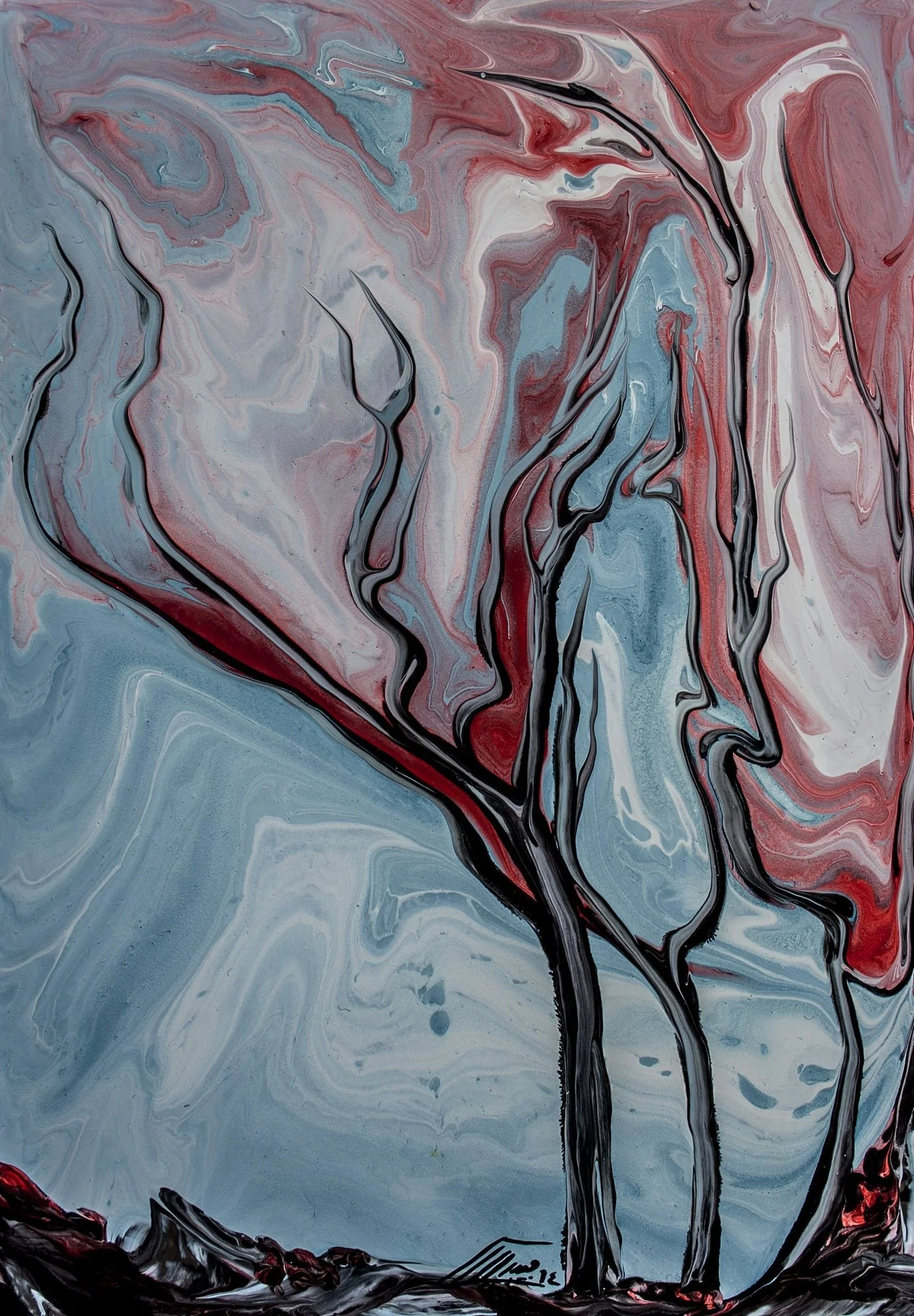
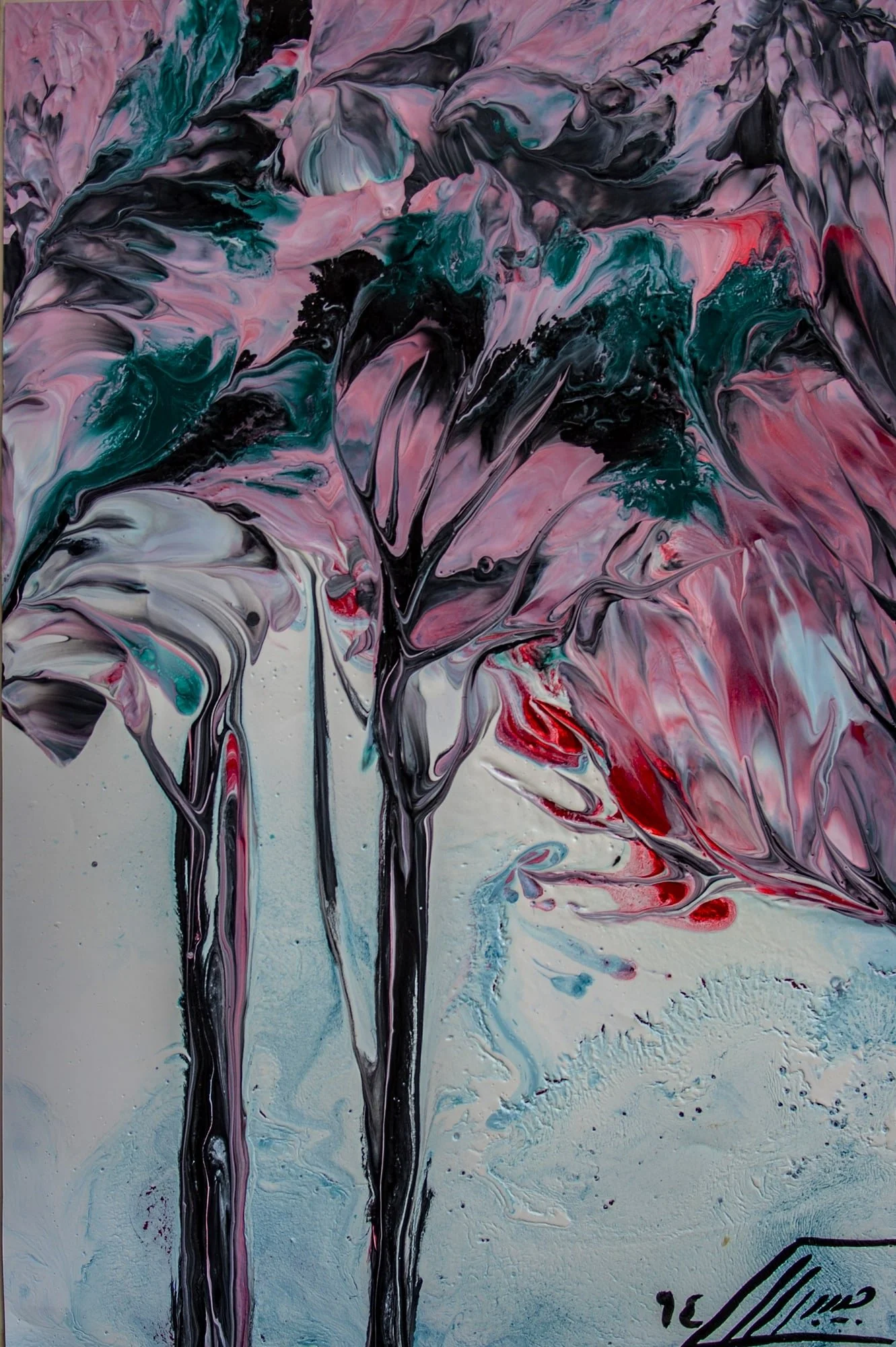
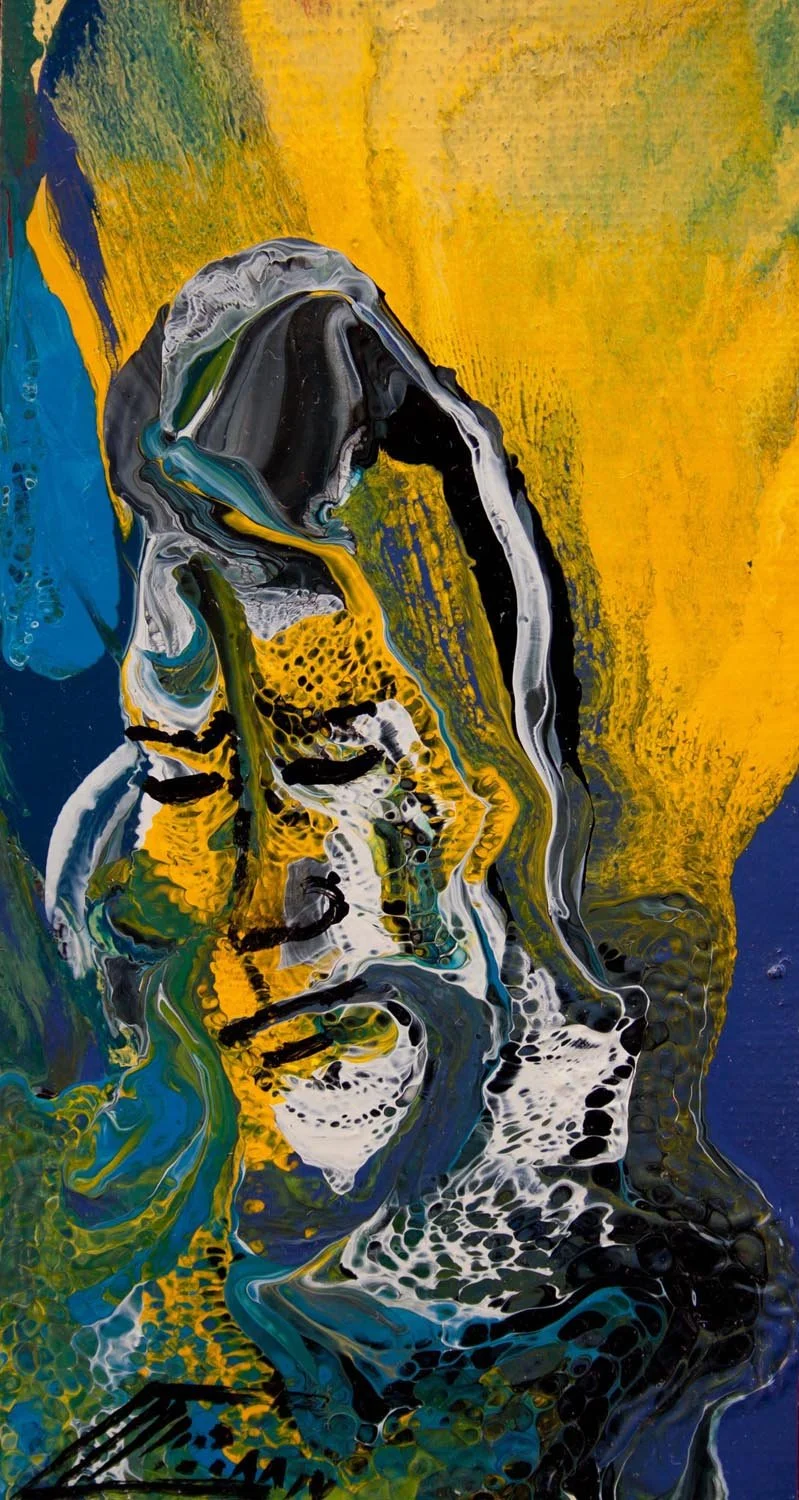
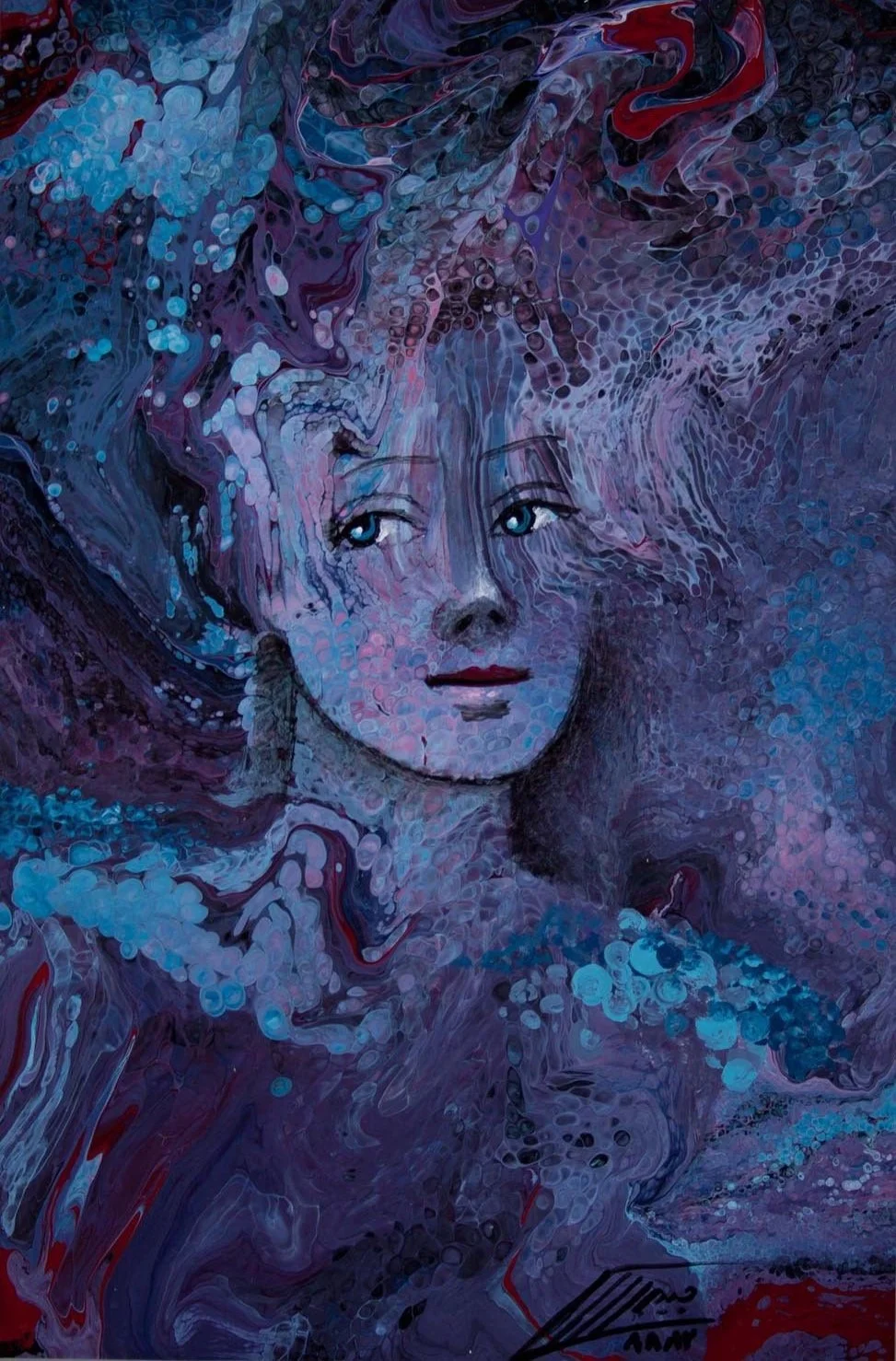
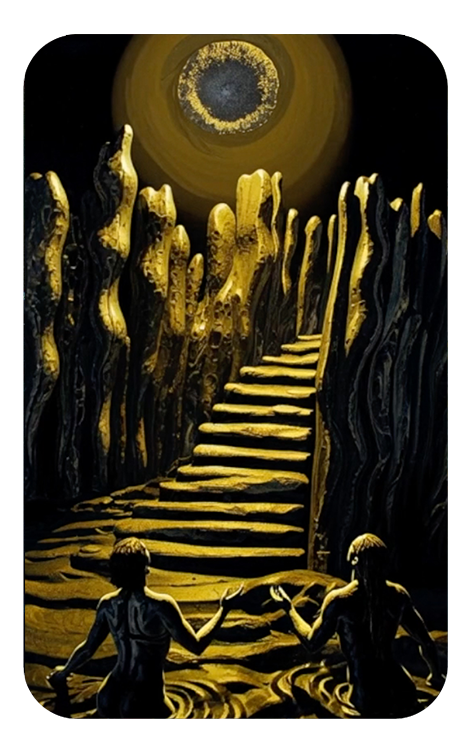
Composed by Poyan Bedayat, Butterflies in Winter is a modern classical work inspired by a selection of Brumand’s paintings. While listening to the completed composition, Brumand described the feelings, movements, and transformations the music awakened in relation to each image. Her responses were developed into a script and translated into a sequence of AI prompts through which the paintings were animated. The resulting video extends their forms and colors through movement and time, following the emotional progression Brumand perceived while listening. What began as a musical response to painting returns as a visual response to music. Music by Poyan Bedayat · Paintings by Habibe Brumand · Animation developed through scripted AI prompts .
Three Reading Paths
Brumand’s work can be approached through its artistic development, the life that transformed its demands, or the theory that emerged from its practice. Each text offers a distinct entry point into the same history.
Inquiries
Spanning more than five decades and thousands of works across painting, sculpture, and material experiment, Brumand’s archive offers substantial ground for exhibition, curatorial research, and critical engagement. Curators, galleries, museums, and cultural institutions are invited to contact the studio regarding exhibitions, representation, archival access, and collaborative projects.
Spanning more than five decades and thousands of works across painting, sculpture, and material experiment, Brumand’s archive offers substantial ground for exhibition, curatorial research, and critical engagement. Curators, galleries, museums, and cultural institutions are invited to contact the studio regarding exhibitions, representation, archival access, and collaborative projects.
Get in touch
You may reach the studio directly for all artwork inquiries, exhibition requests, or general information at poyan@brumand.art.